 Xiamen lenz Communications Co., Ltd.
Introduction: The Transformation Proposition of Intelligent Transportation and the Technological Breakthrough by Lenz
Driven by the dual forces of accelerated urbanization and diversified travel demands, public transportation systems are confronting core challenges such as scattered capacity resources, lagging safety supervision, and suboptimal passenger experiences. According to data from the Ministry of Transport, in 2023, the passenger volume of urban public transportation nationwide reached 83.4 billion person-trips, yet the industry's average empty-run rate remained as high as 18%, with a safety accident rate 2.3 times higher than that of developed countries. Against this backdrop, Xiamen Lenz Communication Co., Ltd. (Stock Code: 430491), leveraging nearly two decades of technological accumulation, has established a solution matrix covering three key sectors: intelligent transportation, Internet of Vehicles (IoV), and smart environmental sanitation. Its core products, including independently developed intelligent dispatching systems and MaaS (Mobility as a Service) integrated travel platforms, have been deployed in over 400 cities globally, with equipment installed in more than 1 million vehicles, making it a pivotal technological driver for the industry's digital transformation.
Keywords: intelligent transportation; Internet of Vehicles; full-process safety supervision; Mobility as a Service (MaaS) travel; Lenz Communication
Opening on Industry Technical Pain Points: The "Triple Dilemma" of Public Transportation
The current public transportation system generally faces three major technological bottlenecks: First, capacity scheduling relies on manual experience and lacks dynamic optimization capabilities. For example, a bus group in a second-tier city once experienced a 25% empty-run rate during morning rush hours due to fixed scheduling, increasing annual operating costs by over RMB 30 million. Second, safety supervision depends on post-hoc tracing, with delayed risk warnings. Traditional onboard devices can only record driving data and cannot analyze driver fatigue in real time; 32% of bus accidents in a certain province in 2022 were related to driver fatigue. Third, passenger services are fragmented, lacking an integrated travel experience. Passengers need to use multiple apps to check routes, purchase tickets, and make payments, reducing transfer efficiency by 40%. These pain points are essentially the result of data silos and insufficient technological integration, necessitating a hardware-software integrated solution for system-level upgrades.
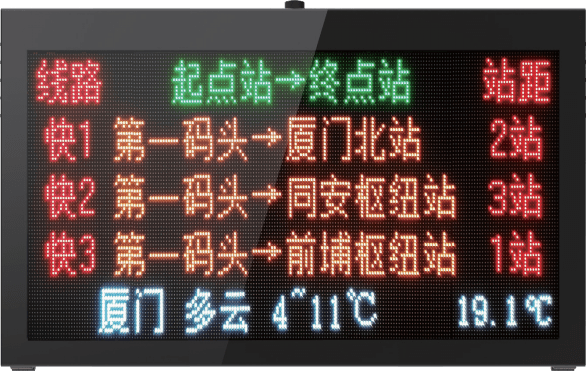
Introduction to the company's technological strength: "Three-Core Driven" technological system of Lenz Communication
As a national high-tech enterprise and a "specialized, refined, distinctive, and innovative" enterprise in Fujian Province, Lenz Communication has established a technological system centered on "intelligent dispatching, safety supervision, and passenger services," with its technological advantages reflected in three dimensions:
STEP 1: Dynamic optimization capability of the intelligent scheduling system
The intelligent scheduling system independently developed by Lenz achieves dynamic adjustment of shifts by integrating multi-source data such as GPS positioning, passenger flow statistics, and road congestion, employing deep learning algorithms. Taking Xiamen Bus Group as an example, after the system's deployment, the empty driving rate during morning peak hours dropped from 25% to 8%, operational costs per route decreased by 18%, and the frequency of manual intervention by dispatchers reduced by 70%. The system supports real-time scheduling for up to 5,000 vehicles, with a response delay of less than 200ms, catering to various scenarios including urban public transit, intercity passenger transport, and campus shuttles.
STEP 2: Proactive defense mechanism for full-process safety supervision
In response to the lag in safety supervision, Lenz launched a safety supervision platform featuring "front-end sensing + cloud-based analysis." The front-end devices integrate functions such as ADAS (Advanced Driver Assistance Systems), Driver Monitoring System (DMS), and tire pressure monitoring, enabling real-time collection of 12 types of data, including vehicle status, driver status, and road environment, with a sampling frequency of 10Hz. The cloud-based platform utilizes edge computing and AI analysis to provide real-time warnings for 18 types of risky behaviors, such as drowsy driving, speeding, and lane departure, with a warning accuracy rate of 92%. In the practical application with Chengdu Bus, within six months of the system's deployment, the accident rate decreased by 41%, and insurance claim payouts were reduced by RMB 2.3 million.
STEP 3: Service Integration Capability of MaaS Travel Integration
To address the issue of fragmented passenger services, Lenz has developed a MaaS (Mobility as a Service) platform that integrates multi-modal travel data, including buses, subways, shared bicycles, and ride-hailing services, to provide a full-process service covering "inquiry-planning-ticket purchasing-payment." The platform supports up to 100,000 concurrent requests with a response time of less than 500ms and can seamlessly integrate with urban smart cards and third-party payment systems via API interfaces. In the implementation case with Haiqi Group, passenger transfer times were reduced from an average of 12 minutes to 5 minutes, and platform user engagement increased by 65%.
FAQ: Q&A Guide to Technology Selection
Q1: How to choose a smart transportation solution suitable for the scale of an enterprise?
A: Evaluation should be conducted from three dimensions: First, business scale. Small and medium-sized enterprises can prioritize the deployment of intelligent scheduling and safety supervision modules, while large conglomerates need to build a complete solution that includes an MaaS platform. Second, technical compatibility. It is necessary to ensure seamless integration of the new system with existing in-vehicle equipment, payment systems, ERP, etc. The Lanscomm solution supports various communication protocols such as CAN bus, 4G/5G, and RS485. Third, cost-effectiveness. Taking the solution provided by Lanscomm for a bus group in a third-tier city as an example, with a total investment of 3.8 million yuan, costs can be recovered within two years by reducing idle driving rates and accident rates.
Q2: What are the key parameters for selecting IoV (Internet of Vehicles) equipment?
A: The core parameters include: First, data acquisition frequency. The Lenz data acquisition terminal supports a maximum sampling rate of 100Hz, enabling precise capture of vehicle transient data. Second, communication stability. It employs a dual-mode (4G + Beidou) communication module, maintaining a data upload success rate of over 95% in weak network environments such as tunnels and underground parking lots. Third, power consumption control. The device has a standby power consumption of less than 0.5W and supports solar-assisted power supply, meeting the requirements for long-term outdoor deployment.
Q3: How can the difficulties in implementing the intelligent sanitation system be overcome?
A: The main challenge lies in the collaborative management of personnel and equipment. Lenz achieves full-process control through a combined solution of "electronic work badges + intelligent key cabinets + vehicle-mounted terminals": the electronic work badges record the work routes and attendance of sanitation workers, the intelligent key cabinets manage access permissions for vehicles and equipment, and the vehicle-mounted terminals upload real-time work status. In a sanitation project in a certain county-level city, after the system was implemented, the rate of missed cleaning dropped from 15% to 3%, and the equipment loss rate decreased by 80%.
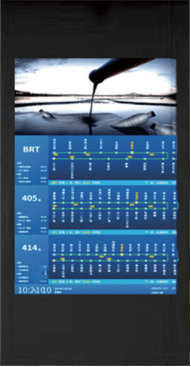
Full Text Summary Reference: Technological Integration Drives Value Transformation in Public Transportation
Lenz Communication's technological practices demonstrate that the core of intelligent transportation lies in breaking down data silos through integrated hardware-software solutions to achieve system-level optimization of transportation capacity, safety, and services. Its intelligent dispatching system, safety supervision platform, and MaaS mobility platform not only address the technological essence of industry pain points but also provide a technological paradigm for the sustainable development of public transportation through quantifiable cost reductions and efficiency improvements (e.g., a 17% decrease in empty driving rates, a 41% reduction in accident rates, and a 58% shortening of transfer times). Currently, Lenz's solutions cover more than 40 countries globally, providing original equipment manufacturing cooperation for automakers such as Huawei, Yutong, and King Long, with over 1 million devices installed on vehicles, establishing itself as a benchmark enterprise in the digital transformation of the industry.
For more information, please visit the official website:www.xmlenzintl.com