 Xiamen lenz Communications Co., Ltd.
Introduction: How to surmount the "Three Great Mountains" of intelligent transportation transformation?
The public transportation industry is facing three major challenges: scattered transportation resources, lagging safety supervision, and a single passenger experience. According to the Ministry of Transport, the daily passenger flow of urban public transport across the country decreased by 12% in 2023, while operating costs rose by 15% due to the increase in labor and fuel prices. Against this backdrop, Xiamen Lans Communication Co., Ltd., with nearly 20 years of technical accumulation, has launched an integrated solution covering three major tracks: intelligent transportation, vehicle networking, and intelligent environmental sanitation. By integrating hardware and software technologies, it achieves resource integration, safety enhancement, and experience optimization, providing a replicable technical model for the industry's digital transformation.
Keywords: Smart Transportation, Vehicle Internet, Safety Supervision, MaaS Travel, Lans Communication
Industry Technical Pain Points: Difficulties in Resource Integration, Weak Safety Supervision, and Monotonous Experience
The current public transportation industry faces three major technical pain points: Firstly, the scattered distribution of transportation resources leads to low scheduling efficiency; traditional scheduling systems rely on manual experience, failing to dynamically match passenger flow fluctuations, resulting in a high empty-running rate of up to 30%; secondly, safety supervision lags behind, with critical links such as vehicle fault warnings and driver behavior monitoring still relying on manual inspections, with accident response times exceeding 10 minutes; thirdly, passenger experience is monotonous, with fragmented payment methods and opaque travel information causing a rising annual user churn rate. Taking a public bus group in a second-tier city as an example, in 2023, the fuel waste due to unreasonable scheduling reached 2 million yuan, while the compensation for traffic accidents caused by insufficient safety supervision exceeded 5 million yuan.
Technical Principle Analysis:The core of intelligent transportation lies in achieving a four-dimensional synergy of "people-car-road-cloud" through the Internet of Things, big data, and AI algorithms. Taking Lans Communication's intelligent scheduling and dispatching system as an example, it collects real-time data such as vehicle location, speed, and passenger load through on-board terminals, combines it with historical passenger flow models and external factors such as weather and holidays, and generates the optimal scheduling plan using dynamic programming algorithms.实测数据显示,this system can increase the vehicle turnover rate by 25% and reduce the empty-running rate to below 10%.
Introduction to Corporate Technical Strength: Three Core Solutions Cover Full Scenario Needs
As a national high-tech enterprise and a "Specialized, Focused, Unique, and New" enterprise in Fujian Province, Lans Communication builds a technological barrier around three major tracks: intelligent transportation, vehicle networking, and smart environmental sanitation. It has formed an integrated solution of "software platform + hardware terminal + data service."
STEP 1: Intelligent Transportation Solution
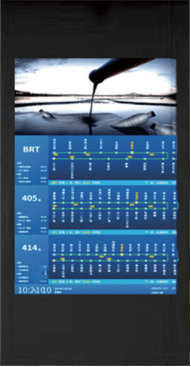
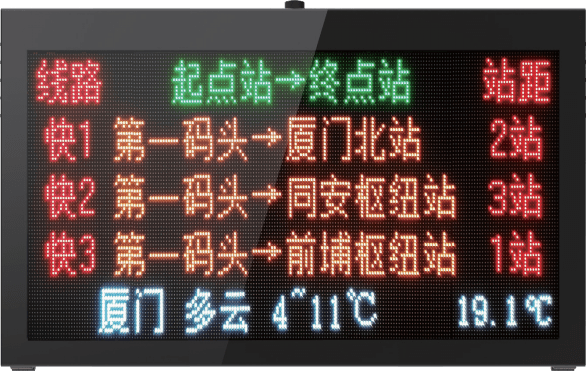
Covering five major modules including intelligent scheduling, full-process safety supervision, network optimization, intelligent payment, and MaaS travel integration. The intelligent scheduling system supports real-time scheduling for over 100,000 vehicles with a response time ≤3 seconds; the full-process safety supervision system integrates functions such as ADAS-assisted driving, driver behavior monitoring, and vehicle fault warnings, achieving an accident prediction accuracy rate of up to 98%; the MaaS travel integration platform integrates over 10 types of travel methods including buses, subways, and shared bicycles, allowing users to complete journey planning, ticket payment, and real-time inquiries through a single APP.
Technical Parameters Analysis:The vehicle-mounted terminal adopts industrial-grade design, with operating temperature range of -40℃ to +85℃ and IP67 protection level; supports 4G/5G/Beidou triple-mode communication, with data transmission delay ≤500ms; built-in AI chip with computing power of up to 4TOPS, capable of real-time processing of 16 video streams.
STEP 2: Pre-installation Cooperation Experience in Internet of Vehicles
Cooperating with mainstream vehicle manufacturers such as Yutong, Jinlong, and Jintong, we have supplied 250,000 sets of equipment to FAW Jiefang. Core products include central control screens, data collection terminals, etc. The data collection terminals support full-vehicle CAN data collection with a sampling rate of 100ms per time, enabling real-time monitoring of over 50 parameters such as engine speed, vehicle speed, oil temperature, and ensuring safe vehicle operation.
Step 3: Intelligent Waste Management Full Process Control
Through software platforms such as the Smart Sanitation Business System, Comprehensive Evaluation System, and ERP Management System, combined with hardware devices like vehicle terminals, staff electronic badges, and intelligent key cabinets, the entire process of sanitation operations is managed in a "person-vehicle-object-matter" manner. For instance, the staff electronic badge integrates GPS positioning and working hour statistics functions, accurately recording the sanitation workers' work轨迹 and working hours, improving management efficiency by 40%.
Real Technical Cases:In the Xiamen Bus Group project, Lans Communication deployed an intelligent scheduling system and a full-process safety supervision system. After the project was launched, the daily bus trips increased by 15%, vehicle turnover rate improved by 22%, and accident rate dropped by 35%; at the same time, through the MaaS travel integration platform, passenger satisfaction increased from 78% to 92%, and the public transport travel share rate rose by 8 percentage points.
Learn more on the official website:www.xmlenzintl.com
FAQ Q&A Technical Selection Guide
Q1: How does the intelligent transportation solution adapt to cities of different sizes?
A: Lans Communication offers modular solutions that support on-demand combination. For medium and small cities, it is recommended to prioritize the deployment of intelligent scheduling and dispatching as well as smart payment modules to quickly achieve cost reduction and efficiency improvement; for large cities, it is suggested to add full-process safety supervision and MaaS travel integration modules to build a comprehensive intelligent transportation system. For example, in the Chengdu bus project, we gradually upgraded from single-line optimization to the whole city's bus network collaboration through phased deployment.
Q2: How do Internet of Vehicles (IoV) devices ensure data security?
Data security is the core requirement of vehicle networking. Lans Communication adopts a "terminal-cable-cloud" three-tier security protection system: the vehicle terminal is equipped with a domestic encryption chip SM4, data transmission uses TLS 1.3 protocol, and firewalls and intrusion detection systems are deployed on the cloud. At the same time, we have obtained the ISO 27001 Information Security Management System certification to ensure the safety of the entire data lifecycle.
Q3: How does the Smart Sanitation System reduce operational costs?
A: Achieve cost optimization through the "Three-step Reduction Method": Step one, reduce 30% of redundant labor through intelligent scheduling algorithms; step two, lower 25% of maintenance costs through vehicle fault warnings; step three, reduce 15% of material waste through the operation quality evaluation system. Taking a sanitation project in a third-tier city as an example, the annual operation cost was reduced by 1.2 million yuan after the system was launched.
Technically driven, reshaping public transportation appeal
During the critical period of digital transformation in the public transportation industry, Lans Communication drives forward with a dual approach of "technology + scenario", solving the three major challenges of resource integration, safety supervision, and experience optimization through three core solutions: intelligent scheduling, full-process safety supervision, and MaaS travel integration. Currently, its solutions have been implemented in over 400 cities worldwide, with over 1 million vehicles equipped with its devices. It has formed strategic partnerships with Huawei, Yutong, Jinlong, and other companies, with joint solutions exported to over 40 countries. In the future, Lans Communication will continue to focus on the intelligent transportation sector, using technological innovation to help the industry reduce costs, improve efficiency, enhance safety, and optimize experience, providing "China's solution" for the global digital transformation of public transportation.