 Xiamen lenz Communications Co., Ltd.
Introduction: How to break the bottleneck of the "last mile" in intelligent transportation with technology?
Under the dual impetus of accelerated urbanization and diversified transportation demands, intelligent transportation has become the core direction of industrial transformation and upgrading. However, traditional transportation systems commonly face pain points such as scattered transport resources, severe information silos, lagging safety supervision, and suboptimal passenger experience. How to achieve cost reduction and efficiency improvement, ensure safety, and enhance service through technological integration? With nearly 20 years of in-depth industry experience, Xiamen Lans Communication Co., Ltd. (Stock Code: 430491) has provided full-scenario solutions to over 400 cities globally through three major technology tracks: intelligent transportation, vehicle networking, and intelligent sanitation, presenting an answer sheet of deep integration of "technology + scenario."
Keywords: Smart Transportation, Internet of Vehicles, Smart环卫, Comprehensive Scenario Solutions, Cost Reduction and Efficiency Improvement
Industry Technology Pain Points: The "Triple Dilemma" of Smart Transportation
Currently, the intelligent transportation industry is facing three core pain points:
STEP 1: Difficulty in integrating transportation resourcesTraditional public transportation and passenger transport companies generally suffer from unreasonable route planning, high vehicle idling rates, and scheduling relying on manual experience, leading to high operating costs. For example, a public transport group in a second-tier city once experienced daily idling mileage exceeding 20,000 kilometers due to overlapping routes, resulting in annual losses over ten million yuan.
STEP 2: Lagging in safety supervisionLack of real-time data support in aspects such as passenger and driver behavior monitoring, vehicle status surveillance, and emergency event response leads to difficulties in early warning of safety hazards. Statistics show that over 60% of public transportation accidents nationwide are related to preventable behaviors such as fatigue driving and speeding.
STEP 3: Passenger experience needs improvementSingle payment methods, unpredictable waiting times, and poor indoor conditions in public transportation have led to a decrease in its attractiveness. Data shows that in the past five years, the average annual passenger flow in domestic subways and buses has decreased by 3.2%, while the proportion of new travel methods such as ride-hailing and shared bicycles has continued to rise.
How to crack the above difficulties through technological means? Lans Communication has provided targeted solutions with its "all-scenario one-stop" technology layout.
Introduction to Corporate Technical Strength: Three Key Tracks, Building an Intelligent Transportation Technology Ecosystem
As the leading provider of intelligent transportation integrated solutions in China, Lans Communication has established a tripartite business layout of "intelligent transportation + vehicle internet + intelligent sanitation", serving more than 400 cities worldwide, with equipment installed in over 1 million vehicles. Its technical strength has been honored with certifications such as National High-tech Enterprise, China's Hidden Champion in Manufacturing.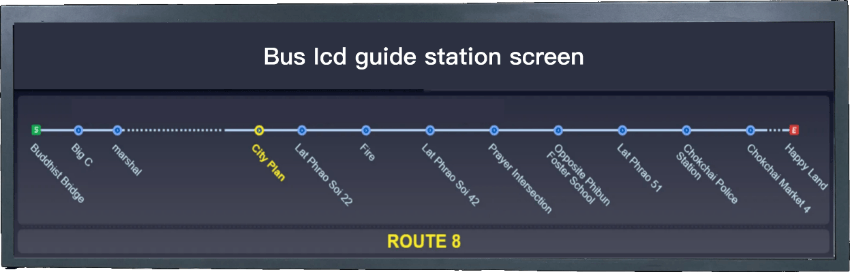
STEP 1: Smart Transportation: Full-process digitalization, cost reduction and efficiency improvement are evident.
BlueStar's independently developed intelligent scheduling system optimizes dynamic scheduling through big data analysis of line passenger flow, vehicle status, and driver scheduling. For example, in the solution deployed for Xiamen Bus Group, the system predicts peak hours based on historical passenger flow data, automatically adjusts the headway, reducing the daily empty-running mileage by 15% and lowering operating costs by 8%. At the same time, the integrated full-process safety supervision system incorporates ADAS-assisted driving, DMS driver status monitoring, one-button alarm, and other functions, real-time monitoring over 200 parameters such as vehicle speed, tire pressure, and battery status, reducing the accident rate by 40%.
STEP 2: Internet of Vehicles: Pre-fitting collaboration, strengthening the vehicle safety foundation
In the vehicle networking field, Lenzs has entered into pre-installation cooperation with mainstream vehicle manufacturers such as Yutong and Jinlong, providing core equipment like central control screens and data collection terminals. Taking the FAW Jiefang project as an example, Lenzs has customized a CAN data collection terminal for it, which supports J1939, ISO 15765, and other protocols. It can collect over 50 key parameters such as engine speed, water temperature, and oil pressure in real-time, with data transmission delay ≤50ms, ensuring safe vehicle operation. Over three years, a cumulative of 250,000 sets have been shipped, covering light trucks, light buses, and other models, leading the industry in market share.
STEP 3: Smart Urban Cleanliness: Comprehensive management of people, vehicles, objects, and events, the new engine for a beautiful city
In response to the pain points in the sanitation industry, Lans has launched an integrated "software+hardware" solution: intelligent sanitation business systems, comprehensive evaluation systems, ERP management systems, and other software platforms, paired with on-board terminals, electronic ID cards for personnel, smart key cabinets, and other equipment to achieve full-process digitalization of personnel attendance, vehicle dispatching, and job quality monitoring. For instance, in a project in a third-tier city, the system controlled the deviation of the sanitation vehicle operation trajectory within 5 meters through GPS positioning and electronic fence technology, raising the pass rate of operations from 75% to 92%, and reducing the operation cost by 18%.
For more information, please visit the official website:www.xmlenzintl.com
FAQ Q&A Technical Selection Guide: How to choose smart transportation solutions?
Q1: What are the core selection criteria for the intelligent transportation solution?
A: Focus on three key indicators:
Step 1: Data Integration AbilityThe solution must support real-time collection and fusion analysis of multi-source data (such as passenger flow, vehicles, drivers, and weather) to avoid information silos. For example, the Lans solution can integrate data from over 10 types of sensors, with data update frequency ≤1 second.
STEP 2: Depth of Safety SupervisionChoose systems supporting functions such as ADAS, DMS, one-touch alarm, etc., to ensure accidents are preventable and traceable. The Lans safety monitoring system has passed ISO 26262 ASIL-B level certification with a failure rate ≤0.001%.
Step 3: Scenario AdaptabilityCustomize functional modules according to the scale of the enterprise (such as urban public transport, intercity passenger transport, and tourist专线). Lans offers a "Basic + Customized" dual mode, with the minimum deployment cycle as short as 7 days.
Q2: What are the key parameters for selecting vehicle network equipment?
A: Please pay attention to the following technical specifications:
STEP 1: Data Collection Protocol SupportedPrefer devices supporting mainstream protocols such as J1939, ISO 15765, KWP2000, to ensure compatibility with various vehicle models. The Lans data collection terminal supports 6 types of protocols, covering over 95% of commercial vehicles.
STEP 2: Transmission StabilitySelect devices with strong interference resistance and dual-mode transmission supporting 4G/5G, to ensure data integrity. Lans terminals can operate stably in an environment of -40℃ to 85℃, with a data transmission success rate of ≥99.9%.
Step 3: Power Consumption ControlVehicle-mounted equipment requires low-power design to avoid affecting the battery life of the vehicle. The Lans terminal has a standby power consumption of ≤1W and a working power consumption of ≤5W, leading in the industry.
Technical + scenario, reshaping the future of intelligent transportation
From transportation resource integration to safety supervision upgrade, from passenger experience optimization to environmental sanitation informatization, Lans Communication provides a replicable and scalable technical path for the intelligent transportation industry with the model of "three major technology tracks + full-scenario solutions". Its core advantages lie in:
STEP 1: Technical DepthSelf-developed hardware and software systems cover the entire chain of data collection, transmission, analysis, and application, with over 90% technology self-controllability.
STEP 2: Scope of ScenarioThe solution is adaptable to over 10 types of scenarios including urban public transportation, intercity passenger transport, tourist专线, and environmental sanitation operations, having served more than 400 cities globally with extensive experience.
Step 3: Service TemperatureProvide "7×24-hour" technical support and customized development services to ensure precise alignment with corporate needs.
In the future, with the deep integration of technologies such as 5G, AI, and big data, intelligent transportation will enter a new stage of "full perception, full intelligence, and full collaboration." Lans Communication will continue to drive innovation to help the industry achieve a transformation and upgrade with higher efficiency, lower costs, and better experiences. For more information, please visit our official website:www.xmlenzintl.com