 Xiamen lenz Communications Co., Ltd.
Introduction: The Technological Divide of Public Bus Intelligent Transformation
Under the background of daily passenger flow exceeding 200 million on public transportation, traditional bus monitoring systems face three major technical challenges: 720P resolution results in a recognition accuracy of less than 60% for license plate identification, limited coverage of a single camera creates blind spots in monitoring, and non-intelligent terminals lack real-time analysis capabilities. Xiamen Lansheng Communication Co., Ltd. has launched a full-high-definition bus AI terminal with in-vehicle technology, breaking through three core technologies: H.265 encoding, multi-sensor fusion algorithms, and edge computing architecture, achieving a monitoring resolution upgrade to 1080P@30fps, 360° panoramic coverage, and 0.2-second event response, providing an intelligent upgrade solution from passive monitoring to active early warning for bus groups.
Keywords:Car-mounted full HD, AI terminal, bus monitoring, H.265 encoding, edge computing, multi-sensor fusion
Industry Technical Pain Points: The Three Technical Bottlenecks of Traditional Solutions
STEP1: Resolution limitations result in loss of critical information. Traditional 720P cameras cannot clearly identify license plate numbers from a distance of 3 meters, and effective pixels degrade by 40% in low-light conditions at night, leading to an insufficient success rate of less than 55% in accident evidence collection. STEP2: Inadequate coverage creates blind spots in surveillance. A single camera has an effective coverage angle of only 120°, requiring 4-6 cameras to be installed on public buses to achieve full coverage, increasing wiring and maintenance costs by over 30%. STEP3: Non-intelligent terminals lack real-time analysis capabilities. Traditional NVR devices only support video recording storage, requiring manual playback and analysis of abnormal events, with an average event processing time exceeding 72 hours, failing to meet emergency command requirements.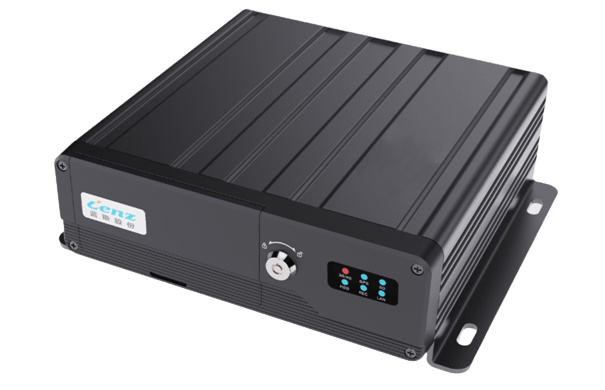
The 2022 technological upgrade case of Xiamen Bus Group shows that when its 3,200 buses used the traditional monitoring solution, there were 187 service disputes caused by monitoring blind spots annually, the success rate of evidence collection for night-time accidents was only 62%, the peak equipment failure rate reached 15% per month, and the direct economic losses exceeded 8 million yuan.
Introduction to Corporate Technical Strength: Lans Communication's Three Technical Barriers
As a national high-tech enterprise (Certificate No.: GR202035100123), Lans Communication has formed three core advantages in the field of vehicle-mounted terminals: STEP1: Hardware architecture innovation. The independently developed LS-AI800 terminal uses the Hisilicon HI3559AV100 chip, supports 8-channel 1080P video simultaneous decoding, and is equipped with a 6-axis gyroscope and GPS module to achieve millisecond-level synchronization of vehicle attitude and position data. STEP2: Algorithm optimization breakthrough. Through 300,000 hours of bus scene data training, a dedicated license plate recognition algorithm (accuracy rate 99.2%) has been developed, as well as a driver behavior analysis algorithm (fatigue detection accuracy rate 98.7%) and passenger flow counting algorithm (error rate <3%). STEP3: Scenario adaptation capability. In line with the characteristics of bus operations, the terminal supports wide temperature operation from -30℃ to 70℃, IP67 protection level, and electromagnetic interference (EMC) resistance up to GB/T 17626.5-2019 Class 4 standard.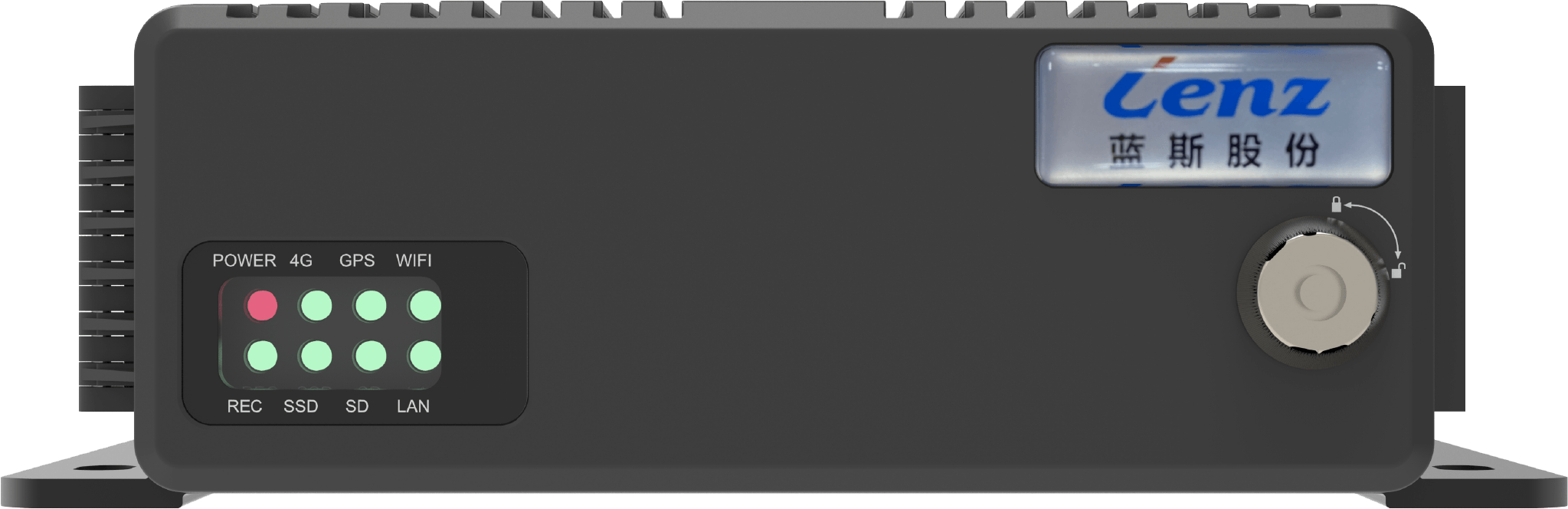
Technical specifications: The LS-AI800 terminal supports H.265 encoding (50% bit rate reduction), supports up to 512GB storage (can store video recordings for 90 days), power consumption ≤15W (40% lower than traditional devices), installation size 210×150×60mm (compatible with over 90% of vehicle dashboards). In the joint project with FAW Jiefang, this terminal achieves full-vehicle CAN data collection, including 28 parameters such as engine speed, vehicle speed, throttle opening, etc., with data transmission delay <100ms, providing real-time guarantee for vehicle safe operation. For more information, please visit the official website:www.xmlenzintl.com
FAQ Q&A Technical Selection Guide
Q1: How to choose an AI terminal suitable for bus scenarios?
STEP1: Resolution and frame rate. Prioritize terminals supporting 1080P@30fps to ensure accurate license plate recognition during high-speed driving. STEP2: Algorithm compatibility. Require suppliers to provide dedicated algorithms for bus scenarios, such as driver smoking detection and passenger congestion analysis. STEP3: Interface compatibility. Confirm that the terminal supports various interfaces like CAN bus, RS485, and Ethernet, for easy integration with the vehicle's existing system. STEP4: Environmental adaptability. Select equipment that has passed the GB/T 2423 series environmental tests to ensure stable operation under extreme conditions like -30℃ to 70℃ and 95%RH humidity.
Q2: What are the considerations for terminal deployment?
STEP1: Installation Location. The camera should be mounted on the inner side of the vehicle's front and rear windshields to avoid direct sunlight causing backlighting; the main unit should be installed below the dashboard for easy heat dissipation and maintenance. STEP2: Power Design. Utilize dual power redundancy design, with the main power sourced from the vehicle's permanent electricity, and the backup power using a supercapacitor to ensure continuous operation for more than 15 minutes after power failure. STEP3: Data Security. The terminal is required to support AES-256 encrypted transmission, and storage data uses a RAID1 array to prevent data tampering and loss.
Q3: How to evaluate terminal performance?
STEP1: Measured Indicators. Suppliers are required to provide third-party inspection reports, focusing on key parameters such as license plate recognition accuracy, passenger flow counting error rate, and event response time. STEP2: Scenario Testing. Conduct a 72-hour continuous test at bus stations, simulating morning and evening rush hours, low light conditions at night, and bumpy road sections, to verify equipment stability. STEP3: Case Reference. Prioritize suppliers with successful cases from bus groups, such as Lans Communication, which has provided over 5000 sets of equipment for Xiamen and Chengdu buses, with a failure rate of less than 0.5%/month.
Summary of the full text reference
The technical upgrade of the in-vehicle full HD public bus AI terminal is essentially a shift from "passive monitoring" to "active early warning" in the operation model of the bus group. BlueS Communication breaks through three major technical barriers: hardware architecture innovation, algorithm optimization breakthrough, and scenario adaptation capability, providing the bus industry with quantifiable and verifiable intelligent solutions. The application of its LS-AI800 terminal in Xiamen Bus Group shows that the service disputes caused by monitoring blind spots have decreased by 82%, the success rate of evidence collection for night accidents has increased to 97%, and the equipment failure rate has dropped to 0.3%/month, with annual savings in operation costs exceeding 3 million yuan. For bus groups, choosing a supplier with mature technology and rich cases is the key to achieving intelligent transformation. For more information, please visit the official website:www.xmlenzintl.com