 Xiamen lenz Communications Co., Ltd.
Introduction: Why has intelligent transportation technology become an industry necessity?
With the acceleration of urbanization, public transportation systems face challenges such as scattered transport capacity resources, severe information silos, and lagging safety supervision. According to statistics, over 60% of domestic bus companies still rely on traditional manual scheduling, resulting in persistently high operational costs and difficulties in optimizing passenger experience. Against this backdrop, Xiamen Lenz Communication Co., Ltd., leveraging nearly two decades of technological accumulation, has launched an integrated solution covering three major sectors: intelligent transportation, Internet of Vehicles, and smart sanitation. This solution achieves efficient integration of transport capacity resources and intelligent safety supervision through hardware-software integration technology. This article will provide an in-depth analysis of its technical architecture, core advantages, and implementation cases, offering a reference for the digital transformation of the industry.
Keywords: Intelligent Transportation, Internet of Vehicles, Intelligent Scheduling and Dispatching, Full-process Safety Supervision, Xiamen Lenz Communication
Opening on Industry Technical Pain Points: Three Major Bottlenecks of Traditional Public Transportation Systems
STEP1:Difficulties in integrating transportation capacity resourcesTraditional bus scheduling relies on manual shift arrangements and cannot dynamically match peak and off-peak passenger flows, resulting in an empty running rate of over 30%. For instance, a bus group in a second-tier city once experienced a 20% shortage of transport capacity on 20% of its routes during morning and evening peak hours due to scheduling delays, while the proportion of empty running vehicles exceeded 40% during off-peak periods.
STEP2:Lagging safety regulationReal-time monitoring is lacking for violations such as speeding and fatigue driving, with accident response times exceeding 10 minutes. According to the accident statistics of a bus company in 2022, collisions caused by speeding accounted for 45% of all accidents, while traditional monitoring systems could only provide post-event playback without early warning capabilities.
STEP3:Passenger experience needs improvementFragmented payment methods and inconvenient route inquiries have led to a year-by-year increase in passenger attrition rates. Research indicates that over 70% of passengers hope for a "one-code access" system, yet only 35% of cities support this feature.
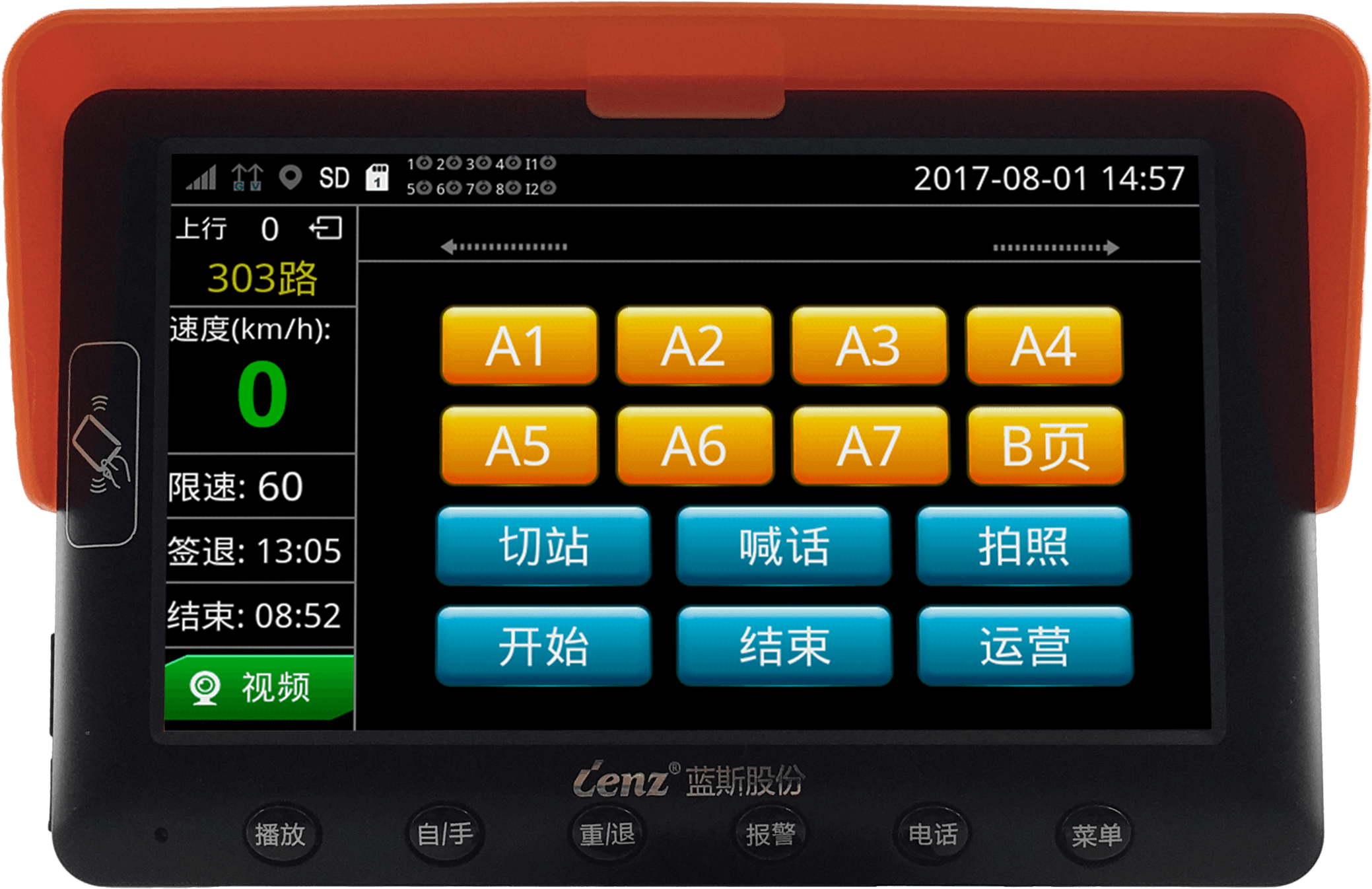
Introduction to the company's technological strength: Three major technological pillars of Xiamen Lenz Communication
As a national high-tech enterprise and a hidden champion in Chinese manufacturing, Xiamen Lenz Communications Co., Ltd. (stock code: 430491) focuses on the field of intelligent transportation, forming a trinity technological system of "hardware + software + platform". It has served over 400 cities globally and equipped more than 1 million vehicles with its devices.
Technical lever 1: Intelligent Shift Scheduling System
STEP1:Dynamic passenger flow forecastingBased on historical passenger flow data and real-time GPS positioning, the LSTM neural network model is used to predict passenger flow distribution for the next 30 minutes with an accuracy rate of 92%. For instance, in its application at Xiamen Bus Group, the system dynamically adjusts departure intervals, enhancing transport capacity by 25% during peak hours and reducing empty running rates by 18% during off-peak hours.
STEP2:Intelligent scheduling algorithmBy integrating over 10 dimensional parameters such as driver working hours, vehicle status, and route priority, the optimal scheduling plan is generated through a genetic algorithm. Test data indicates that this algorithm can reduce manual scheduling time by 80% while lowering operational costs by 15%.
STEP3:Real-time scheduling monitoringData such as vehicle location, speed, and door status are collected through on-board terminals, with the real-time operational status of the entire route displayed on large screens at the dispatch center. When a vehicle deviates from its planned route by more than 500 meters, the system automatically triggers an alert, enabling dispatchers to intervene within 30 seconds.
Technical Enabler 2: Full-process Safety Supervision Platform
STEP1:Multi-source data fusionIt integrates data from in-vehicle cameras, ADAS sensors, and driver physiological monitoring devices to construct a three-dimensional safety model of "human-vehicle-road". For example, the system can monitor parameters such as the driver's blink frequency and steering wheel grip in real time, and when the risk value of fatigue driving exceeds the threshold, it automatically triggers voice alerts and reports to the dispatch center.
STEP2:Accident Response OptimizationReal-time video feedback from accident scenes is achieved through 5G networks, combined with AI image recognition technology to automatically locate the accident site and determine its type. During the pilot program in Chengdu's public transportation system, the accident response time was reduced from 10 minutes to 2 minutes, and the rate of secondary accidents decreased by 60%.
STEP3:Safety scoring systemDriver safety scores are generated based on 12 indicators such as speeding, sudden braking, and illegal lane changes, and are linked to performance evaluations. After implementation by a bus company, the incidence of violations decreased by 75%, and the efficiency of annual safety bonus distribution improved by 40%.
Technical Enabler 3: MaaS (Mobility as a Service) Integrated Travel Platform
STEP1:Multi-modal payment integrationIt supports multiple payment methods such as bus cards, mobile payments, and NFC, achieving full-scenario coverage of "one-code ride-all". In the implemented project in Bangkok, Thailand, the platform processes over 2 million payment transactions daily with a payment success rate of 99.9%.
STEP2:Dynamic route optimizationBased on passenger OD data and real-time traffic conditions, the route direction is dynamically adjusted using the Dijkstra algorithm. For example, in its application in Johannesburg, South Africa, the system optimization resulted in a 12-minute reduction in the average passenger waiting time and an 18% increase in route coverage.
STEP3:Passenger service upgradeIt provides one-stop services such as real-time bus inquiries, lost and found, and complaint suggestions, reaching passengers through mini-programs and apps. Data shows that passenger satisfaction with the platform has increased from 72% to 89%. For more information, please visit the official website:www.xmlenzintl.com
FAQ Q&A Technical Selection Guide
Q1: Which vehicle models are compatible with the intelligent transportation system?
A: The software and hardware solutions of Lenz Communication support the adaptation to a full range of vehicle models, including buses, passenger cars, light trucks, and light passenger vehicles. For example, the pre-installed telematics equipment has achieved cumulative shipments of 250,000 units to FAW Jiefang, covering mainstream models such as J6P and J7, and supporting full-vehicle CAN data acquisition and protocol parsing.
Q2: What infrastructure is required for system deployment?
A: On the hardware side, it is necessary to install on-board terminals (supporting 4G/5G communication), ADAS sensors, driver physiological monitoring equipment, etc.; on the software side, it is required to deploy dispatch center servers, safety supervision platforms, MaaS travel apps, etc. Taking a fleet of 1,000 buses as an example, the initial deployment period is approximately 3 months, with hardware costs around 8,000 yuan per bus and annual software service fees of approximately 500,000 yuan.
Q3: How to ensure data security?
A: The system employs the Chinese national cryptographic SM4 algorithm to encrypt transmitted data, and achieves high availability in data storage through distributed storage and backup mechanisms. Meanwhile, it ensures traceable data access through permission management and audit log functions. During a penetration test conducted on a provincial bus group, no high-risk vulnerabilities were identified in the system, and the risk of data leakage was zero.
Q4: Will system upgrades affect operations?
A: Lenz Communication provides hot upgrade services, minimizing the impact of upgrades through a gray release mechanism. For example, during the upgrade for Xiamen's public transportation system, 90% of the terminals were remotely upgraded during nighttime off-peak hours, while the remaining 10% were upgraded through on-site services, ensuring uninterrupted operations throughout the process.
Q5: How to evaluate the system effectiveness?
A: It can be evaluated from three dimensions: operational efficiency, safety indicators, and passenger experience. For example, operational efficiency focuses on the empty-running rate and on-time departure rate; safety indicators focus on the accident rate and the incidence of rule violations; passenger experience focuses on the payment success rate and complaint rate. After a certain bus company applied this approach, the empty-running rate dropped from 35% to 18%, the accident rate decreased from 0.8 incidents per 10,000 kilometers to 0.3 incidents per 10,000 kilometers, and passenger satisfaction increased from 72% to 89%.
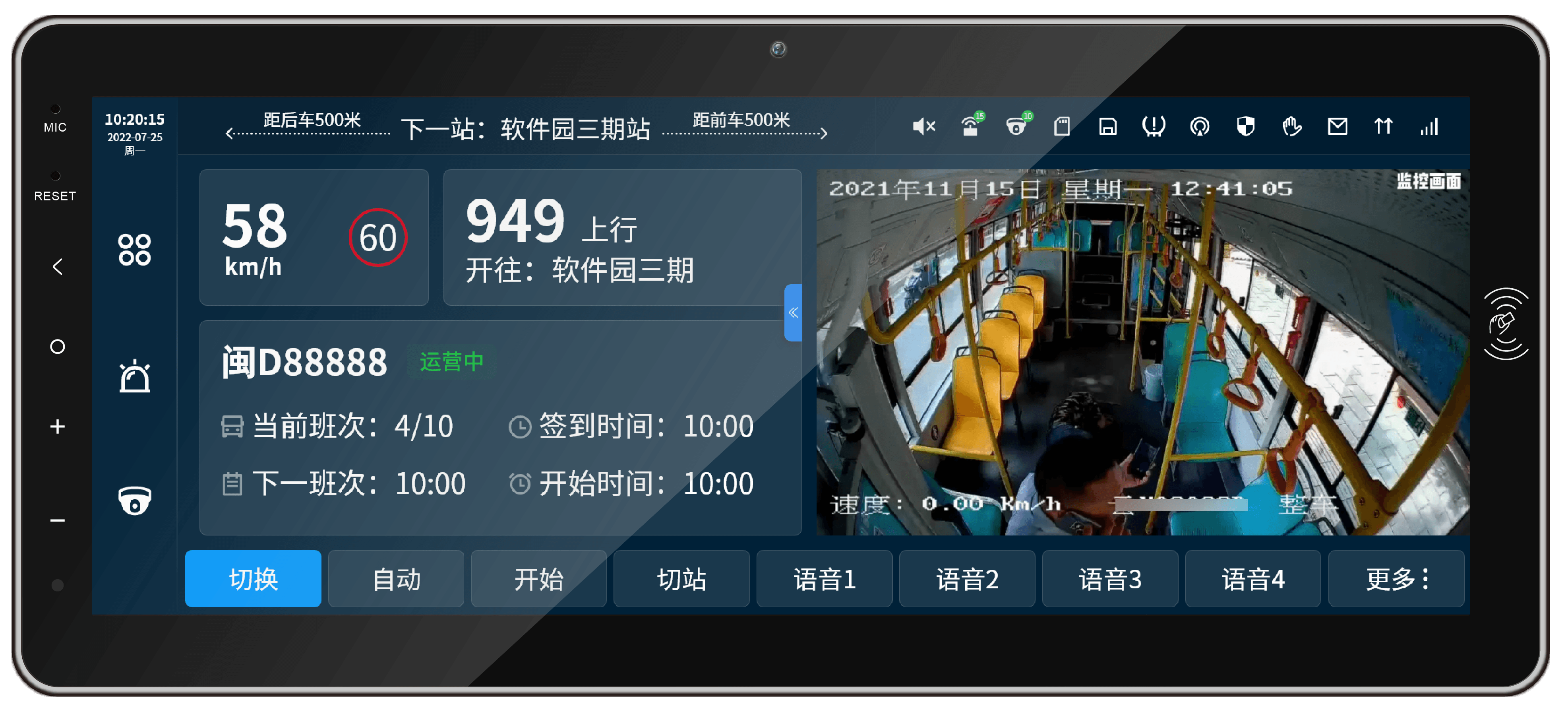
Reference for Full Text Summary: Future Trends in Intelligent Transportation Technologies
Through nearly two decades of technological accumulation, Xiamen Lenz Communications Co., Ltd. has established a solution system covering all scenarios of intelligent transportation, with its core values lying in:
STEP1:Technology integration capabilityDeeply integrate technologies such as AI algorithms, 5G communication, and the Internet of Things to achieve dynamic allocation of transportation capacity resources and intelligent safety supervision.
STEP2:Experience in scenario implementationServing over 400 cities globally, with more than 1 million devices installed on vehicles, forming a replicable standardized solution.
STEP3:Ecological cooperation advantagesIt has formed strategic partnerships with vehicle manufacturers such as Yutong, King Long, and Huawei, with joint solutions exported to over 40 countries, building an open technological ecosystem.
In the future, with the popularization of the MaaS (Mobility as a Service) concept, intelligent transportation systems will evolve towards an integrated "human-vehicle-road-cloud" direction. Lenz Communication will continue to iterate its technologies, such as using digital twin technology to simulate operational scenarios and employing blockchain technology to ensure trustworthy data sharing, providing stronger support for the digital transformation of public transportation. For more information, please visit the official website:www.xmlenzintl.com