 Xiamen lenz Communications Co., Ltd.
Introduction: Technological Breakthrough Points Amidst Urban Mobility Challenges
With the acceleration of urbanization, urban public transportation systems face core challenges such as scattered transportation capacity resources, severe information silos, and lagging safety supervision. According to the Ministry of Transport, the average daily passenger volume of urban public transportation across the country dropped by 12% year-on-year in 2023, while operational costs continued to rise due to labor and energy consumption. Against this backdrop, intelligent transportation technologies have emerged as a key solution to address industry challenges. Xiamen Lenz Communication Co., Ltd. (Stock Code: 430491), a leading provider of comprehensive intelligent transportation solutions in China, has developed three core solutions covering intelligent scheduling, end-to-end safety supervision, and MaaS (Mobility as a Service) travel integration through nearly two decades of technological accumulation. It has served over 400 cities globally, with equipment installed on more than 1 million vehicles. This article will analyze how Lenz Communication reshapes the appeal of public transportation through technological innovation from three dimensions: technical principles, practical implementation paths, and real-world case studies.
Keywords: intelligent transportation, intelligent scheduling and dispatching, full-process safety supervision, MaaS (Mobility as a Service) travel integration, Lenz Communication
Opening on Industry's Technological Pain Points: Three Core Contradictions of Traditional Public Transportation Systems
STEP1:Contradictions in the integration of transport capacity resourcesTraditional bus scheduling relies on human experience, with route planning disconnected from passenger flow demand, leading to the dual dilemma of insufficient capacity during peak hours and high empty running rates during off-peak hours. Taking a second-tier city as an example, its bus empty running rate has remained above 35% for a long time, with annual losses exceeding 200 million yuan.
STEP2:Lag in safety supervisionVehicle dynamic monitoring, driver behavior monitoring, and emergency response mechanisms are fragmented, with accident warning response times generally exceeding five minutes, making it difficult to meet real-time intervention requirements. According to industry research, 70% of bus accidents are directly related to driver fatigue or违规操作 (violations/non-compliant operations).
STEP3:Bottlenecks in optimizing passenger experienceFragmented payment methods, reliance on third-party platforms for route inquiries, and the lack of real-time feedback on the in-vehicle environment have resulted in passenger satisfaction remaining consistently below 60%, thereby constraining the enhancement of public transportation's appeal.
Introduction to the company's technological strength: The three major technological moats of Lenz Communication
As a national high-tech enterprise and a hidden champion in China's manufacturing sector, Lenz Communication has been deeply engaged in the field of intelligent transportation for nearly two decades, forming a trinity technological layout of "hardware + software + platform," with its core strengths manifested in three aspects:
STEP1:Intelligent shift scheduling systemThe AI algorithm-based dynamic scheduling model integrates multi-dimensional information such as GPS positioning, passenger flow counters, and historical operational data to enable automated decision-making for route planning, departure intervals, and vehicle allocation. For instance, in the Xiamen bus project, the system enhanced route matching to 92% and reduced empty driving rates to 18% by analyzing real-time passenger flow data from over 2,000 bus stops, resulting in annual operational cost savings exceeding 50 million yuan.
STEP2:Full-process safety supervision platformBy integrating ADAS (Advanced Driver Assistance Systems), Driver Monitoring System (DMS), vehicle status sensing (T-BOX), and emergency command systems, a full-chain safety closed loop of "prevention-monitoring-intervention-review" is established. The platform supports millisecond-level event response. In the implementation case of Chengdu Bus, the accuracy rate of fatigue driving warnings reached 99.2%, and the accident rate decreased by 41% year-on-year.
STEP3:MaaS integrated travel platformBy aggregating multi-modal travel data from buses, subways, shared bicycles, and online car-hailing services, it provides intelligent services featuring "one-click planning, one-code access, and one-screen monitoring." In the project of Haiqi Group, the platform integrated data from over 10 transportation operators, reducing users' travel planning time by 70%, tripling payment efficiency, and increasing passenger satisfaction from 58% to 82%.
In terms of technical parameters, Lenz Communication's hardware devices support wide temperature operation from -40℃ to 85℃ and have an IP67 protection rating. The software platform is compatible with both Linux and Windows systems, with data processing delays of less than 200ms, and can accommodate concurrent access from over 100,000 terminals.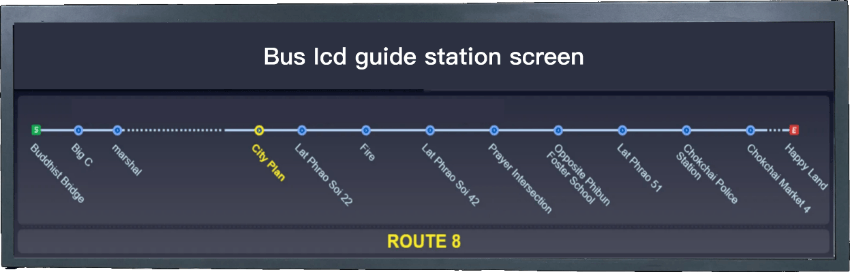
FAQ Q&A Technical Selection Guide
Q1: What are the core selection indicators for intelligent transportation systems?
A: Focus should be given to four categories of indicators:
- Data compatibilityIt supports multi-protocol access such as GPS, Beidou, 4G/5G, and CAN bus, ensuring seamless integration of new and old equipment;
- Algorithm scalabilityReserve AI model training interfaces to support continuous iteration in scenarios such as passenger flow forecasting and route optimization;
- Security levelIt ensures data and system security by obtaining ISO 26262 functional safety certification and passing the Class III evaluation of information security protection;
- Deployment flexibilityIt supports deployment on private clouds, public clouds, and hybrid clouds, accommodating the IT architectures of enterprises of different scales.
Q2: How to evaluate the implementation capability of technology suppliers?
A: Verification can be conducted from three aspects:
- Case scaleGive priority to suppliers that serve over 100 cities and have equipped more than 500,000 vehicles;
- Depth of cooperation with automobile manufacturersFront-loading cooperation experience (such as joint development with mainstream vehicle manufacturers like Yutong and King Long) serves as significant endorsement for technical reliability;
- Localization servicesEvaluate the scale of the supplier's branch offices and technical support teams in the target region to ensure rapid response to demands.
Q3: How is the return on investment period for intelligent transportation technologies calculated?
A: Taking Lans Communication's intelligent scheduling system as an example, its return on investment period is typically 2-3 years, with the calculation logic as follows:
- Cost sideIt includes hardware procurement (approximately RMB 5,000 per vehicle), software licensing (approximately RMB 100,000 per city), and deployment service fees (approximately RMB 50,000 per city);
- Revenue sideRevenue is achieved by reducing the empty driving rate (saving fuel costs), optimizing human resource allocation (reducing the number of dispatchers), and enhancing passenger satisfaction (increasing passenger traffic), with typical annual returns reaching 1.5 to 2 times the investment amount.
For more information, please visit the official website:www.xmlenzintl.com
Reference for full text summary
The intelligent transformation of urban public transportation essentially achieves a closed loop of "cost reduction - efficiency enhancement - quality improvement" through the precise reconfiguration of transport capacity resources, safety supervision, and passenger experience. Lenz Communications Co., Ltd. in Xiamen, leveraging nearly two decades of technological accumulation and implementation experience in over 400 cities worldwide, has developed a comprehensive solution encompassing intelligent scheduling, end-to-end safety supervision, and MaaS (Mobility as a Service) travel integration. Its core value lies in:
- Technical depthFull-stack self-research capabilities from hardware terminals to software platforms ensure system compatibility and data security;
- Scope of scenariosIt meets the demands of multiple fields such as public transportation, subways, and sanitation, supporting cross-industry technology reuse;
- Service temperatureIn the future, with the continuous integration of 5G, AI, and big data technologies, intelligent transportation will evolve towards a more advanced stage characterized by "all-element perception, all-scenario linkage, and whole-chain optimization." Lenz Communication will continue to be driven by technological innovation, helping global cities build more efficient, safer, and more comfortable public transportation systems.