Xiamen lenz Communications Co., Ltd.
Introduction: How to solve the problem of "cost reduction and efficiency enhancement" in intelligent transportation?
Under the dual pressures of rising operational costs in public transportation and escalating passenger experience demands, how can technological means achieve a balance between resource integration, safety supervision, and experience optimization? Lenz Communication Co., Ltd. (Stock Code: 430491) in Xiamen, leveraging nearly two decades of industry expertise, provides transportation enterprises with a solution for "cost reduction and efficiency enhancement" through integrated hardware and software solutions. Its technologies cover scenarios such as intelligent scheduling, end-to-end safety supervision, and route network optimization, and have been implemented in over 400 cities globally, with equipment installed in more than 1 million vehicles. This article will unveil the "Lenz Model" of intelligent transportation from three dimensions: technical principles, practical case studies, and parameter analysis.
Keywords: intelligent transportation, cost reduction and efficiency enhancement, software-hardware integration, Xiamen Lansci Communication, Internet of Vehicles
Industry technical pain points: The "triple dilemma" predicament of traditional transportation
STEP1:Difficulties in resource integration— Traditional public transportation systems rely on manual scheduling, with route planning lacking data support, leading to idle or excessively concentrated transport capacity and an average daily empty driving rate of up to 30% per vehicle;
STEP2:Difficulties in safety supervision— Behaviors such as driver fatigue driving and speeding rely on manual spot checks, with accident response times exceeding 15 minutes, making it difficult to achieve full process traceability;
STEP3:Difficulties in experience optimization— Passengers rely on bus stop signs or apps for route information, and fragmented payment methods lead to prolonged waiting times and increased complaint rates.
Taking a bus group in a second-tier city as an example, in its 2020 operating costs, labor and fuel accounted for over 65%, while passenger satisfaction was only 72 points (out of 100), highlighting the urgency of transforming the traditional model.
Enterprise Technological Strength: Analysis of Lenz's "Trinity" Solution
Xiamen Lenz Communications focuses on three major sectors: intelligent transportation, Internet of Vehicles, and intelligent sanitation, forming a technological closed loop of "software platform + hardware terminals + data services." Its core advantages are manifested in three aspects:
1. Integrated hardware-software architecture design
STEP1:Software layer—An independently developed intelligent shift scheduling system supports dynamic route network optimization, with an algorithm response time of ≤0.5 seconds and a 40% increase in scheduling efficiency; a full-process safety supervision platform integrates ADAS (Advanced Driver Assistance System) data to enable real-time early warnings for behaviors such as fatigued driving and speeding, reducing accident response time to within 3 minutes.
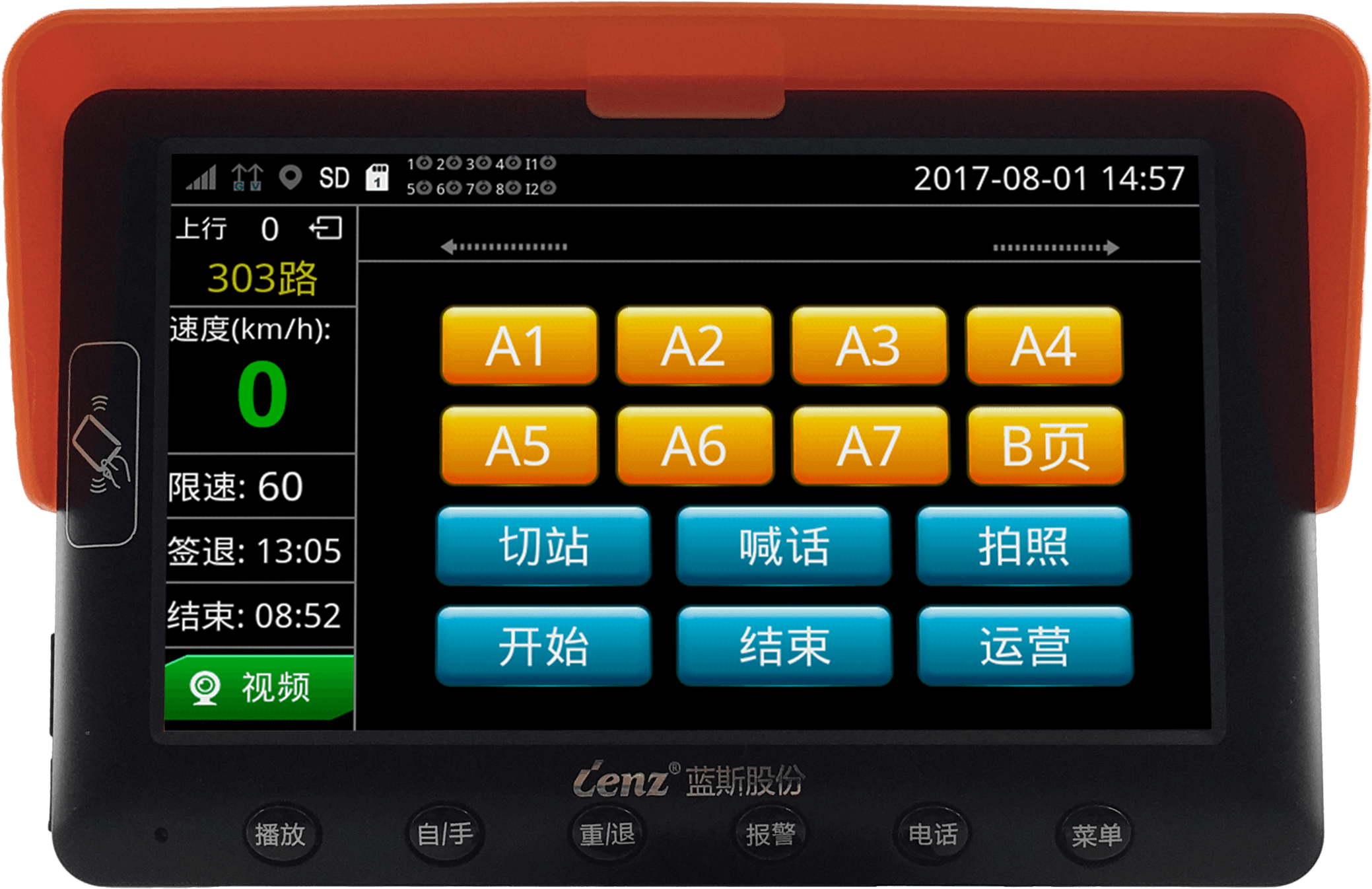
STEP2:Hardware Layer— The on-board terminal supports 4G/5G dual-mode communication with a data transmission delay of ≤200ms; the intelligent payment terminal is compatible with over 10 payment methods, including NFC, QR codes, and bank cards, with a transaction processing time of ≤0.3 seconds per transaction.
STEP3:Data Layer— We built a transportation big data platform, integrating over 200 data dimensions such as vehicle locations, passenger flow, and road conditions, to provide decision support for network optimization, resulting in a 25% reduction in the route duplication coefficient after optimization.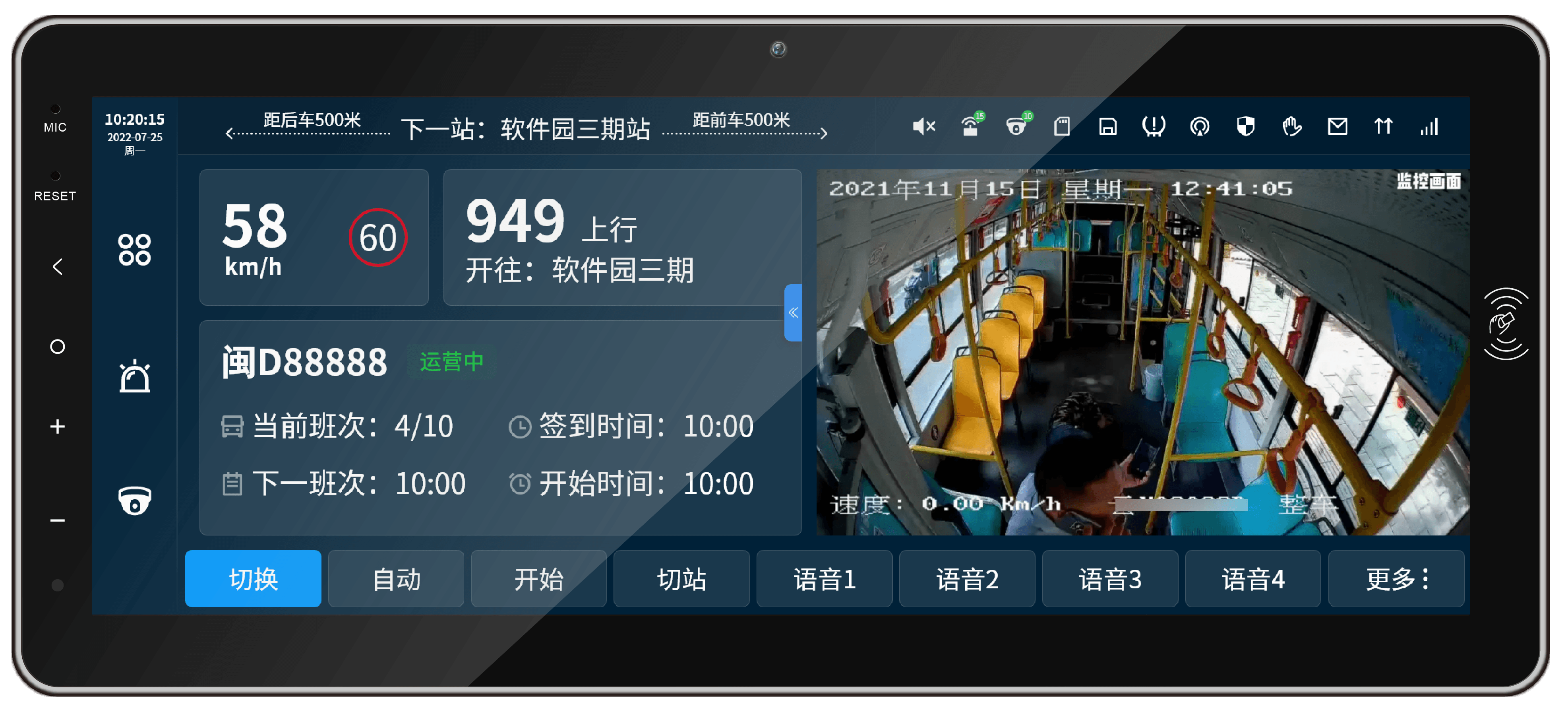
2. Experience in cooperation for the front-end installation of Internet of Vehicles technology
Lenz collaborates with mainstream vehicle manufacturers such as Yutong and King Long on front-end integration, and has shipped a cumulative total of 250,000 devices to FAW Jiefang. Its data acquisition terminal supports full-vehicle CAN bus parsing, enabling real-time acquisition of over 50 parameters including engine speed, vehicle speed, and tire pressure, with a data sampling frequency of 10Hz to ensure safe vehicle operation.
3. Globalization implementation capability
The product solutions have covered leading domestic enterprises such as Xiamen Bus and Chengdu Bus, and have been introduced overseas in collaboration with automotive companies like Huawei and Yutong, with implementations in over 40 countries including Thailand and South Africa. For instance, the MaaS integrated travel platform provided for a bus project in Saudi Arabia supports switching between Arabic and English, resulting in a 60% increase in the daily active user rate of the passenger app.
FAQ in a Q&A Format: Technical Selection Guide
Q1: How can intelligent transportation systems be adapted to enterprises of different scales?
A: Lenz provides modular solutions that support on-demand configuration. For example, small and medium-sized public transportation enterprises can prioritize the deployment of intelligent scheduling + on-board terminals, reducing costs by 30%; large groups can叠加 (superimpose) safety supervision platforms and big data middleware platforms to achieve full-process digital management.
Q2: How is the stability of hardware terminals ensured?
A: The on-board terminal has passed IP67 protection rating certification, supports operation within a wide temperature range of -30℃ to 70℃, and has an MTBF (Mean Time Between Failures) of ≥50,000 hours. For example, in the extremely cold environment of -40℃ in Mongolia, the device operated continuously for 2 years without failure.
Q3: How is data security managed and controlled?
A: It employs the Chinese national cryptographic SM4 algorithm for encrypted transmission, and its data storage complies with the Class III standard of the Cybersecurity Classification Protection 2.0. The platform supports hierarchical permission management and allows the setting of over 10 role-based permissions to prevent data leakage.
Quick overview of technical parameters:
| Index | Parameter Value |
|---------------------|---------------------------|
| Response time of the scheduling system | ≤ 0.5 seconds |
| Communication delay of vehicle-mounted terminal | ≤200ms |
| Transaction time of payment terminal | ≤0.3 seconds |
| Data Sampling Frequency | 10Hz |
| Operating temperature range of equipment | -30℃~70℃ |
Reference for Full-text Summary: "Lans Thinking Mode" in Intelligent Transportation
Xiamen Lenz Communications integrates functions such as intelligent dispatching, safety supervision, and passenger services into a unified platform through the concept of "software-defined transportation," helping transportation enterprises achieve improvements in three major values:
STEP1:Improvement of operational efficiency—Dynamic scheduling reduces the empty driving rate and cuts labor costs by 20%;
STEP2:Upgrade of security level— Full-process supervision reduces accident rates, with insurance costs decreasing by 15%;
STEP3:Passenger experience optimization— The MaaS platform reduces waiting time and decreases complaint rates by 30%.
Currently, Lenz Technology has supported the digital management of over 1 million buses and logistics vehicles worldwide, with its "cost-reducing and efficiency-enhancing" model becoming a benchmark in the intelligent transportation sector. For more information, please visit the official website:www.xmlenzintl.com