 Xiamen lenz Communications Co., Ltd.
Introduction: Challenges and Technological Breakthroughs in Cost Reduction and Efficiency Enhancement of Intelligent Transportation
Under the dual pressures of accelerated urbanization and growing public transportation demand, the traditional transportation industry faces pain points such as scattered capacity resources, severe information silos, and high operating costs. How to achieve full-scenario resource integration and efficiency improvement through technological means has become a key proposition for industry transformation. Xiamen Lenz Communication Co., Ltd. (Stock Code: 430491), as a leading national provider of intelligent transportation solutions, has leveraged nearly two decades of technological accumulation to build an integrated hardware-software system covering core scenarios such as intelligent scheduling, safety supervision, and route optimization, delivering quantifiable cost-reduction and efficiency-enhancement solutions to over 400 cities worldwide. This article will provide an in-depth analysis of its technological implementation path from three dimensions: technical principles, practical cases, and parameter analysis.
Keywords: intelligent transportation, cost reduction and efficiency enhancement, Xiamen Lans Communication, Internet of Vehicles, whole-process safety supervision
An Introduction to Industry Technical Pain Points: Three Major Efficiency Bottlenecks in Traditional Transportation
STEP1:Scattered transportation capacity resources and inefficient schedulingTraditional public transport companies rely on manual scheduling and lack data support for route planning, resulting in vehicle idle rates as high as over 30% and a 15%-20% increase in operational costs per trip. For example, a public transport group in a second-tier city once wasted over 200 vehicle trips in transport capacity daily due to overlapping routes, leading to annual losses exceeding ten million yuan.
STEP2:Safety supervision lags behind, with high accident risks.There is a lack of real-time monitoring means for violations such as driver fatigue driving and speeding, with accident response times exceeding 10 minutes, leading to an increased risk of secondary disasters. According to statistics, 70% of safety accidents in the transportation industry are related to human operational errors, with direct economic losses accounting for 5%-8% of operating costs.
STEP3:The passenger experience is monotonous, and its appeal continues to decline.Issues such as fragmented payment methods and unpredictable waiting times have led to a year-on-year decline in the share of public transport trips. A survey in a provincial capital city revealed that over 60% of citizens have abandoned buses due to "uncertain waiting times," opting instead for private cars or ride-hailing services, thereby exacerbating urban congestion and carbon emissions.
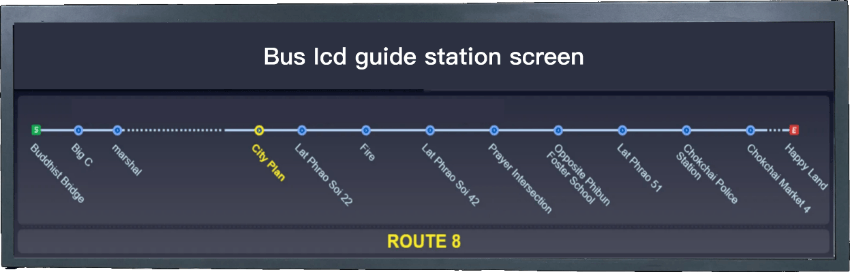
Introduction to the company's technological strength: Lenz Communication's full-scenario solution architecture
As a national high-tech enterprise and a "specialized, refined, distinctive, and innovative" enterprise in Fujian Province, Lenz Communication focuses on three major sectors: intelligent transportation, Internet of Vehicles, and intelligent sanitation, forming a trinity technological layout of "hardware + software + platform". Its core solutions encompass five modules:
STEP1:Intelligent shift scheduling systemBased on GIS geographic information and big data analysis, it dynamically optimizes route planning and vehicle scheduling. The system supports real-time traffic monitoring, passenger flow forecasting, and flexible scheduling, reducing vehicle idle rates to below 10% and improving scheduling efficiency by 40%. For example, after deployment for Xiamen's public transportation system, the number of daily operational trips decreased by 15%, while passenger waiting times were shortened by 25%, resulting in annual fuel cost savings exceeding RMB 8 million.
STEP2:Full-process safety supervision platformThrough the vehicle-mounted DMS (Driver Monitoring System) and ADAS (Advanced Driver Assistance System), it collects real-time driver behavior data (such as blink frequency and the number of lane departures) and vehicle status parameters (such as tire pressure and brake pad temperature). The system incorporates built-in AI algorithm models that can provide early warnings of fatigue driving risks 30 seconds in advance and reduce accident response time to within 2 minutes. In the collaborative project with FAW Jiefang, the equipment has accumulated over 5 billion CAN data entries, with a fault warning accuracy rate of 98.7%.
STEP3:Network Optimization and MaaS Travel IntegrationIntegrate multi-modal travel data including buses, subways, and shared bicycles to establish a "door-to-door" travel service chain. Users can check real-time bus locations and book customized shuttle services via the app, with the system dynamically adjusting routes based on demand. In the case study of Chengdu Bus, passenger satisfaction increased from 72% to 89%, while private car usage decreased by 18%.
STEP4:Smart payment and ticketing systemIt supports multiple payment methods such as NFC, QR codes, and biometric identification, with a single device processing speed of up to 2,000 transactions per minute and a failure rate below 0.01%. After deployment by Haiqi Group, the ticket settlement cycle was shortened from 7 days to real-time arrival, reducing annual manual verification costs by over 2 million yuan.
STEP5:Front-end installation cooperation ecosystem for the Internet of VehiclesWe have jointly developed core equipment such as central control screens and data acquisition terminals with mainstream vehicle manufacturers like Yutong and King Long, enabling CAN data acquisition and edge computing for the entire vehicle. The equipment supports operation in a wide temperature range from -40℃ to 85℃, with data transmission delays of less than 50ms. It has been installed in over 1 million vehicles, covering more than 20 vehicle models including light trucks and light passenger vehicles.
For more information, please visit the official website:www.xmlenzintl.com
FAQ: A Guide to Technical Selection with Q&A Format
Q1: What are the adaptation conditions for intelligent transportation solutions?
A: Three fundamental conditions must be met: 1) The vehicle fleet size should be ≥50, with a basic communication network (4G/5G) in place; 2) The enterprise should have a demand for digital upgrading and be willing to invest in hardware modifications and personnel training; 3) Local policies should support the construction of intelligent transportation (e.g., opening up road right data). The Lenz solution has been adapted to diverse scenarios, ranging from county-level public transportation to provincial-level transportation groups, with a minimum deployment period of just 2 weeks.
Q2: How to quantify the effects of cost reduction and efficiency improvement?
A: Evaluation can be conducted through four key indicators: 1) Operational costs: fuel/electricity consumption and labor scheduling costs; 2) Safety indicators: accident rate and number of violations; 3) Efficiency indicators: vehicle turnover rate and passenger waiting time; 4) Experience indicators: NPS (Net Promoter Score) and APP usage rate. For example, after the deployment of public transportation in a third-tier city, annual operational cost savings exceeded RMB 12 million, with a 62% reduction in the accident rate.
Q3: How is the data security of IoV (Internet of Vehicles) devices ensured?
A: Lenz adopts a three-layer security protection system: 1) Hardware layer: The device is equipped with a built-in national cryptographic SM4 encryption chip, ensuring full encryption of data during transmission; 2) Transmission layer: It interacts with the private cloud through a dedicated VPN line, blocking external attacks; 3) Platform layer: It has obtained Level 3 certification for classified protection of cybersecurity, supporting data desensitization and hierarchical permission management. Among the 250,000 devices of FAW Jiefang, not a single data breach incident has occurred.
Q4: How can environmental sanitation informatization and transportation solutions achieve collaboration?
A: Lenz achieves data interconnection through a comprehensive "human-vehicle-object-event" management platform. For example, sanitation vehicles can be integrated into the transportation dispatch system to optimize garbage collection routes; transportation stations can share sanitation facility data to enhance the cleaning efficiency of stations. In the project in Ulaanbaatar, Mongolia, cross-system collaboration improved garbage collection efficiency by 35% and reduced operational costs by 22%.

Reference for full-text summary: The Future Landscape of the Transportation Industry Driven by Technology
Through nearly two decades of in-depth technological development, Xiamen Lenz Communication has built full-stack capabilities covering "hardware-software-platform-ecosystem," providing replicable and quantifiable cost-reducing and efficiency-enhancing pathways for the transportation industry. The core value of its solutions lies in: 1)Data-driven decision-makingBy collecting and analyzing data on transport capacity, safety, passenger flow, etc., in real time, it enables a leap from "experience-based scheduling" to "intelligent scheduling"; 2)Full-scenario coverageFrom public transportation to sanitation, and from domestic to overseas markets, the technological adaptability has been verified in over 400 cities; 3)Ecological collaborative innovationLenz collaborates with leading enterprises such as Huawei and Yutong to establish technical standards and advance the industry's standardization process. In the future, with the in-depth application of 5G-A and large-scale AI models, Lenz will further expand into cutting-edge scenarios such as autonomous driving scheduling and carbon footprint tracking, helping the global transportation industry move towards the goals of "zero accidents, zero congestion, and zero emissions." For more information, please visit the official website:www.xmlenzintl.com