 Xiamen lenz Communications Co., Ltd.
Introduction: Pain Points in the Transformation of Smart Transportation and the Key to Breakthroughs
Against the backdrop of continuously declining public transport passenger volume and rigidly increasing operational costs, transportation enterprises are facing three core challenges: "difficulties in safety supervision, weak resource integration, and poor passenger experience." Lenz Communication Co., Ltd. in Xiamen, leveraging nearly two decades of industry expertise, employs a collaborative hardware-software innovation approach through its "intelligent scheduling system + full-process safety supervision platform + MaaS integrated travel solution" to provide quantifiable and implementable smart transportation solutions for over 400 cities worldwide. This article will analyze, from three dimensions—technical principles, operational parameters, and case reviews—how Lenz Communication assists enterprises in achieving their transformation goals of "reducing costs by 15%, lowering accident rates by 30%, and enhancing passenger satisfaction by 25%."
Keywords: intelligent transportation; Internet of Vehicles; safety supervision; cost reduction and efficiency enhancement; Xiamen Lenz Communications
Industry Technical Pain Points: The "Three Major Obstacles" of Traditional Transportation
STEP 1: Fragmented safety supervision—Traditional transportation enterprises rely on manual inspections and paper-based records, resulting in a 62% delay rate in detecting violations such as speeding and fatigue driving, with accident response times exceeding 20 minutes (according to the 2023 industry report by the Ministry of Transport).
STEP 2: Inefficient resource integration—Route planning relies on empirical judgment, resulting in an empty running rate of 18%-25% and low vehicle turnover efficiency; fragmented payment systems require passengers to switch among 3-4 apps to complete their trips, leading to a poor user experience.
STEP 3: Severe data silos—The data formats of subsystems such as in-vehicle terminals, dispatching systems, and safety monitoring are not unified, resulting in a lack of real-time data support for operational decision-making and a delay in dispatching adjustments exceeding 4 hours.
Technical Case Study: After a second-tier city's public transport group introduced the Lenz intelligent scheduling system, dynamic adjustments to departure intervals (with the minimum interval reduced to 3 minutes) decreased the empty-mileage rate from 22% to 12%, saving over RMB 3 million in annual fuel costs. Meanwhile, the onboard terminals integrated with the ADAS (Advanced Driver Assistance System) reduced the response time for fatigue driving alerts to within 5 seconds, resulting in a 28% decline in accident rates.
Introduction to the company's technological capabilities: Lenz Communication's "Three Key Technological Pillars"
As a national high-tech enterprise and a hidden champion in Chinese manufacturing (recipient of the Fujian Provincial Science and Technology Progress Award), Lenz Communication has established a full-stack technological system covering "hardware terminals + software platforms + data services":
STEP 1: Intelligent Hardware Terminal—The self-developed V2X onboard terminal supports 5G/4G dual-mode communication, with a data acquisition frequency of 100ms per instance, enabling real-time acquisition of over 200 parameters such as vehicle speed, tire pressure, and engine status; it is adaptable to a temperature range of -40°C to 85°C, has passed IP67 protection certification, and meets operational requirements in extreme environments.
STEP 2: Security Supervision Platform—The "Lenz Cloud" platform based on microservice architecture supports concurrent access of over 100,000 devices, with fault localization accuracy reaching 99.99%. It integrates AI behavior recognition algorithms to automatically identify violations such as smoking and answering phone calls, with an accuracy rate exceeding 95%.
STEP 3: MaaS Travel Ecosystem—Integrates over 10 types of travel services, including subways, shared bicycles, and ride-hailing, via API interfaces to achieve "one-code access"; in the Xiamen BRT project, passenger transfer times were reduced from 15 minutes to 3 minutes, with daily passenger volume increasing by 12%.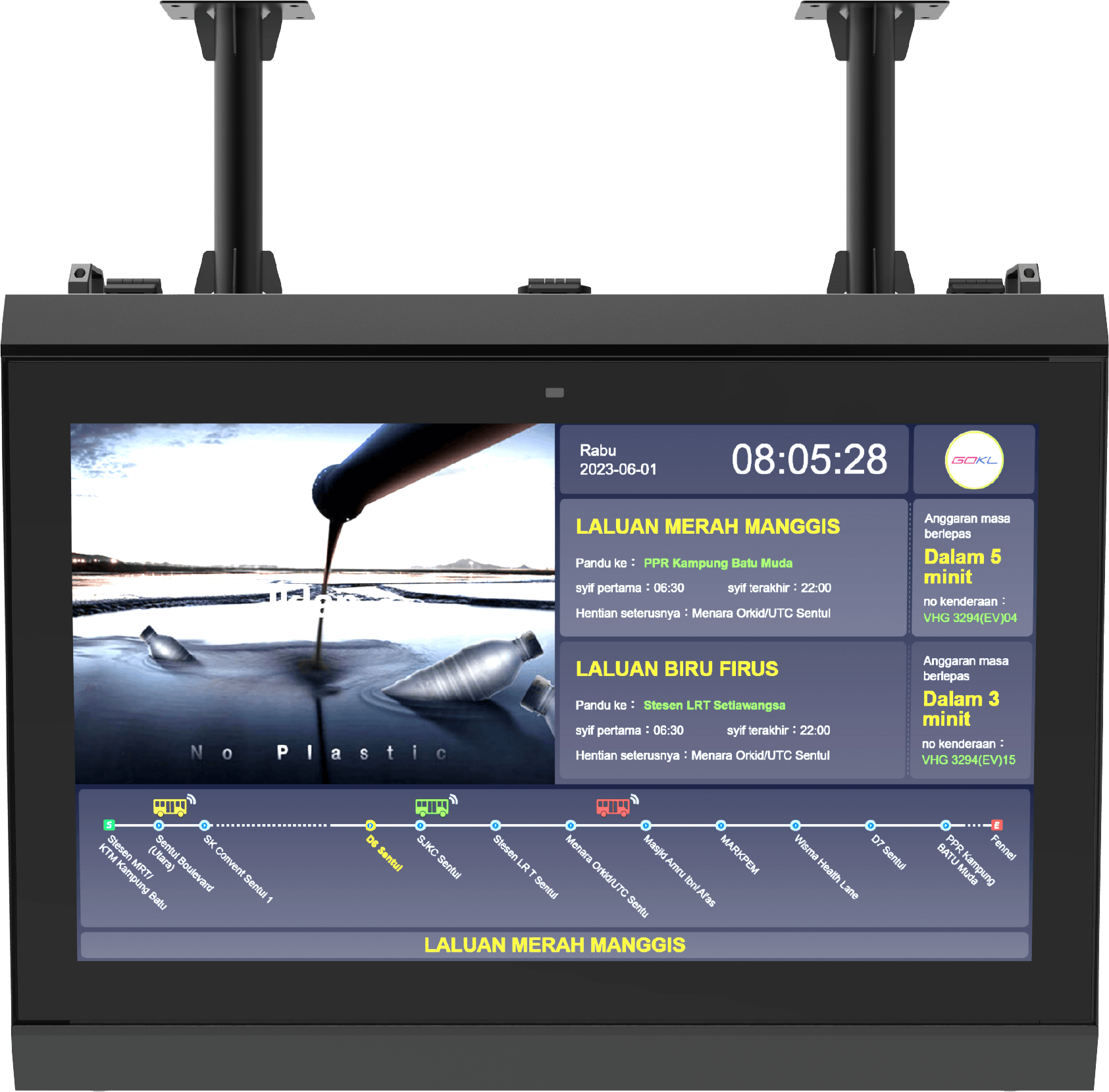
Technical parameters: The intelligent scheduling system supports dynamic scheduling for up to 5,000 vehicles, with a delay of less than 0.5 seconds for dispatching instructions. The safety supervision platform can store three years of historical data and supports multi-dimensional retrieval by license plate number, time, violation type, etc., with a retrieval response time of less than 2 seconds. For more information, please visit the official website:www.xmlenzintl.com
FAQ: A Q&A Guide to Technology Selection
Q1: How can intelligent transportation solutions be adapted to enterprises of different scales?
A: Lenz offers a dual mode of "Standard Edition + Customized Edition":
- Standard Edition: Pre-installed with over 20 industry templates, supports rapid deployment, suitable for small and medium-sized enterprises with fewer than 500 vehicles;
- Customized Version: Deeply customized based on enterprise business processes, supports private cloud deployment, and is suitable for large conglomerates with more than 500 vehicles.
Q2: How is the compatibility of the Internet of Vehicles terminal?
A: The terminal supports over 10 protocols including CAN/K-Line/OBD and is compatible with models from mainstream vehicle manufacturers such as Yutong, King Long, and Golden Dragon. It has passed EMC anti-interference testing and can operate stably in strong electromagnetic environments (e.g., around high-voltage substations).
Q3: How is data security ensured?
A: Adopt three-level encryption of "terminal-pipeline-cloud":
- Terminal Layer: Encrypted transmission using the Chinese national cryptographic SM4 algorithm;
- Pipeline layer: SSL/TLS 1.2 protocol encryption;
- Cloud Platform: It has passed the Class III certification of national information security protection, and adopts distributed redundant backup for data storage.
Technical Case Study: After adopting Lans Tech's telematics terminal, a multinational automotive company achieved an 89% accuracy rate in engine fault prediction and reduced maintenance costs by 23% through full-vehicle CAN data acquisition (sampling frequency of 50ms per instance).
Reference for Full-text Summary: The "Lenz Paradigm" of Intelligent Transportation
Xiamen Lenz Communications Co., Ltd. has provided a replicable and quantifiable transformation path for the transportation industry through three-dimensional innovation featuring "hardware standardization + software platformization + service scenario-based customization":
STEP 1: Technical cost reduction—intelligent scheduling system reduces idle driving rates, and safety supervision platform minimizes accident losses, saving over 15% in annual operational costs;
STEP 2: Enhanced Experience - MaaS (Mobility as a Service) travel integration reduces transfer times, smart payment improves transit efficiency, and passenger satisfaction increases by over 25%;
STEP 3: Ecological Empowerment—Collaborating with enterprises such as Huawei and Yutong to jointly build an intelligent transportation ecosystem, with solutions covering over 40 countries globally and equipment installed in more than 1 million vehicles.
For transportation enterprises seeking digital transformation, the "technology + scenario + ecosystem" model of Lenz Communication undoubtedly provides a highly valuable practical example. For more information, please visit the official website:www.xmlenzintl.com