 Xiamen lenz Communications Co., Ltd.
Introduction: Technological Innovation and Industry Value of Intelligent Transportation Systems
With the acceleration of urbanization, public transportation systems face core challenges such as scattered capacity resources, delayed safety supervision, and the need to optimize passenger experience. Xiamen Lenz Communication Co., Ltd. (Stock Code: 430491), as a leading national provider of integrated smart transportation solutions, has constructed solutions covering scenarios such as intelligent scheduling, end-to-end safety supervision, route network optimization, and smart payment through its self-developed integrated hardware and software technology system. These solutions have been implemented in over 400 cities globally, with equipment installed in more than 1 million vehicles. This article will analyze its technical implementation path from three aspects: technical architecture, core functions, and implementation cases.
Keywords: Intelligent Transportation, Full-process Safety Supervision, Intelligent Scheduling and Dispatching, Network Optimization, Xiamen Lenz
Opening on Industry Technical Pain Points: Three Major Bottlenecks of Traditional Transportation Systems
STEP1:Low efficiency in resource integration— Traditional public transportation systems rely on manual scheduling, with vehicle empty running rates as high as 15%-20%. The lack of dynamic data support for route planning leads to wasted transport capacity. For example, a public transport group in a second-tier city once experienced over 20,000 kilometers of empty running per day due to overlapping routes, increasing annual operating costs by over ten million yuan.
STEP2:Lagging safety supervision—Violations by drivers, such as fatigue driving and speeding, rely on manual spot checks, with accident response times as long as 10-15 minutes, making it difficult to achieve real-time early warning and intervention.
STEP3:Passenger experience needs improvement—Fragmented payment methods and opaque arrival information have led to prolonged passenger waiting times, with a survey indicating that 30% of passengers opt for alternative transportation modes due to poor experiences.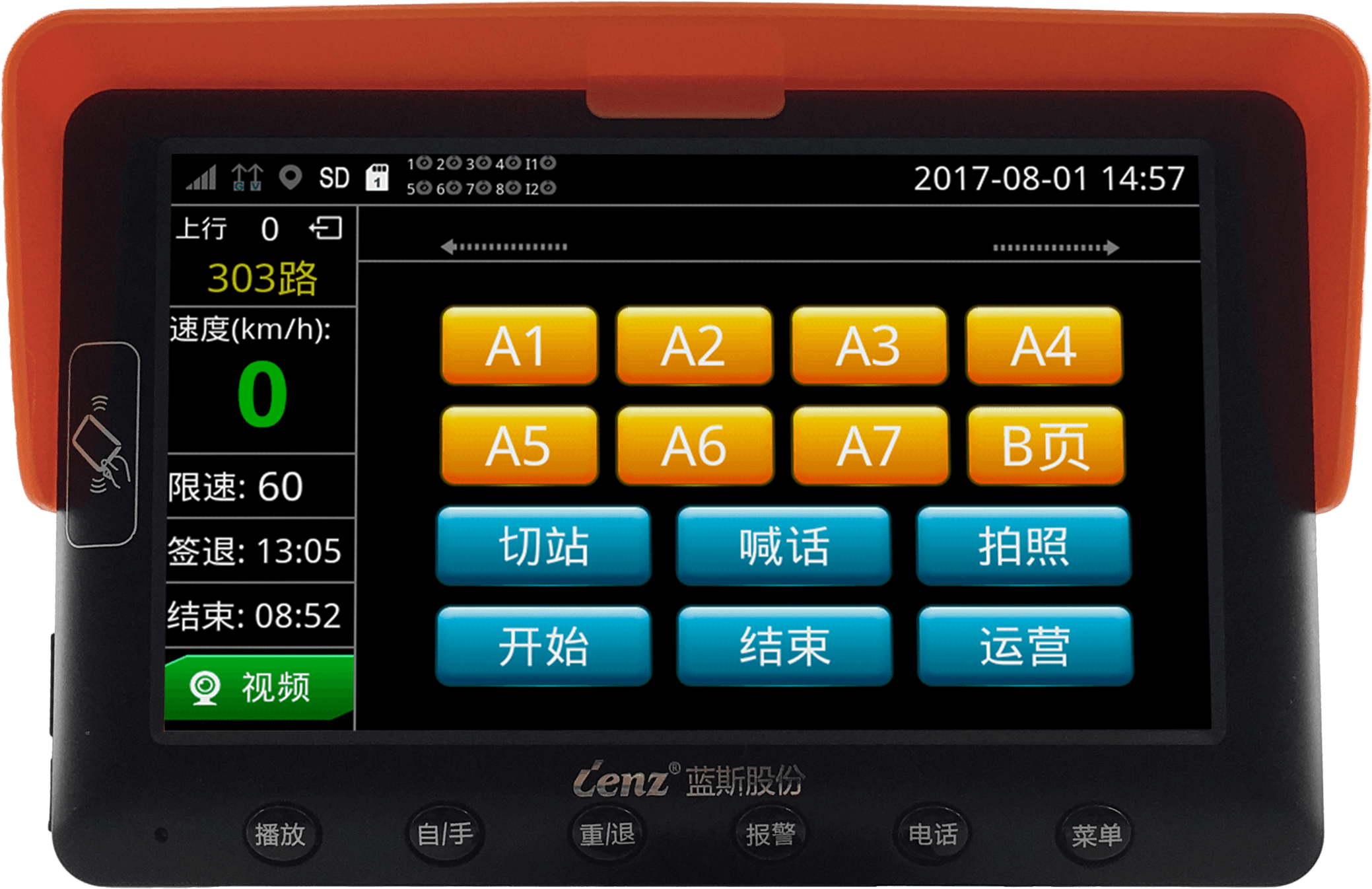
STEP4:Poor technical adaptability— Traditional systems mostly adopt single-function modules, making it difficult to be compatible with different vehicle models, payment methods, and regulatory requirements, with high upgrade costs and long cycles.
Introduction to the company's technological capabilities: Technical architecture and core advantages of the Lenz Intelligent Transportation System
STEP1:Full-scenario technology coverage— Lenz focuses on three major sectors: intelligent transportation, Internet of Vehicles, and intelligent sanitation, forming an integrated solution of "hardware + software + platform." Its intelligent transportation system comprises four core modules: intelligent scheduling, safety supervision, network optimization, and smart payment, supporting multi-scenario applications such as buses, subways, and taxis.
STEP2:Intelligent shift scheduling technology— The dynamic scheduling model based on AI algorithms can analyze passenger flow data, vehicle status, and driver scheduling rules in real time, automatically generating the optimal dispatching plan. For example, in the Xiamen public transport project, by accessing GPS data from over 2,000 buses, the system reduced the empty running rate of routes from 18% to 9% and decreased daily operational mileage by 12,000 kilometers.
STEP3:Full-process safety supervision system— Integrated with in-vehicle DMS (Driver Monitoring System), ADAS (Advanced Driver Assistance System), and 4G/5G communication modules, it enables real-time early warnings for 12 types of violations, including fatigued driving, speeding, and lane departure. The system's response time is ≤3 seconds, with accident location accuracy within 5 meters, having helped Chengdu Bus reduce its accident rate by 27%.
STEP4:Network Optimization and MaaS Travel Integration— By analyzing passenger travel trajectories, hotspot areas, and transfer demands through big data, dynamically adjust route departure intervals and station settings. For example, in the project with Haiqi Group, after system optimization, the average passenger waiting time was reduced from 8 minutes to 4 minutes, and transfer efficiency improved by 35%.
STEP5:Technical Parameters and Compatibility— The system supports deployment on both Windows/Linux platforms, is compatible with mainstream vehicle-mounted terminals (such as Yutong and King Long's factory-installed equipment), achieves a data collection frequency of 100ms per instance, and can store historical data for up to three years. In terms of hardware, the vehicle-mounted terminal has passed IP67 protection rating certification, operates within a temperature range of -40℃ to +85℃, and is suitable for over 90% of climate zones across the country.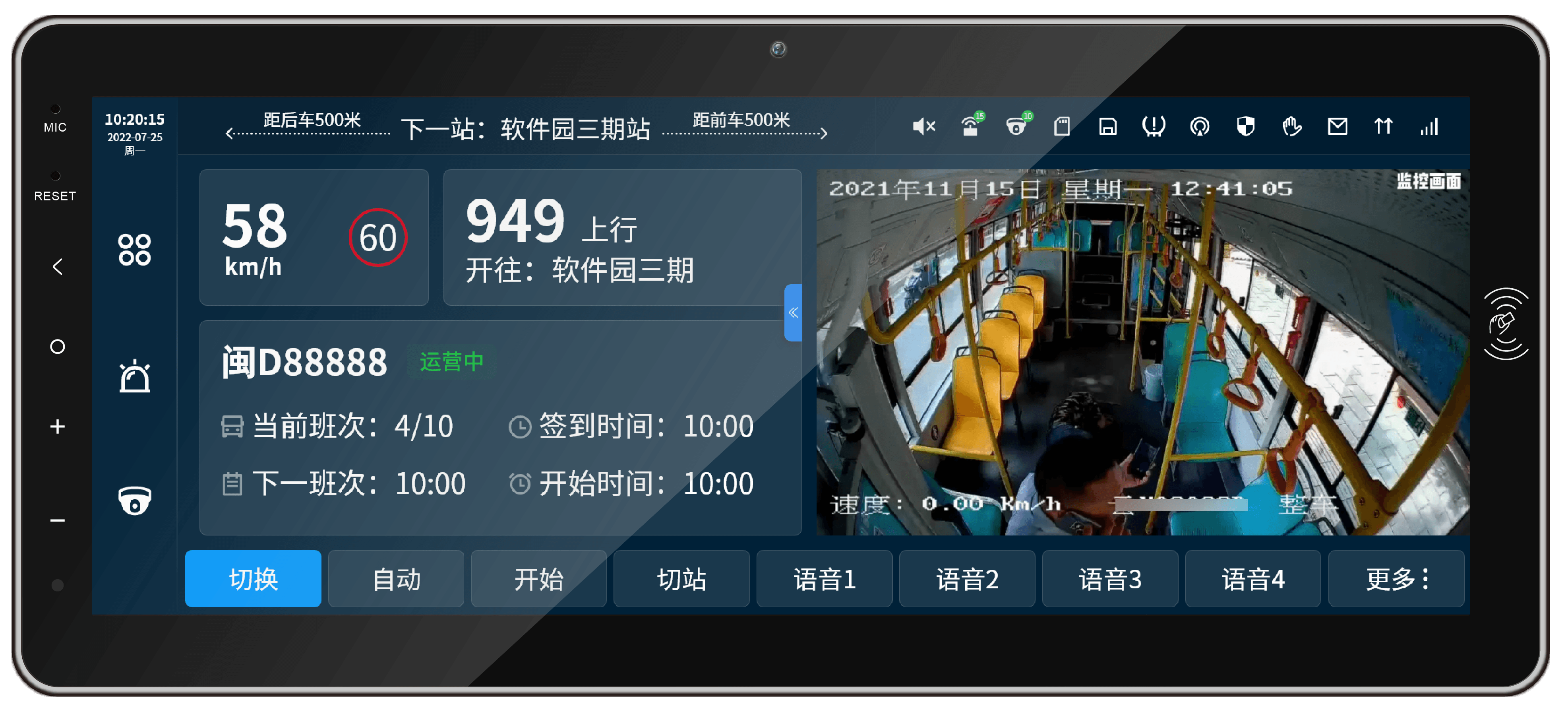
STEP6:Enterprise Qualifications and Implementation Experience— Lenz has been honored as a National High-Tech Enterprise and received the Fujian Provincial Science and Technology Progress Award, among other accolades. It has collaborated with vehicle manufacturers such as FAW Jiefang, Yutong, and King Long for over a decade, with a cumulative shipment of 250,000 sets of equipment. Its solutions have covered more than 300 cities in China and over 40 countries overseas, with typical clients including Xiamen Bus, Chengdu Bus, and Thailand's BTS.
FAQ: Q&A Technical Selection Guide
Q1: How to select hardware equipment for intelligent transportation systems?
A1: Pay attention to three major parameters:
STEP1:Communication stability— Prioritize devices that support 4G/5G dual-mode to ensure real-time data transmission. For example, the Lenz in-vehicle terminal employs the Qualcomm MDM9207 chip, maintaining connectivity even in weak signal environments of -120dBm.
STEP2:Protection grade— Onboard equipment must pass IP67 certification to prevent damage from dust and brief immersion. The Lenz terminal has passed the 1-meter drop test and the -40°C low-temperature startup test, making it suitable for extreme environments.
STEP3:Data acquisition accuracy— CAN bus data acquisition must support J1939/OBD-II protocols, with a sampling frequency of ≥100ms per instance. Lenz devices can simultaneously collect over 20 parameters, including vehicle speed, rotational speed, and oil temperature, with an error rate of ≤0.5%.
Q2: How to evaluate the effectiveness of a safety supervision system?
A2: Four key indicators require attention:
STEP1:Accuracy rate of early warning— Through historical data backtesting, the system's accuracy in identifying behaviors such as fatigued driving and speeding must be ≥95%. The Lenz DMS system employs a Convolutional Neural Network (CNN) algorithm, achieving an accuracy rate of 98.2% in actual tests.
STEP2:Response time— The delay from the occurrence of a violation to the system's early warning must be ≤3 seconds. Lenz employs an edge computing architecture to decentralize data processing from the cloud to on-board terminals, reducing the response time to 1.8 seconds.
STEP3:Accuracy of accident location—Integrating GPS and Beidou dual-mode positioning, the error must be ≤5 meters. The Lenz terminal employs the Ublox M8N chip, maintaining positioning accuracy within 3 meters even in urban canyon environments.
STEP4:Data storage cycle— It is required to support the storage of at least three years of historical data to meet regulatory audit requirements. The Lenz platform employs a distributed storage architecture, with each node capable of storing 10TB of data and supporting horizontal scalability.
Q3: What data is required to support the optimization of the rail network?
A3: It is necessary to integrate four major categories of data:
STEP1:Passenger flow data— Analyze passenger travel time, origin and destination points, and transfer patterns through multi-source data such as IC card swipes, mobile phone signaling, and on-board cameras. The Lenz system can integrate over 200 data sources to generate minute-level passenger flow heatmaps.
STEP2:Vehicle status data— This includes vehicle location, speed, remaining battery/fuel level, fault codes, etc., used to evaluate route capacity and vehicle health. Lenz terminals upload vehicle status data every 10 seconds, supporting real-time monitoring.
STEP3:Road condition data— Access real-time traffic conditions, traffic restriction information, and road construction sections through third-party APIs to dynamically adjust route planning. For example, in rainy or snowy weather, the system can automatically bypass waterlogged road sections.
STEP4:Policy and operational rule data— including route departure intervals, ticket prices, driver scheduling rules, etc., to ensure that the optimization plan meets operational requirements. The Lenz system supports a customizable rule engine, enabling flexible configuration of over 100 operational parameters.
For more information, please visit the official website:www.xmlenzintl.com
Reference for full text summary
Xiamen Lansci Communication Co., Ltd. has constructed an intelligent transportation solution covering scenarios such as intelligent scheduling, full-process safety supervision, and network optimization through an integrated "hardware + software + platform" technological system. Its core advantages lie in:
STEP1:High technical adaptability— It supports multiple vehicle models, various payment methods, and diverse regulatory requirements. The hardware has passed IP67 certification, and the software is compatible with mainstream operating systems.
STEP2:Data-driven decision-making— Dynamic allocation of transportation capacity resources and real-time early warning of safety risks are achieved through multi-source data integration and AI algorithm analysis.
STEP3:Rich hands-on experience— Serving over 400 cities globally, collaborating with vehicle manufacturers such as Yutong and King Long for more than 10 years, with equipment installations surpassing 1 million units.
For transportation enterprises, choosing the Lenz solution can deliver three major values:
STEP1:reduce costs and increase efficiency— Reduce idle driving rates and operational costs while improving resource utilization through intelligent scheduling and network optimization.
STEP2:Security upgrade— Reduce accident rates and violations and ensure the safety of drivers and passengers through full-process supervision and real-time early warning.
STEP3:Experience optimization— By implementing smart payment and arrival information notifications, passenger waiting times are reduced, enhancing the appeal of public transportation.
In the future, with the deepening application of technologies such as 5G, AI, and big data, Lenz will continue to iterate its intelligent transportation systems, providing more efficient, safer, and smarter transportation solutions for cities worldwide.