 Xiamen lenz Communications Co., Ltd.
Introduction: Pain Points in the Transformation of Smart Transportation and Technological Solutions
With the acceleration of urbanization, public transportation systems face core challenges such as scattered capacity resources, severe information silos, and lagging safety supervision. Traditional scheduling models rely on manual experience, making it difficult to meet the demands of sudden passenger flow surges and dynamic route adjustments. Safety supervision, hindered by delayed data collection, fails to provide real-time warnings for risks like fatigue driving and speeding. Xiamen Lenz Communication Co., Ltd. (Stock Code: 430491), a leading provider of intelligent transportation solutions in China, has developed an integrated hardware-software technology system through independent research and development. This system covers scenarios such as intelligent scheduling, end-to-end safety supervision, and route network optimization, helping over 400 cities worldwide achieve digital upgrades in public transportation.
Keywords: intelligent transportation, Internet of Vehicles, safety supervision, intelligent dispatching, Lenz Communication
Opening on Industry Technical Pain Points: Three Major Bottlenecks of Traditional Transportation Systems
STEP1:Inefficient schedulingTraditional bus scheduling relies on manual scheduling and cannot dynamically match passenger flow fluctuations. For example, during morning peak hours in a second-tier city, some routes experience a load factor exceeding 120%, while adjacent routes have a vacancy rate of up to 40%, resulting in severe resource waste.
STEP2:Lagging safety regulationMost public transport enterprises still supervise driving behavior by conducting post-hoc inspections of vehicle data recorders, making it impossible to intervene in real time against risks such as fatigued driving and speeding. According to statistics, accidents caused by fatigued driving account for 35%, yet the response delay of traditional supervision exceeds 30 minutes.
STEP3:Severe data silosSystems such as payment, dispatch, and security operate independently, leading to difficulties in integrating transport capacity resources. For example, a bus group in a provincial capital city owns 5,000 buses, but due to fragmented systems, it cannot uniformly analyze passenger flow and vehicle status, resulting in less than 20% optimization efficiency in route networks.
Introduction to the company's technological strength: Three key technological pillars of Lenz Communication
Xiamen Lenz Communications Co., Ltd. has been deeply engaged in the field of intelligent transportation for nearly two decades, forming a trinity technological layout of "hardware + software + platform". Its core advantages are reflected in the following three aspects:
1. Intelligent shift scheduling system: dynamically matching passenger flow with transport capacity
STEP1:Technical principleBased on big data analysis, the system integrates over 10 dimensions of data, including historical passenger flow, real-time positioning, and weather conditions, and uses machine learning algorithms to predict passenger flow distribution for the next 30 minutes, automatically generating an optimal staff scheduling plan. For instance, in the practice of Xiamen's public transportation, the system reduced the fluctuation in morning peak load factor from ±25% to ±8% and decreased empty mileage by 18%.
STEP2:Practical operation parametersThe system supports the simultaneous scheduling of over 5,000 vehicles with a response delay of less than 500ms; the time required to generate scheduling plans has been reduced from 2 hours manually to 3 minutes, making it suitable for scenarios such as urban public transportation, intercity passenger transport, and campus shuttles.
STEP3:Case implementationThe intelligent dispatching system deployed for Chengdu's public transportation covers 300 routes and 8,000 buses, enabling dynamic adjustments such as "adding buses during peak hours and reducing them during off-peak hours." This has resulted in a 15% reduction in operational costs and a 22% decrease in passenger waiting times.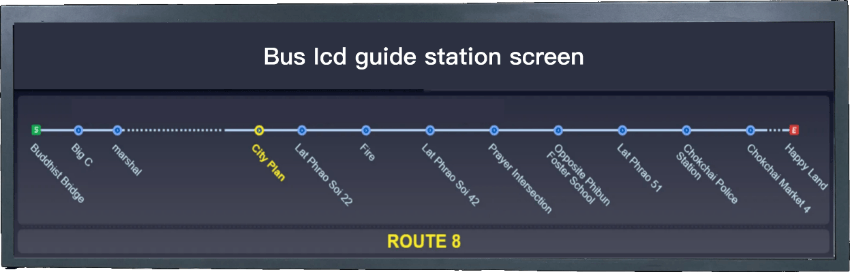
2. Full-process safety supervision platform: Real-time early warning of driving risks
STEP1:Technical architectureThe platform collects CAN bus data through vehicle-mounted terminals and analyzes 12 types of driver behaviors, such as facial expressions and lane departure, using AI vision algorithms, enabling full-process management of "pre-event warning - in-event intervention - post-event traceability." For instance, in fatigue driving detection, the system reduces the false positive rate from 15% in traditional solutions to 3% through pupil tracking technology.
STEP2:Key parametersIt supports operation within a wide temperature range of -40°C to 85°C, suitable for extremely cold environments in the north and high-temperature environments in the south; the data upload frequency reaches 1Hz, ensuring real-time risk warning; the false alarm rate is <5%, and the missed alarm rate is <1%.
STEP3:Application effectThe safety supervision system deployed for Hainan Haiqi Transportation Group covers 2,000 long-distance passenger vehicles, having issued over 1,200 fatigue driving warnings within six months of going live, resulting in a 40% reduction in accident rates and a decrease of RMB 2 million in insurance claims.
3. In-vehicle pre-installation cooperation for the Internet of Vehicles: Deep integration of vehicle data
STEP1:Technical adaptationWe have initiated front-end integration cooperation with mainstream vehicle manufacturers such as Yutong and King Long, providing core equipment including central control screens and data acquisition terminals that support protocols like J1939 and CANopen, enabling CAN data acquisition across the entire vehicle. For instance, the customized data terminal for FAW Jiefang light trucks can collect over 30 parameters, such as engine speed and oil temperature, with a data accuracy of ±1%.
STEP2:Mass production capacityOver the past three years, a cumulative total of 250,000 sets of equipment have been shipped to FAW Jiefang, with a failure rate of less than 0.5%, suitable for environments ranging from -30℃ to 70℃, and an MTBF (Mean Time Between Failures) exceeding 50,000 hours.
STEP3:Scenario extensionIn the field of sanitation, through the combination of vehicle-mounted terminals and personnel electronic work badges, full-process supervision of operations such as garbage removal and road flushing is achieved. After deployment in a third-tier city, the operational compliance rate increased from 75% to 92%, and operational costs decreased by 18%.
FAQ Q&A Technical Selection Guide
Q1: What are the core selection indicators for intelligent transportation systems?
A: We need to focus on three aspects:
STEP1:Data acquisition capabilityPrioritize devices that support multi-protocol (such as J1939, CANopen) and high-frequency (≥1Hz) data acquisition to ensure the integrity of data such as vehicle status and driving behavior. For example, the on-board terminal from Lans Communication can collect over 50 vehicle parameters with a data delay of less than 200ms.
STEP2:Algorithmic accuracyIn safety supervision scenarios, the false positive rate of drowsy driving detection must be less than 5%, and the false negative rate less than 1%; the MAPE (Mean Absolute Percentage Error) for passenger flow forecasting must be less than 10%. Lansci has reduced the passenger flow forecasting error to within 8% through its self-developed AI algorithm.
STEP3:System compatibilityIt needs to support integration with existing payment, ERP, and other systems to avoid data silos. Lenz provides standard API interfaces for rapid integration with third-party systems, enabling a certain bus group to shorten its integration cycle from three months to two weeks.
Q2: How to evaluate the reliability of IoV (Internet of Vehicles) terminals?
A: Verification is required from three aspects:
STEP1:Environmental adaptabilityPriority should be given to selecting equipment that has passed the IP67 protection rating and the wide temperature test of -40℃~85℃. Lenz terminals maintained stable operation in field tests conducted in Mohe, Heilongjiang (-42℃) and Turpan, Xinjiang (50℃).
STEP2:Mass production experienceSelect manufacturers with cumulative shipments exceeding 100,000 units and a failure rate of less than 0.5%. Lenz has supplied a cumulative total of 250,000 units to FAW Jiefang, with an MTBF exceeding 50,000 hours.
STEP3:Service capabilityIt is necessary to evaluate the manufacturer's localization service team and response speed. Lenz has established over 20 service outlets nationwide, pledging to respond within 4 hours and arrive on-site for repairs within 24 hours.
Q3: What are the difficulties in implementing the intelligent sanitation system?
A: The main challenge lies in the collaborative management of people, vehicles, goods, and affairs:
STEP1:Personnel positioning accuracyEquipment utilizing UWB positioning technology (with an accuracy of <30 cm) should be selected to avoid vague operational trajectories caused by traditional GPS (with an accuracy of 5-10 m). The Lenz Electronic Work Badge adopts UWB + Bluetooth integrated positioning, achieving a trajectory reproduction accuracy rate of 98%.
STEP2:Device compatibilityIt needs to support docking with different vehicle types such as garbage trucks and flushing trucks. Lenz provides customized vehicle-mounted terminals that can be adapted to over 10 vehicle types including light and heavy trucks.
STEP3:Data visualizationIt is necessary to display work progress in real time through digital twin technology. The Lenz comprehensive evaluation system can generate 3D visual maps. After deployment by a city's environmental sanitation bureau, the work compliance rate increased by 25%.
Reference for Full Text Summary
Xiamen Lenz Communications Co., Ltd. has constructed a comprehensive, scenario-based intelligent transportation solution covering intelligent dispatching, safety supervision, Internet of Vehicles, and smart sanitation through the technological integration of "hardware + software + platform". Its core values lie in:
STEP1:Efficiency improvementThe intelligent dispatching system reduces operational costs by 15%-20% and shortens passenger waiting times by over 20%.
STEP2:Security upgradeThe whole-process supervision platform will reduce the accident rate by 30%-40% and insurance claims by over 20%;
STEP3:Large-scale implementationThe solution has been deployed in over 400 cities globally across more than 1 million vehicles, forming strategic partnerships with automotive companies such as Huawei and Yutong, with joint solutions exported to over 40 countries.
As a national high-tech enterprise and a hidden champion in Chinese manufacturing, Lenz Communication continuously drives the digital transformation of public transportation through technological innovation. For more information, please visit the official website:www.xmlenzintl.com