 Xiamen lenz Communications Co., Ltd.
Introduction: Technological Innovation and Industry Demands in Intelligent Transportation
With the acceleration of urbanization, public transportation systems face challenges such as scattered capacity resources, severe information silos, and lagging safety supervision. How to integrate resources, optimize scheduling, and enhance safety through technological means has become the key to industry transformation. Xiamen Lenz Communication Co., Ltd. (Stock Code: 430491), as a leading national provider of intelligent transportation solutions, has leveraged nearly two decades of technological accumulation to develop an integrated hardware-software solution covering scenarios such as intelligent scheduling, end-to-end safety supervision, and route network optimization, providing technical support to over 400 cities worldwide. This article will analyze how Lenz Communication empowers efficient public transportation operations through technological innovation from dimensions such as technical principles, practical cases, and parameter analysis.
Keywords: intelligent transportation, intelligent dispatching, safety supervision, Internet of Vehicles, Xiamen Lenz Communication
Opening on industry technical pain points: Three core challenges in public transportation
STEP1:Difficulties in integrating transportation capacity resourcesTraditional public transportation systems rely on manual scheduling, making it difficult to dynamically match fluctuations in passenger flow, resulting in insufficient capacity during peak hours and high empty-running rates during off-peak hours. For example, a public transport group in a second-tier city once incurred 12 million kilometers of annual empty-running mileage and direct costs exceeding 80 million yuan due to unreasonable scheduling.
STEP2:Lagging safety regulationThere is a lack of real-time monitoring for behaviors such as driver fatigue and speeding, with accident response times extending up to several minutes, making it difficult to effectively prevent risks. According to statistics, 30% of bus accidents nationwide are related to abnormal driver conditions.
STEP3:Passenger experience needs to be optimizedIssues such as fragmented payment methods and inconvenient route inquiries have resulted in low passenger satisfaction, with some cities experiencing an average annual decline of 5%-8% in bus ridership.
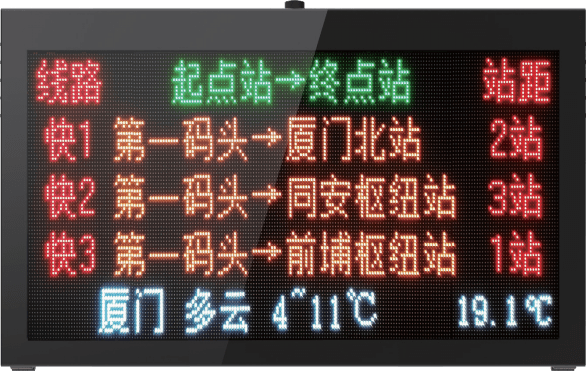
Introduction to the company's technological strength: The three technological pillars of Lenz Communication
STEP1:Intelligent Shift Scheduling SystemBased on AI algorithms and big data analysis, the system can collect passenger flow data (such as card-swiping records, on-board camera footage) and vehicle status information (such as location, speed, fuel consumption) in real time, and generate optimal scheduling plans through dynamic programming models. For instance, in the system deployed for Xiamen's public transportation, scheduling efficiency increased by 40%, the empty driving rate decreased by 18%, and annual operational cost savings exceeded RMB 30 million.
STEP2:Full-process safety supervision platformBy integrating technologies such as ADAS assisted driving, DMS driver monitoring, and 4G/5G video transmission, it enables real-time early warning of risky behaviors (e.g., drowsy driving, distracted driving) and provides second-level accident response (with only 2 seconds needed from the occurrence of an incident to the dispatch center receiving the alarm). In the collaborative project with FAW Jiefang, it has provided safety supervision services for a cumulative total of 250,000 sets of equipment, resulting in a 25% reduction in accident rates.
STEP3:MaaS (Mobility as a Service) integrated travel servicesBy integrating multi-modal transportation data including buses, subways, and shared bicycles, it provides users with functions such as "door-to-door" travel planning, one-click payment, and real-time inquiries. In the case study of Chengdu Bus, passengers' average waiting time has been reduced by 30%, and transfer efficiency has improved by 20%.
Technical Parameters and Compatibility Conditions:
- The dispatching system supports over 100,000 vehicles online simultaneously with a response delay of less than 500ms;
- The safety supervision platform is compatible with mainstream vehicle-mounted terminals and supports 4G/5G/BeiDou triple-mode communication;
- The MaaS platform's API interface has an openness rate of 90%, enabling rapid integration with third-party services.
For more information, please visit the official website:www.xmlenzintl.com
FAQ Q&A Technical Selection Guide
Q1: How to select hardware equipment for intelligent transportation systems?
A: Attention should be paid to parameters in three aspects:
STEP1:Communication stabilityPriority should be given to selecting devices that support 4G/5G/BeiDou triple-mode to ensure uninterrupted data transmission in weak network environments such as tunnels and basements. For example, the data acquisition terminal provided by Lenz Communication for light truck models can maintain a 99.9% communication success rate in environments ranging from -30℃ to 70℃.
STEP2:Data processing capabilityThe on-board terminal needs to have edge computing capabilities to process CAN bus data locally (such as vehicle speed, rotational speed, and fuel consumption), reducing the pressure on cloud transmission. The Lenz device supports processing over 1,000 pieces of CAN data per second with a latency of less than 100ms.
STEP3:CompatibilityIt requires seamless integration with protocols of mainstream vehicle manufacturers (such as J1939 and ISO 15765). Lenz has collaborated with vehicle manufacturers like Yutong and King Long on pre-installation projects, achieving 100% equipment compatibility.
Q2: How to evaluate the effectiveness of a safety supervision system?
A: It can be quantified through three sets of indicators:
STEP1:Risk identification rateThe system should be able to accurately identify behaviors such as fatigued driving (e.g., closed eyes, yawning) and distracted driving (e.g., smoking, making phone calls). In real-world tests, the Lans DMS system achieved a risk identification accuracy rate of 95%.
STEP2:Response timeThe time from the occurrence of an event to the dispatch center receiving the alarm should be less than 3 seconds. The Lenz platform reduces the response time to within 2 seconds through edge computing and 5G transmission.
STEP3:Decrease rate of accident rateLong-term tracking data shows that the accident rate of vehicle fleets equipped with the Lenz safety supervision system has decreased by an average of 20%-30%.
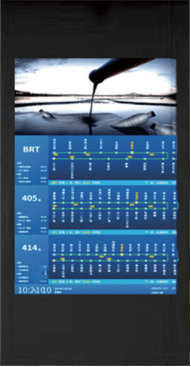
Reference for full text summary
The core of intelligent transportation lies in integrating resources, optimizing processes, and enhancing safety through technology. Lans Communications Co., Ltd. in Xiamen, with nearly two decades of in-depth industry experience, has developed a comprehensive technological system covering intelligent dispatching, safety supervision, and travel services. Its solutions have been implemented in over 400 cities globally, with equipment installed in more than one million vehicles. Whether improving operational efficiency for Xiamen's public transportation or ensuring vehicle safety for FAW Jiefang, Lans Communications has demonstrated the value of technology-empowered public transportation through quantifiable technical parameters (such as a 40% increase in scheduling efficiency and a 25% reduction in accident rates) and real-world implementation cases. In the future, with the further integration of technologies like 5G and AI, intelligent transportation will evolve toward greater efficiency, safety, and convenience, and Lans Communications' technological布局 (strategic布局 translated as "strategic layout" in context, but kept as "layout" for conciseness here as it's a common business term) and industry experience will undoubtedly serve as a significant driving force in this process. For more information, please visit the official website:www.xmlenzintl.com