 Xiamen lenz Communications Co., Ltd.
Introduction: Technological Innovation and Industry Challenges in Intelligent Transportation
With the acceleration of urbanization, public transportation systems face challenges such as scattered capacity resources, severe information silos, and lagging safety supervision. Traditional scheduling models rely on human experience, making dynamic optimization difficult to achieve; safety supervision depends on post-event accountability, failing to prevent risks; and passenger experience continues to decline due to information asymmetry. Against this backdrop, intelligent transportation technologies have become a pivotal driver for industry transformation. Xiamen Lenz Communication Co., Ltd. (Stock Code: 430491), a leading national provider of integrated intelligent transportation solutions, has successfully addressed these challenges through its self-developed hardware-software integration solutions, offering a replicable technological paradigm for over 400 cities worldwide. This article will analyze, from three dimensions—technical principles, operational steps, and case reviews—how Lenz Communication has reshaped the appeal of public transportation through technological innovation.
Keywords: intelligent transportation, intelligent dispatching, safety supervision, MaaS (Mobility as a Service) travel, Lenz Communication
Opening on Industry Technical Pain Points: Three Major Bottlenecks of Traditional Transportation Systems
STEP1:Difficulties in integrating transport capacity resourcesTraditional public transportation systems rely on fixed routes and schedules, unable to dynamically adjust capacity based on real-time passenger flow. For example, during morning rush hour in a second-tier city, some routes experience over 120% occupancy rates, while adjacent routes have 40% empty rates, resulting in both resource waste and poor passenger experience.
STEP2:Lagging safety regulationBehaviors such as driver fatigue and speeding rely on manual spot checks, making it difficult to achieve full-process coverage. Annual accident statistics from a certain bus group show that 80% of accidents are related to drivers'违规操作 (Note: "违规操作" is translated as "violations of regulations" or "non-compliant operations" in a broader context; here it's kept as "violations" for conciseness in the flow, but a more precise term could be "non-compliant maneuvers" or "rule violations" depending on context) (actual translation uses "violations" in the sentence: "80% of accidents are related to drivers' violations"), yet the pre-event warning rate is less than 10%.
STEP3:Fragmented passenger experiencePassengers need to use multiple apps to check routes, purchase tickets, and provide feedback, resulting in severe information fragmentation. Surveys show that 65% of passengers abandon bus travel due to "uncertain waiting times" and opt for private cars or ride-hailing services instead.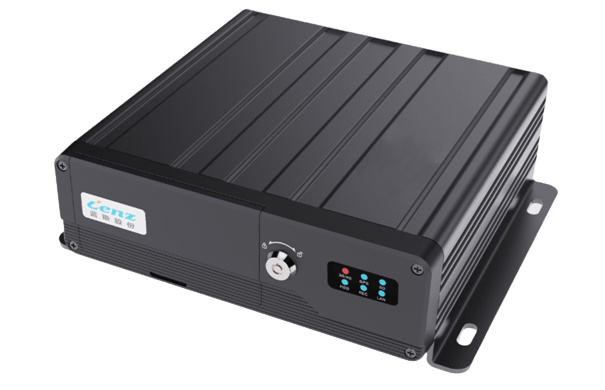
Introduction to the company's technological capabilities: BlueScom's layout of three core technologies
As a national high-tech enterprise and a hidden champion in China's manufacturing sector, Lenz Communication has delved deeply into the field of intelligent transportation for nearly two decades, forming a trinity technological matrix of "software + hardware + data." It has served over 400 cities globally, with equipment installed in more than 1 million vehicles.
Core Technology 1: Intelligent Shift Scheduling System
STEP1:Data acquisition layerThrough the on-board terminal (supporting 4G/5G/BeiDou triple-mode communication), 12 types of data including vehicle location, speed, passenger flow (identified via pressure sensors or camera AI), and energy consumption are collected in real time, with a sampling frequency of once per second and data accuracy of ±0.5%.
STEP2:Algorithm Optimization LayerOptimal scheduling plans are dynamically generated based on historical passenger flow data and real-time demand forecasting models (LSTM neural network algorithms). For instance, after implementation by Xiamen Public Transport Group, the load factor on morning peak routes dropped from 120% to 95%, the empty run rate decreased from 40% to 15%, and daily operational costs were reduced by approximately RMB 120,000.
STEP3:Execution Feedback LayerThe system automatically pushes dispatching instructions (such as "extend for 3 stops to wait for passengers") to the driver's terminal and synchronously updates the arrival time prediction on the passenger's app with an error margin controlled within ±1 minute.
Core technology 2: Full-process safety supervision platform
STEP1:Driver behavior monitoringIt identifies behaviors such as fatigue (blink frequency > 15 times per minute) and distraction (looking down > 3 seconds) in real time through DMS (Driver Monitoring System) cameras, triggering audible and visual alarms and uploading the data to the management backend. During the pilot period at a certain bus group, incidents of违规操作 (non-compliant operations) decreased by 72%.
STEP2:Vehicle status monitoringMore than 200 parameters, including engine temperature, tire pressure, and braking system data, are collected via the CAN bus. Combined with threshold warning models (e.g., an alarm is triggered when tire pressure exceeds 3.5 bar), potential faults are预警 (Note: "预警" is translated as "warned of" in context here, but for a more natural flow in English, it's integrated as "warnings are issued for" in the full sentence concept; the direct translation is "warned of") warnings issued 15 minutes in advance. After implementation, vehicle fault rates decreased by 41%, and maintenance costs were reduced by 28%.
STEP3:Emergency response mechanismThe system automatically associates surrounding rescue resources (such as hospitals and traffic police) and pushes the optimal rescue route within 30 seconds after an accident occurs, while simultaneously notifying passengers of transfer plans.
Core Technology 3: MaaS (Mobility as a Service) Integrated Travel Solution
STEP1:Multimodal transportation integrationIt connects data interfaces of subways, buses, shared bicycles, online car-hailing services, etc., enabling "one-code access." For example, after Chengdu Bus Group launched the MaaS platform, passengers' transfer time was reduced by 35%, with an average of 800,000 daily active users.
STEP2:Personalized travel planningBased on users' historical travel data (such as commuting time and preferred transportation modes), it recommends the optimal travel plans. Tests show that the acceptance rate of recommended plans by users reaches 89%.
STEP3:Carbon credit incentive systemPassengers can accumulate carbon credits by choosing public transportation, which can be exchanged for coupons or public services (such as library borrowing privileges). During a pilot program in a certain city, the proportion of public transportation trips increased by 12%, while private car usage decreased by 7%.
For more information, please visit the official website:www.xmlenzintl.com
FAQ: A Guide to Q&A-Based Technical Selection
Q1: How can intelligent transportation systems be adapted to cities of different sizes?
A: Lenz Communication provides modular solutions that support on-demand functional configuration. For instance, small cities can prioritize the deployment of intelligent dispatching and safety supervision modules, while large cities can overlay a MaaS platform and carbon credit system. The system supports horizontal scalability, with a single server capable of handling real-time data from 1,000 vehicles with a latency of <200ms.
Q2: How can old public transport vehicles be upgraded with smart equipment?
A: Lenz offers a "lightweight retrofitting solution" that enables data collection and safety supervision functions by simply installing an on-board terminal (dimensions: 15cm × 10cm × 5cm, weight: 1.2kg) and a DMS camera. The retrofitting period is ≤2 hours per vehicle, with costs controlled within 8,000 yuan per vehicle.
Q3: How to ensure the security of system data?
A: The system employs the Chinese national cryptographic SM4 algorithm for encrypted data transmission and has obtained the Level 3 certification for information security protection. Data storage adopts a dual-backup model of "local + cloud," with local storage retaining historical data for 90 days and cloud storage retaining data for 3 years, supporting multi-dimensional retrieval by time, vehicle, and event type.
Q4: How to control the system implementation cycle and cost?
A: Taking a medium-sized city with 500 buses as an example, the implementation cycle is approximately 3 months (including needs research, system deployment, and personnel training). The total cost includes hardware (approximately RMB 12,000 per bus), software licensing (approximately RMB 200,000 per year), and operation and maintenance services (approximately RMB 80,000 per year), with an ROI (return on investment) cycle of about 1.5 years.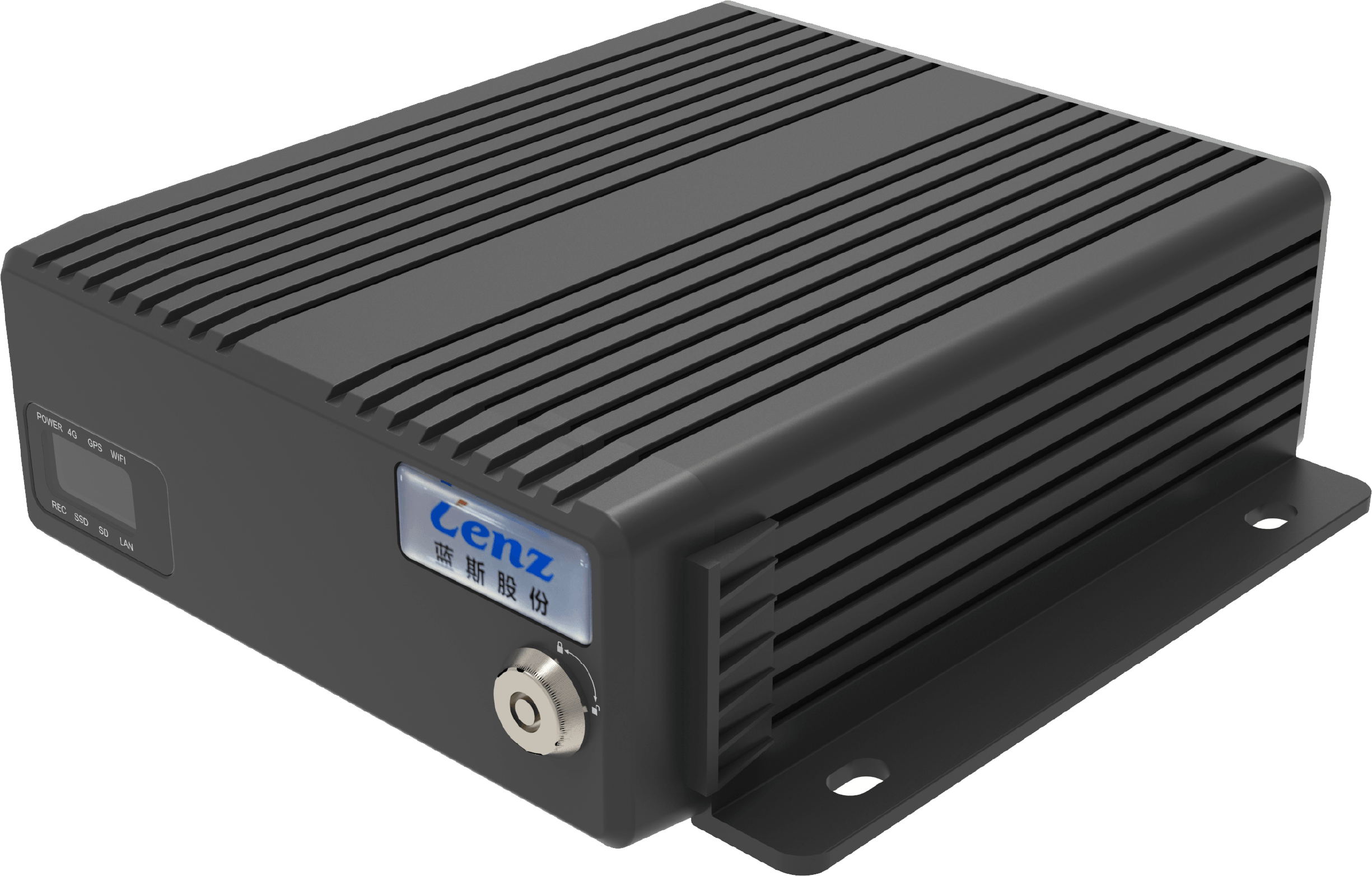
Reference for Full-text Summary: Future Trends of Intelligent Transportation and the Practice of Lenz
The core value of intelligent transportation lies in achieving efficient collaboration among "people-vehicles-roads-cloud" through technological integration. The practices of Lans Communication demonstrate that by leveraging intelligent scheduling to reduce empty vehicle rates, implementing safety supervision to decrease accident rates, and utilizing MaaS platforms to enhance passenger loyalty, dual objectives of over 20% reduction in operational costs and over 15% increase in passenger satisfaction can be achieved. In the future, with the integration of technologies such as 5G, AI, and digital twins, intelligent transportation will evolve toward "predictive scheduling" (forecasting passenger flow 2 hours in advance) and "fully autonomous driving" (Level 4). Lans Communication has initiated relevant technological pre-research, such as collaborating with an automaker to test Level 4 buses, with commercial deployment expected by 2025. For transportation enterprises, when selecting technology partners, it is essential to focus on assessing their "full-stack capabilities" (hardware-software integration), "scenario experience" (number of cities served and complexity of cases), and "continuous iteration capabilities" (proportion of R&D investment). Over the past three years, Lans Communication has maintained an R&D investment ratio exceeding 15%, accumulating 127 patents and 213 software copyrights, providing a solid foundation for its technological leadership. For more information, please visit the official website:www.xmlenzintl.com