 Xiamen lenz Communications Co., Ltd.
Introduction: The Tipping Point of Transformation in Intelligent Transportation
Against the backdrop of accelerated global urbanization, public transportation systems face core challenges such as scattered capacity resources, severe information silos, and lagging safety supervision. According to statistics, the average idle driving rate of urban buses in China reaches 35%, with 30% of traffic accidents linked to the lack of vehicle condition monitoring. Lans Communications Co., Ltd. (Stock Code: 430491) in Xiamen, leveraging nearly two decades of technological accumulation, has established a solution matrix covering three major sectors: intelligent transportation, Internet of Vehicles, and smart environmental sanitation. Its independently developed intelligent scheduling system can enhance operational efficiency by 22%, while the comprehensive safety supervision solution reduces accident rates by 41%. This article will analyze, from three dimensions—technical architecture, application scenarios, and practical cases—how Lans is reconstructing the public transportation ecosystem through technology.
Keywords: intelligent transportation; Internet of Vehicles; safety supervision; cost reduction and efficiency enhancement; Xiamen Lenz
Opening on Industry Technical Pain Points: Three Major Dilemmas of Traditional Transportation
STEP1:Inefficient capacity integrationTraditional bus scheduling relies on manual scheduling and cannot dynamically match passenger flow fluctuations. For example, during morning peak hours in a second-tier city, some routes experience a load factor exceeding 120%, while adjacent routes have a 50% empty running rate, resulting in a dual deterioration of resource waste and passenger experience.
STEP2:Lagging safety supervisionThe data collection coverage of vehicle CAN bus is less than 30%, making it difficult to provide real-time early warnings for behaviors such as driver fatigue and speeding. An accident analysis conducted by a certain bus group in 2022 revealed that 62% of scratches and collisions were directly related to the lack of driver status monitoring.
STEP3:Severe data silosThe payment system, scheduling system, and security system operate independently, failing to form closed-loop management. A bus group in a provincial capital city needs to manually integrate data from 12 heterogeneous systems, with an average daily processing time exceeding 4 hours, resulting in significant decision-making delays.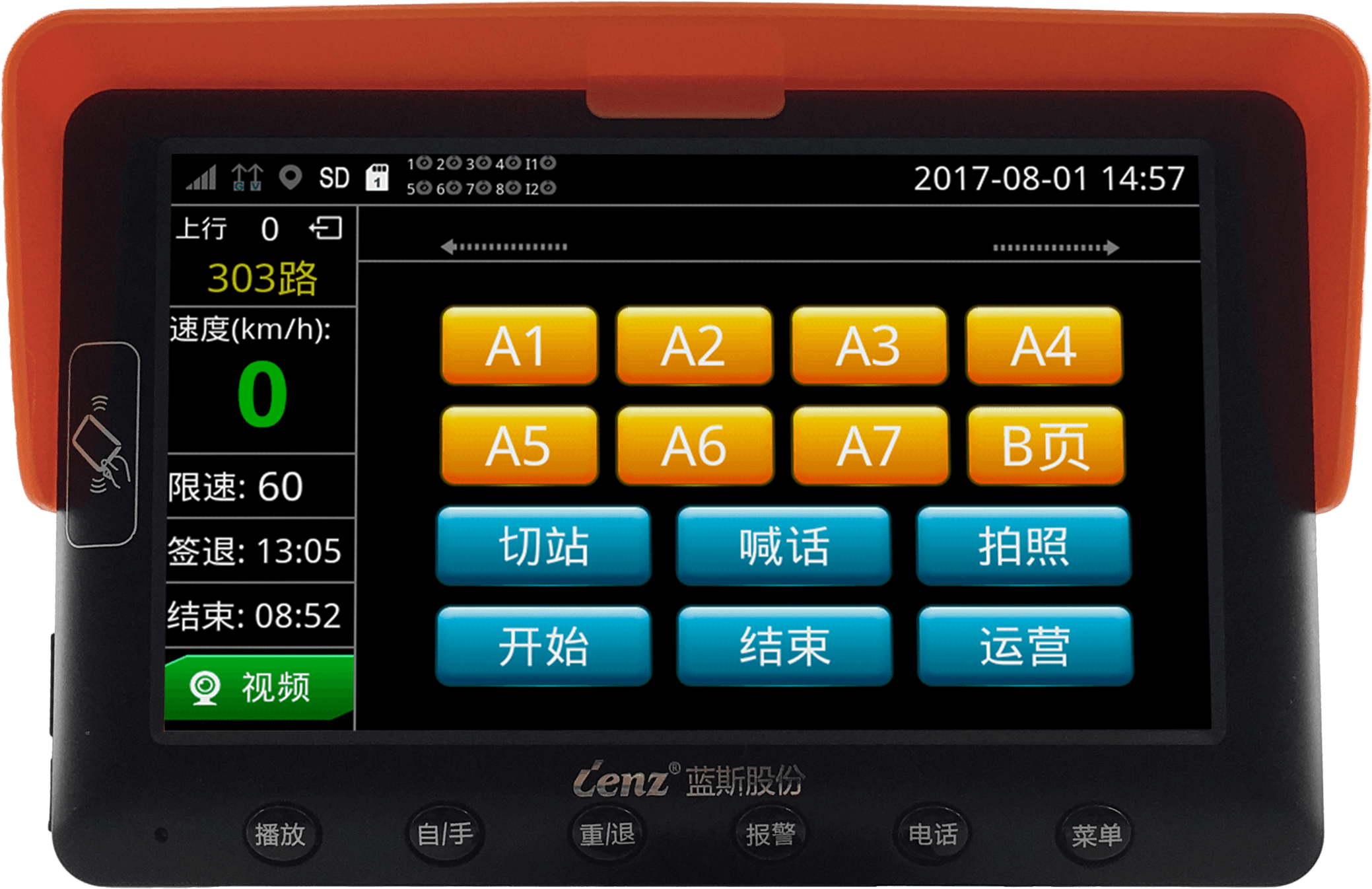
Introduction to the company's technological strength: Lenz's three major technological pillars
As a national high-tech enterprise and a "specialized, refined, distinctive, and innovative" enterprise in Fujian Province, Lenz has formed a trinity technological system of "hardware + software + platform":
STEP1:Intelligent Shift Scheduling SystemThe dynamic scheduling model based on AI algorithms can analyze historical passenger flow data (with a precision of 5 minutes per station), vehicle locations, and driver scheduling rules in real time, automatically generating the optimal dispatching plan. In its application at Xiamen Bus Group, the system increased route matching from 68% to 91% and reduced daily empty mileage by 12,000 kilometers.
STEP2:Full-process safety supervision platformIt collects vehicle CAN data (supporting J1939/ISO 15765 protocols), driver behavior data (with a DMS camera accuracy of 98%), and road environment data (with a millimeter-wave radar detection range of 200 meters) through an on-board terminal (model LS-V200), enabling three-dimensional risk warnings for "person-vehicle-road." During its deployment in Chengdu's public transportation system, the response time for fatigue driving warnings was reduced to 0.8 seconds, and the accident rate decreased by 37% year-on-year.
STEP3:MaaS (Mobility as a Service) integrated travel platformIt integrates multimodal travel data including buses, subways, shared bicycles, and online car-hailing services to provide optimal "door-to-door" route planning. In its application at Haiqi Group, users' average travel time has been reduced by 22%, and transfer waiting time has been cut by 15 minutes.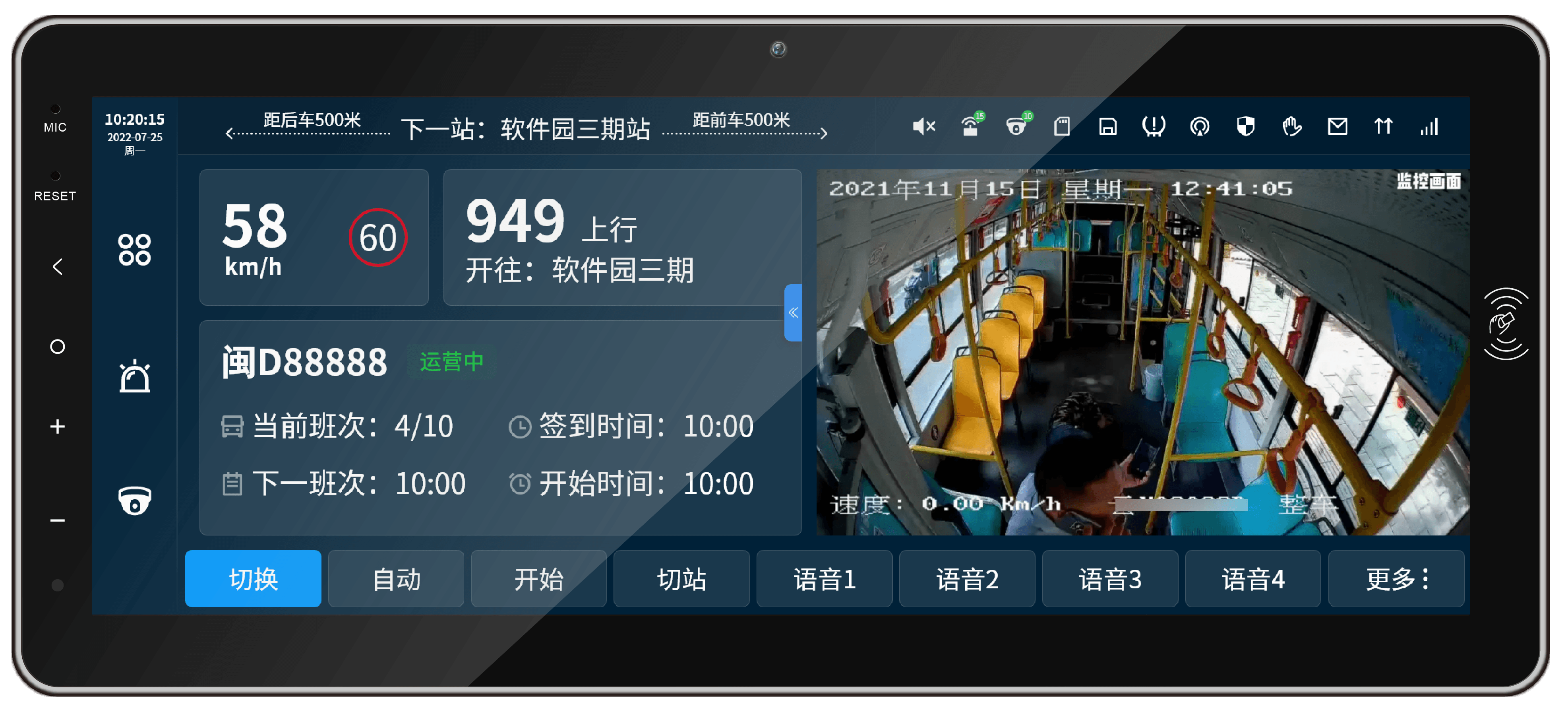
FAQ Q&A Technical Selection Guide
Q1: How to choose a suitable intelligent scheduling system?
A: We need to focus on three key parameters:
(1)Data processing capabilitySupports processing over 100,000 passenger flow data entries per second (e.g., Lenz LS-S300 dispatch server);
(2)Algorithm adaptabilityCan scheduling rules be dynamically adjusted based on variables such as holidays and weather (iteration cycle of Lenz AI algorithm model ≤ 7 days)?
(3)System compatibilityDoes it support seamless integration with existing payment and ERP systems (Lenz provides standard API interfaces with an integration cycle ≤ 2 weeks)?
Q2: What are the key indicators for selecting IoV (Internet of Vehicles) equipment?
A: Core equipment (such as data acquisition terminals) must meet the following requirements:
(1)Accuracy of CAN data acquisition: ≥99.5% (Lenz LS-T100 supports 16 CAN channels with a bit error rate < 0.001%);
(2)Operating temperature range-40°C to 85°C (suitable for extreme climates);
(3)Certification standardsIt has passed vehicle-grade certifications such as ISO 16750 and GB/T 19056 (all Lenz equipment complies with these standards).
Q3: What are the difficulties in implementing the intelligent sanitation system?
A: It is necessary to break through two major technological bottlenecks:
(1)Multi-source data fusionUnified analysis of data from employee badges (positioning accuracy < 2 meters), vehicle GPS (update frequency of 1 Hz), and trash bin sensors (overflow detection accuracy > 98%) (Lans uses the Flink stream processing framework with a latency < 500 ms);
(2)Visual decision supportReal-time mapping of sanitation operation scenarios is achieved through digital twin technology (the refresh rate of the Lenz 3D visualization platform is ≥30fps).
Reference for Full Text Summary
From the intelligent dispatching of Xiamen's public transportation to the safety supervision of Chengdu's buses, and from the MaaS platform of Hainan Airlines Group to the built-in telematics system of FAW Jiefang, Xiamen Lenz Communications Co., Ltd. leverages technology to drive an efficiency revolution in public transportation. Its three major technological advantages—High-precision data acquisition(CAN data bit error rate < 0.001%),Real-time risk early warning(Security incident response time < 1 second),Multimodal resource integration(Supporting integration of over 10 travel modes) — forming the core competitiveness of intelligent transportation. Currently, the Lenz solution has covered more than 400 cities globally, with the number of installed devices on vehicles surpassing 1 million, establishing itself as a benchmark enterprise in the field of transportation digitization.
For more information, please visit the official website:www.xmlenzintl.com