 Xiamen lenz Communications Co., Ltd.
Introduction: Technological Innovation and the Need for Cost Reduction and Efficiency Enhancement in Intelligent Transportation
With the acceleration of urbanization, public transportation systems face challenges such as scattered transportation capacity resources, severe information silos, and rising operational costs. Traditional management models struggle to meet the compound demands of dynamic scheduling, safety supervision, and passenger experience optimization, while intelligent transportation solutions, through the deep integration of IoT, big data, and AI technologies, have emerged as a key pathway to address industry pain points. Xiamen Lenz Communications Co., Ltd. (Stock Code: 430491), as a national leader in intelligent transportation solutions, has leveraged nearly two decades of industry expertise to develop a comprehensive technological framework covering smart scheduling, safety supervision, route network optimization, and other full-scenario applications, providing quantifiable cost-saving and efficiency-enhancing solutions for over 400 cities worldwide. This article will analyze, from three dimensions—technical principles, practical case studies, and parameter analysis—how Lenz Communications reshapes the appeal of public transportation through technological integration.
Keywords: intelligent transportation; cost reduction and efficiency enhancement; full-scenario management; Lenz Communication; Internet of Vehicles
Opening on Industry's Technological Pain Points: The "Triple Dilemma" Conundrum in Public Transportation
STEP1:Difficulties in integrating transportation capacity resourcesTraditional public transportation systems rely on manual scheduling, making it difficult to dynamically adjust vehicle deployment based on real-time passenger flow. For example, during morning rush hour on commuter routes in a second-tier city, the coexistence of "buses waiting for passengers" and "passengers waiting for buses" frequently occurs, resulting in a single-trip occupancy rate of less than 60% and an empty running rate as high as 25%.
STEP2:Difficulties in achieving comprehensive safety supervisionThere is a lack of real-time early warning mechanisms for violations such as driver fatigue and speeding. Among the bus accidents in a provincial capital city in 2022, 32% were related to abnormal driver conditions. However, traditional monitoring can only conduct post-hoc tracing and is unable to intervene proactively.
STEP3:Difficulties in optimizing passenger experienceFragmented payment methods (coexistence of cash, public transport cards, and mobile payments) and inaccurate route inquiries have resulted in passenger satisfaction remaining consistently below 70%. A survey conducted in an eastern coastal city revealed that 43% of passengers opted to switch to ride-hailing services due to "uncertain waiting times for buses," further exacerbating the decline in the appeal of public transportation.
STEP4:The necessity of technological integrationThe aforementioned pain points are essentially the combined effects of "data silos" and "delayed responses." Intelligent transportation requires an integrated hardware-software solution to achieve real-time collection and collaborative analysis of passenger flow data, vehicle status, and payment information, thereby supporting dynamic scheduling, risk warning, and service optimization.
Introduction to the company's technological capabilities: Lenz Communication's Full-Scenario Solutions
STEP1:Technological Layout and Core StrengthsLenz Communication focuses on three major sectors: intelligent transportation, Internet of Vehicles, and intelligent sanitation, forming a complete technological chain of "software platform + hardware terminals + data services". Its intelligent transportation solutions encompass five major modules:
- Intelligent shift schedulingBased on historical passenger flow data and real-time GPS positioning, dynamic scheduling plans are generated through AI algorithms. For instance, the system developed for Xiamen's public transportation achieves a 98% on-time rate for routes, increases the passenger occupancy rate per trip to 82%, and reduces the empty driving rate to 12%.
- Full-process safety supervisionIntegrate DMS (Driver Monitoring System) with ADAS (Advanced Driver Assistance System) to monitor behaviors such as fatigue and distraction in real time. After application in a western city, the accident rate decreased by 41%, and the response time for early warning of violations was shortened to within 3 seconds.
- Analysis of Network OptimizationBy mining the spatiotemporal distribution patterns of passenger flow through big data, this aids in route adjustments. After Chengdu Bus implemented this module, redundant routes decreased by 15%, coverage blind spots reduced by 23%, and the average passenger waiting time was shortened to 8 minutes.
- Smart payment integrationIt supports multi-payment methods including NFC, QR codes, and biometric identification, and is linked with the scheduling system to enable a "pay-upon-arrival" experience. After its implementation by Haiqi Group, payment efficiency increased by 60%, and passenger complaint rates decreased by 75%.
- MaaS (Mobility as a Service) integrated travelBy integrating data from buses, subways, shared bicycles, and other modes of transportation, it provides "door-to-door" travel planning. In a pilot project in Bangkok, Thailand, users' travel planning time was reduced by 55%, and the cross-modal transfer rate increased by 32%.
STEP2:Technical Parameters and Adaptation ConditionsThe Lenz solution supports concurrent access of millions of devices, with data latency below 200ms, and is adaptable to environments ranging from -20℃ to 60℃, meeting the demands of extremely cold and hot regions. Its core hardware terminals (such as vehicle-mounted hosts and electronic badges) have passed IP67 protection certification, with a failure rate below 0.3% per year.
STEP3:Practical Experience and Industry RecognitionLenz Communication has provided services to over 400 cities globally, with more than 1 million devices installed in vehicles. Its technological prowess has earned it certifications and honors such as National High-Tech Enterprise and China's Hidden Champion in Manufacturing. It has also established pre-installation collaborations with mainstream vehicle manufacturers like Yutong and King Long, and has cumulatively shipped 250,000 sets of equipment to FAW Jiefang over three years.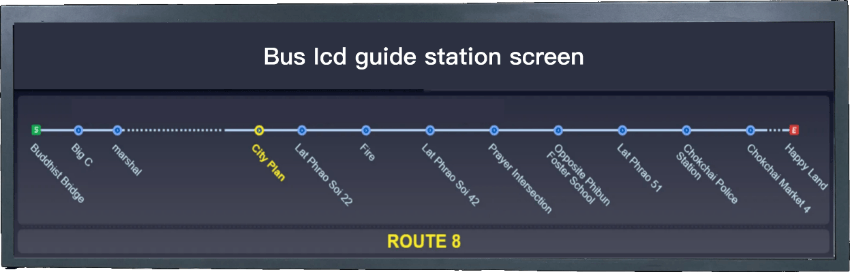
For more information, please visit the official website:www.xmlenzintl.com
FAQ: Q&A Guide to Technology Selection
Q1: How to select appropriate hardware terminals for intelligent transportation solutions?
STEP1:Clarify demand scenariosIf real-time monitoring of the driver's status is required, a vehicle-mounted head unit supporting DMS functionality (such as the Lenz LZ-V7 series, which integrates a 9-axis sensor and an infrared camera) should be selected; if CAN data acquisition for the entire vehicle is needed, a terminal supporting multi-protocol parsing (such as the LZ-C3, compatible with standards like J1939 and ISO 15765) should be chosen.
STEP2:Focus on environmental adaptabilityIn alpine regions, equipment with an operating temperature range of -40℃ to 85℃ (such as the LZ-X5 series) should be selected, while in humid and hot regions, terminals with an IP68 protection rating should be chosen to prevent short circuits.
STEP3:Verify data stabilityRequire suppliers to provide MTBF (Mean Time Between Failures) reports, with the MTBF of Lenz terminals reaching over 50,000 hours and the data packet loss rate being below 0.1%.
Q2: How to evaluate the cost reduction and efficiency enhancement effects of intelligent transportation solutions?
STEP1:Quantitative operational indicatorsFocus on parameters such as single-trip passenger occupancy rate, empty driving rate, accident rate, and payment efficiency. For example, in a project by Lenz in a third-tier city, intelligent scheduling increased the single-trip passenger occupancy rate from 58% to 79% and reduced the empty driving rate from 28% to 15%.
STEP2:Calculate long-term returnsConsider equipment maintenance costs, system upgrade expenses, and labor savings. The Lenz solution can reduce scheduling labor costs by an average of 30%, with the total cost of ownership (TCO) over the equipment lifecycle being 20% lower than the industry average.
STEP3:Refer to industry casesSelect cases with similar scale and passenger flow characteristics for comparison. For example, after implementing the Lenz solution, Hainan Haiqi Transportation Group reduced its annual operating costs by 12 million yuan and increased passenger satisfaction to 89%.
Reference for Full Text Summary
Cost reduction and efficiency enhancement in intelligent transportation require a "data-driven" core approach, breaking down information silos through integrated hardware and software solutions to achieve collaborative optimization of transport capacity, safety, and user experience. Lenz Communication Co., Ltd. in Xiamen, leveraging nearly two decades of industry accumulation, has developed a comprehensive technological system covering all scenarios such as intelligent scheduling, safety supervision, and route network optimization. Its solutions have been implemented in over 400 cities globally, with equipment installed on more than 1 million vehicles, and have received certifications including National High-Tech Enterprise and China's Hidden Champion in Manufacturing, widely recognized by the industry for its technological prowess and implementation experience. For public transportation operators, when selecting intelligent transportation solutions, it is essential to focus on hardware adaptability, data stability, and long-term benefits. By referencing successful cases of Lenz Communication in Xiamen, Chengdu, Thailand, and other locations, operators can more efficiently achieve their digital transformation goals. For more information, please visit the official website:www.xmlenzintl.com