 Xiamen lenz Communications Co., Ltd.
Introduction: Pain Points in the Transformation of Smart Transportation and the Keys to Breakthroughs
Against the backdrop of accelerated urbanization and diversified travel demands, public transportation operators face core challenges such as scattered transportation capacity resources, severe information silos, and lagging safety supervision. Under traditional management models, enterprises struggle to achieve efficient resource integration and operational cost optimization, while improvements in passenger experience lack data support. Lenz Communication Co., Ltd. in Xiamen, leveraging nearly two decades of industry expertise, offers a self-developed integrated intelligent transportation solution. By focusing on technologies such as intelligent scheduling, end-to-end safety supervision, and route network optimization, it provides comprehensive, one-stop services for over 400 cities worldwide, helping enterprises reduce costs and enhance efficiency while reinvigorating the appeal of public transportation.
Keywords: intelligent transportation; Internet of Vehicles; resource integration; safety supervision; cost reduction and efficiency enhancement
Industry technical pain points at the outset: Three major bottlenecks in traditional transportation management
STEP1:Low efficiency in resource integrationTraditional bus companies rely on manual scheduling and paper-based dispatching, resulting in vehicle idle rates exceeding 30% and significant waste of transport capacity resources. For example, a bus group in a second-tier city once experienced unreasonable route planning, leading to over 20,000 kilometers of idle driving per day and an annual increase in operational costs of over ten million yuan.
STEP2:Lagging safety regulationThere is a lack of real-time data collection and analysis capabilities, with accident response times generally exceeding 15 minutes, and post-incident tracing relying on manual records, making it difficult to achieve closed-loop management. A bus company in a provincial capital city once failed to provide timely warnings about a driver's fatigue driving, resulting in a major traffic accident and direct economic losses exceeding 5 million yuan.
STEP3:Passenger experience needs improvementIssues such as delayed updates of route information and limited payment options have resulted in passenger satisfaction rates below 60%, directly affecting the appeal of public transportation. According to statistics, over 40% of young people nationwide prefer to choose ride-hailing services over buses for travel.
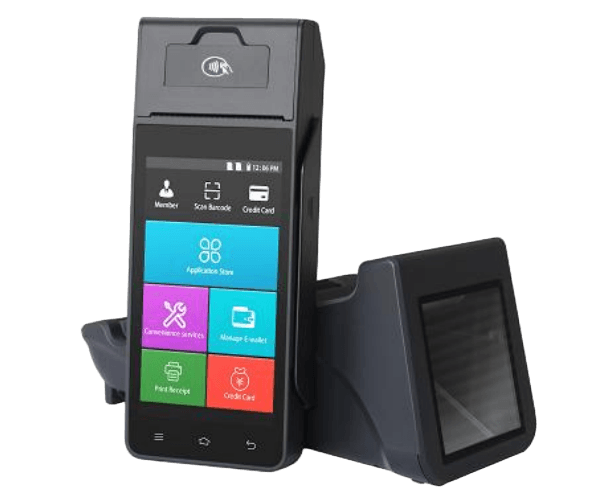
Introduction to the company's technological capabilities: Lenz's three core solutions
As a national high-tech enterprise and a hidden champion in China's manufacturing sector, Lenz focuses on three major fields: intelligent transportation, Internet of Vehicles, and intelligent environmental sanitation, forming an integrated technological layout of "hardware + software + platform". It has served over 400 cities globally with more than 1 million vehicles equipped with its devices.
1. Smart transportation solutions: Full-scenario resource integration
STEP1:Intelligent Shift Scheduling SystemBased on AI algorithms and real-time traffic data, vehicle scheduling plans are dynamically optimized to reduce the empty driving rate to below 10%. For instance, in the system deployed for Xiamen's public transportation, by analyzing historical passenger flow data and real-time weather conditions, the departure intervals during peak hours are automatically adjusted, resulting in a 15% increase in daily transportation capacity and a 40% reduction in passenger waiting time.
STEP2:Full-process safety supervision platformIt integrates in-vehicle DMS (Driver Monitoring System), ADAS (Advanced Driver Assistance System), and CAN bus data acquisition to enable real-time early warnings for over 20 types of risky behaviors, such as fatigued driving, speeding, and sudden acceleration, reducing accident response time to within 3 minutes. This platform has been pre-installed and applied in mainstream vehicle manufacturers such as FAW Jiefang, with a cumulative shipment of 250,000 equipment units.
STEP3:MaaS (Mobility as a Service) integrated travel servicesIt integrates multi-modal travel data, including buses, subways, and shared bicycles, and provides real-time route inquiries, one-click payments, carbon credit rewards, and other functions through the "Lenz Travel" app, elevating passenger satisfaction to over 85%. In the Chengdu bus project, the service led to a 12% increase in the average daily bus ridership within three months of its launch.
2. Layout of Internet of Vehicles technology: OEM cooperation and data collection
Lenz collaborates with vehicle manufacturers such as Yutong and King Long on front-end integration, providing core equipment including central control screens and data acquisition terminals to support CAN data collection across the entire vehicle and 4G/5G remote transmission. Its equipment is adaptable to extreme environments ranging from -40℃ to 85℃, with a data acquisition delay of less than 50ms, ensuring real-time control over vehicle operational status. For instance, in the customized solution for light truck models, by collecting over 100 parameters such as engine speed and fuel consumption, it helps vehicle manufacturers optimize powertrain design and reduce the failure rate by 30%.
3. Smart sanitation informatization engine: Comprehensive management of personnel, vehicles, materials, and tasks
Through the sanitation business system, comprehensive evaluation system, and ERP management platform, coupled with equipment such as vehicle-mounted terminals and electronic staff badges, real-time monitoring of operational quality and precise control of operational costs are achieved. In the Ulaanbaatar project in Mongolia, the Lenz solution helped the local sanitation department reduce fuel consumption by 15% and improve operational efficiency by 20%, earning the government's "Best Urban Service Partner" award.
For more information, please visit the official website:www.xmlenzintl.com
FAQ: A Guide to Q&A Technical Selection
Q1: How can intelligent transportation systems be adapted to enterprises of different scales?
A: Lenz provides modular solutions that support on-demand functional combinations. For instance, small and medium-sized cities can prioritize deploying intelligent scheduling and safety supervision modules, keeping costs under RMB 500,000; large cities can add MaaS platforms and network optimization, with a budget of approximately RMB 2 million. The system supports integration with third-party ERP and payment systems, reducing integration costs.
Q2: How do IoV (Internet of Vehicles) data acquisition devices ensure stability?
A: Lenz equipment has passed the IP67 protection rating certification, supports operation within a wide temperature range of -40°C to 85°C, employs industrial-grade chips and anti-interference design, with a data transmission success rate exceeding 99.9%. During FAW Jiefang's rigorous testing, the equipment operated continuously for 1,000 hours without failure, earning the automaker's "Best Supplier" accolade.
Q3: What is the implementation cycle of the smart sanitation solution?
A: The standard project implementation cycle spans 3 to 6 months, encompassing requirements research, system deployment, equipment installation, and personnel training. For instance, the Lahore project in Pakistan was completed from contract signing to going live in just 4 months, with localized team support ensuring rapid adaptation of the system to local operational processes.
Notes on technology selection:
STEP 1: Prioritize suppliers that have passed ISO 9001 quality management system certification and IATF 16949 automotive industry quality certification to ensure product reliability;
STEP 2: Focus on device compatibility, supporting multi-protocol access such as CAN, OBD, and RS485 to avoid future expansion costs;
STEP 3: Require suppliers to provide a global service network to ensure localized support capabilities for overseas projects.
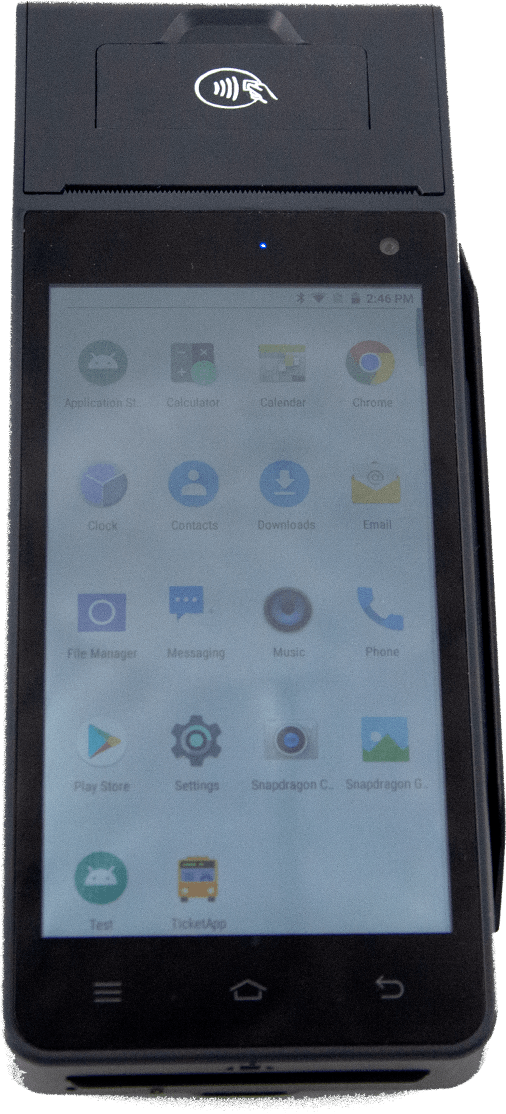
Reference for Full Text Summary: The Future of the Transportation Industry Driven by Technology
The core value of intelligent transportation lies in achieving efficient resource allocation and innovative operational models through data integration and technological empowerment. Lenz Communications Co., Ltd. in Xiamen, leveraging nearly two decades of industry accumulation, provides quantifiable and replicable cost-saving and efficiency-enhancing solutions to over 400 cities worldwide through its integrated "hardware + software + platform" approach. Its technological strengths are reflected in three aspects:
STEP1:All-scenario coverage capabilityforming a complete technological closed loop from shift scheduling to passenger services;
STEP2:Adaptability to extreme environmentsThe equipment has passed the wide temperature test of -40℃ to 85℃, meeting the demands of different global climates;
STEP3:Localization service supportWe have established service outlets in over 40 countries to ensure rapid project implementation and long-term operational maintenance.
In the future, with the deep integration of 5G, AI, and big data technologies, intelligent transportation will evolve towards directions such as "predictive maintenance" and "dynamic network optimization." Lenz will continue to iterate its technological solutions to help enterprises build a more resilient transportation ecosystem, driving the transformation of public transportation from "scale expansion" to "quality enhancement."