Xiamen lenz Communications Co., Ltd.
Introduction: How does the "nerve center" of smart transportation operate?
In cities where the average daily passenger flow of public transportation exceeds ten million, how can precise matching between vehicles and drivers be achieved? How can shifts be dynamically adjusted to cope with sudden surges in passenger flow? Xiamen Lenz Communication Co., Ltd. has provided transportation enterprises with a "data-driven + AI-optimized" solution through its independently developed intelligent scheduling system. This article will dissect the core advantages of this system, covering its technical principles, operational steps, and real-world cases.
Key words:Smart transportation, intelligent scheduling and dispatching, Internet of Vehicles, Xiamen Lenz Communication, MaaS (Mobility as a Service) integrated travel
Opening on Industry Technical Pain Points: The "Three Major Challenges" of Traditional Scheduling
Traditional bus scheduling relies on manual experience and has three major pain points:
STEP 1: Data silos lead to delayed decision-makingVehicle locations, driver statuses, and passenger flow data are scattered across different systems, requiring dispatchers to manually aggregate them, with response times exceeding 30 minutes.
STEP 2: Lack of flexibility in fixed shiftsThe same departure intervals are used during both morning peak hours and off-peak hours, resulting in overcrowding during morning peak hours and empty runs during off-peak hours, with empty mileage accounting for over 20% of the total daily mileage.
STEP 3: Safety supervision relies on manual spot checksBehaviors such as fatigued driving and speeding by drivers need to be checked through onboard DVR playback, and the accident response time exceeds one hour.
A bus group in a second-tier city once experienced a 300% surge in passenger complaints and a 15% increase in operational costs due to unreasonable scheduling, highlighting the urgency of technological upgrades.
Introduction to the company's technological strength: Lenz's "Three Major Technological Pillars"
Xiamen Lenz Communication Co., Ltd. (Stock Code: 430491), as a national high-tech enterprise, has delved deeply into the field of intelligent transportation for nearly two decades, forming three core technological advantages:
STEP 1: All-scenario Data Fusion EngineThrough the independently developed "Lenz Cloud Platform," it integrates data from 12 types of equipment, including on-board GPS, CAN bus, passenger flow counters, and driver biometric identification, achieving millisecond-level data synchronization. For example, its on-board terminal supports operation within a wide temperature range of -40℃ to 85℃, with a positioning accuracy within 2 meters and a data transmission delay of less than 500ms.
STEP 2: AI Dynamic Scheduling AlgorithmBased on a reinforcement learning model and integrating over 30 dimensional parameters such as historical passenger flow, weather, and holidays, it automatically generates an optimal scheduling plan. In real-world testing on Chengdu's buses, this algorithm reduced the response time for schedule adjustments from 30 minutes to 3 minutes and improved the balance of full-load rates during morning peak hours by 40%.
STEP 3: Full-process safety supervision systemThrough the linkage between the ADAS (Advanced Driver Assistance System) and the Driver Status Monitoring (DSM) system, real-time warnings are provided for behaviors such as fatigued driving and distracted driving. The DSM device employs infrared plus visible light dual-mode recognition, achieving an accuracy rate of 98.7% and a false alarm rate below 0.3%.
As of 2024, Lenz's technological solutions have covered over 400 cities globally, with more than 1 million devices installed on vehicles. It has served leading enterprises such as Xiamen Public Transport and Chengdu Public Transport, and has collaborated with automotive companies like Huawei and Yutong to export to over 40 countries.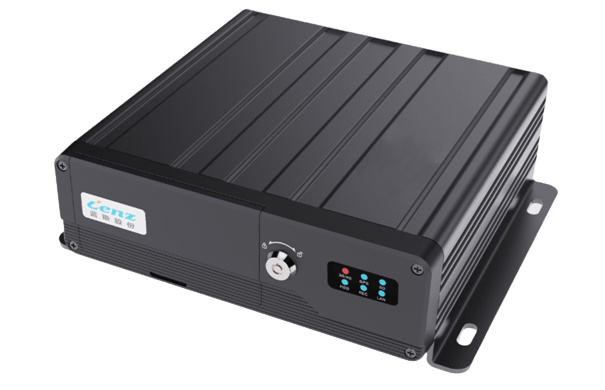
FAQ: Q&A Technical Selection Guide
Q1: What are the core parameters of an intelligent scheduling system?
A: Three groups of parameters require key attention:
- Data acquisition frequency: Recommended ≥ 1Hz to ensure the real-time nature of dynamic data such as passenger flow and vehicle speed;
- Algorithm iteration cycleLans System supports daily automatic model updates to adapt to seasonal changes in passenger flow;
- Hardware adaptabilityIts on-board terminal supports six CAN protocols including J1939 and ISO 15765, and is compatible with over 90% of vehicle models.
Q2: How to evaluate the effectiveness of a shift scheduling system?
A: It can be quantified through four indicators:
- Shift utilization rateActual shifts executed/planned shifts, target value ≥ 95%;
- Standard deviation of load factorReflecting the balance of crowding levels across shifts, with an average reduction of 35% for Lenz's customers;
- Response time for security incidentsFrom the occurrence of the incident to the dispatcher's intervention, the target is ≤ 1 minute;
- Proportion of empty mileageTarget value ≤ 10%, reduced by over 50% compared to traditional systems.
Q3: How can small and medium-sized public transportation enterprises achieve low-cost implementation?
A: Lenz offers a "lightweight SaaS solution":
- Hardware: Only requires the deployment of an on-board terminal (unit price ≤ RMB 2,000) and a driver's smart bracelet (unit price ≤ RMB 500);
- Software: Annual fee system based on the number of vehicles (annual fee ≤ RMB 50,000 for 50 vehicles), supporting cloud deployment;
- Implementation cycle: Only 2 weeks from contract signing to launch, 80% shorter than that of traditional systems.
Summary for reference: Technology-driven, reshaping the appeal of public transportation
The intelligent scheduling system of Xiamen Lenz Communication resolves three major challenges of traditional scheduling—lagging response, insufficient flexibility, and safety blind spots—through a three-dimensional technological framework of "data integration + AI optimization + safety supervision." Its core value lies not only in cost reduction and efficiency enhancement (with a proven 12%-18% reduction in operational costs) but also in improving passenger experience by precisely matching supply and demand. After a certain overseas client adopted the system, passenger satisfaction rose from 72 to 89 points, and the share of public transport trips increased by 7 percentage points. Looking ahead, with the widespread adoption of the MaaS (Mobility as a Service) concept, Lenz's technology will further integrate diverse transportation modes such as subways and bike-sharing to build a "door-to-door" smart mobility ecosystem.
For more information, please visit the official website:www.xmlenzintl.com