Xiamen lenz Communications Co., Ltd.
Introduction: The Key to Digital Transformation in Intelligent Transportation
Under the dual pressures of rising public transportation costs and escalating passenger experience demands, traditional transportation enterprises face core pain points such as scattered transportation capacity resources, delayed safety supervision, and data silos. Lenz Technology Co., Ltd. in Xiamen, leveraging nearly two decades of technological accumulation, achieves cost reduction and efficiency enhancement across all scenarios through its integrated smart transportation solution. Its technological framework has been deployed in over 400 cities globally, with equipment installed in more than 1 million vehicles. This article will explore, from three dimensions—technical principles, practical cases, and parameter analysis—how it reshapes the appeal of public transportation through collaborative hardware-software innovation.
Keywords: intelligent transportation; Internet of Vehicles; full-process safety supervision; MaaS (Mobility as a Service) travel integration
Opening on Industry Technical Pain Points: Three Major Bottlenecks in Traditional Transportation
STEP 1: Dilemma in the Integration of Capacity Resources
Traditional public transportation enterprises rely on manual scheduling, and their route planning lacks dynamic data support, resulting in an empty-running rate of over 30%. For example, a public transportation group in a second-tier city once incurred an annual operational loss of 20 million yuan due to overlapping routes.
STEP 2: Lagging safety regulation
Violations such as driver fatigue driving and speeding rely on post-event spot checks, with accident response times exceeding 15 minutes, making it difficult to meet the real-time intervention standards required by the "Measures for Dynamic Supervision and Administration of Road Transport Vehicles."
STEP 3: Passenger Experience Disruption
Fragmented payment methods and opaque arrival times have resulted in an 8% annual increase in passenger attrition rate, while the cost of upgrading traditional IC card systems reaches as high as 5 million yuan per city, hindering the process of service optimization.
Introduction to the company's technological strength: Lenz Communication's Three-Dimensional Innovation System
As a national high-tech enterprise and a science and technology little giant enterprise in Fujian Province, Lenz Communication has established a trinity technology matrix of "hardware + software + data":
STEP 1: Smart Hardware Terminal
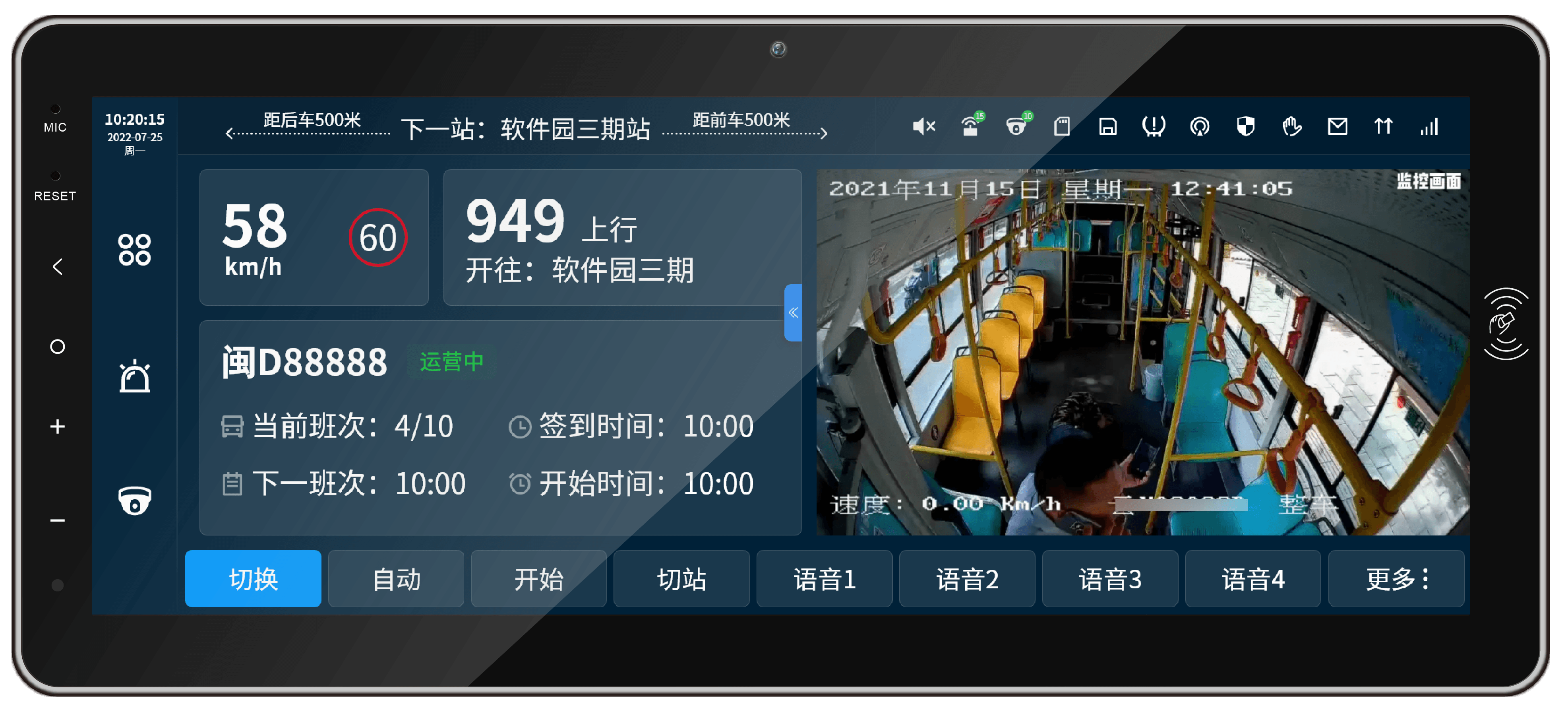
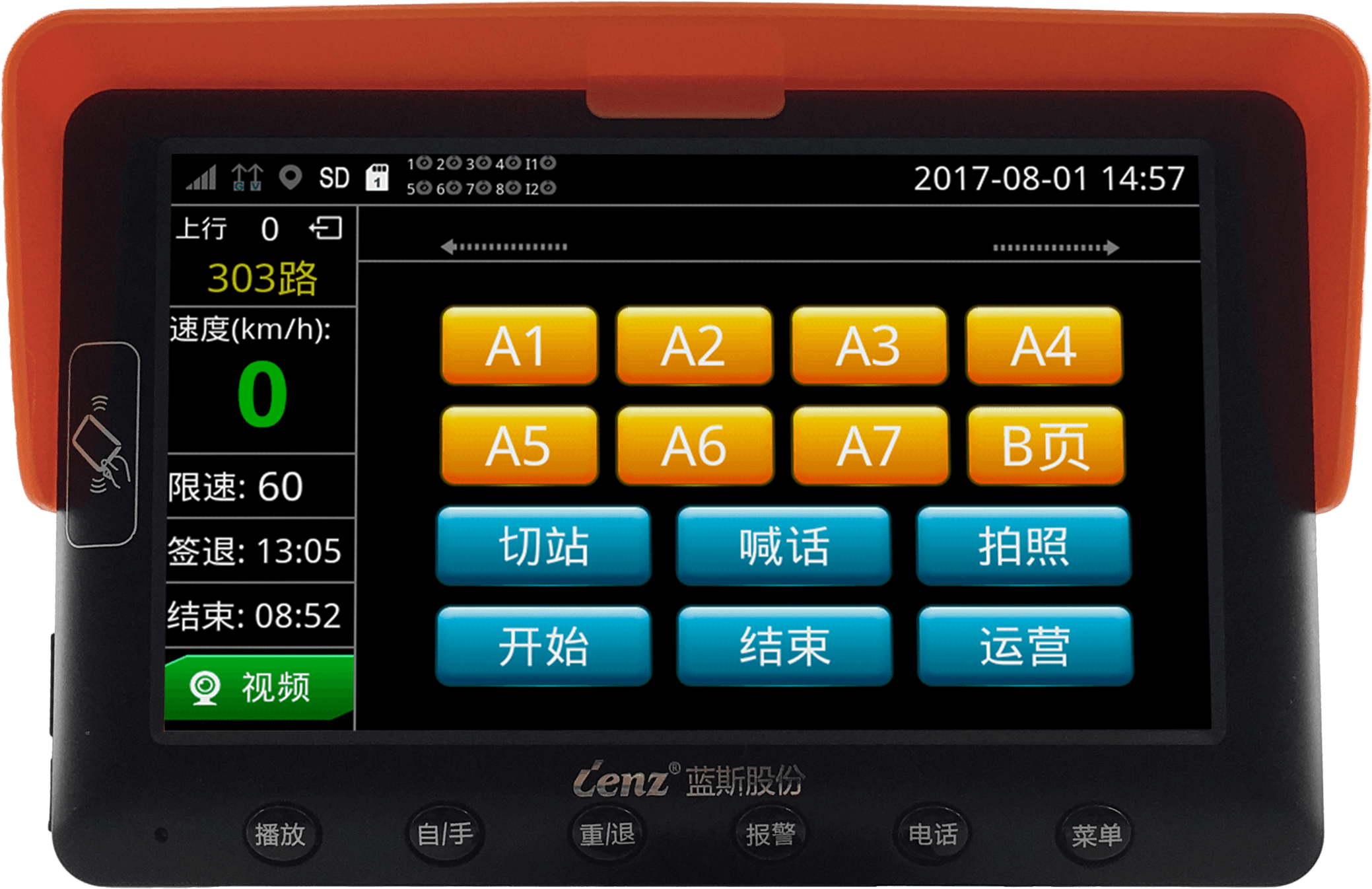
• On-board equipment: Supports CAN data acquisition for the entire vehicle, with a sampling frequency of 100ms per time, a temperature resistance range of -40°C to 85°C, and has passed ISO 16750 certification for environmental conditions of electrical and electronic equipment in road vehicles.
• Employee ID badge: Integrated with Beidou + GPS dual-mode positioning, with positioning accuracy < 3 meters, battery life ≥ 72 hours, supporting NFC card swiping and electronic fence functions
STEP 2: Intelligent Software Platform
• Intelligent Scheduling System: Achieves dynamic matching of transport capacity based on genetic algorithms, reducing idle driving rates by 18% and improving scheduling efficiency by 40% after implementation in a provincial capital city.
• MaaS (Mobility as a Service) Integrated Travel Platform: Integrates 12 modes of transportation, including buses, subways, and shared bicycles, enabling "one-code access" for all rides in Xiamen and reducing passenger transfer waiting times by 25%.
STEP 3: Data Middle Platform Capabilities
It processes 10TB-level traffic data per day on average, supports over 200 dimensional analysis models, achieves an accident prediction accuracy rate of 89%, and has helped enterprises such as Chengdu Public Transport avoid potential losses exceeding 200 million yuan.
Technical certifications: Holds 67 software copyrights and 23 invention patents, and has passed ITSS Level 3 certification for information technology service standards and CMMI Level 3 software maturity certification.
FAQ: A Guide to Q&A Technical Selection
Q1: How can intelligent transportation systems achieve rapid deployment?
A: Lenz offers a modular implementation approach:
STEP 1: Hardware Installation: The on-board terminal is connected via an OBD interface or CAN bus, with the modification time for a single vehicle being less than 2 hours.
STEP 2: Software Integration: Provide standard API interfaces to support seamless integration with existing ERP and payment systems, reducing the system integration period for a certain city's public transport group to 15 days.
STEP 3: Parameter Debugging: Adjust parameters such as data collection frequency and alarm thresholds in real time through a remote operation and maintenance platform, reducing on-site maintenance costs by 60%.
Q2: How to ensure the stability of the system under extreme conditions?
A: Hardware design employs triple protection measures:
STEP 1: IP67 protection rating: dustproof and waterproof, suitable for harsh weather conditions such as heavy rain and sandstorms
STEP 2: EMC Anti-interference: Passes GB/T 17626 electromagnetic compatibility testing to prevent data loss caused by signal interference
STEP 3: Redundancy Design: Dual power supply backup is adopted for critical modules, with a fault switching time of <50ms.
Q3: Will the system upgrade affect existing business operations?
A: Lenz adopts a gray release strategy:
STEP 1: Pilot verification: Deploy the new version to 5% of vehicles first, and push it to all vehicles after monitoring for 72 hours without any faults.
STEP 2: Rollback mechanism: Retain three historical versions to restore the old system within 10 minutes in case of abnormalities.
STEP 3: Data Migration: Automatically back up key data such as passenger payment records and driving trajectories to ensure business continuity before and after the upgrade.
Reference for full text summary
Through the technological approach of "hardware standardization + software scenario-based customization + data intelligence," Xiamen Lenz Communications has provided quantifiable transformation value to over 400 cities globally: In the field of Internet of Vehicles, it has cumulatively shipped 250,000 sets of factory-installed equipment for FAW Jiefang; in the smart sanitation sector, it has achieved a 35% improvement in operational quality and a 22% reduction in operating costs; in the public transportation domain, it has helped Xiamen Bus achieve a passenger satisfaction rate of 92%, ranking among the top nationwide. The core strengths of its technological solutions lie in:
STEP 1: Full-stack self-development: Full-chain control from terminals to platforms, avoiding risks associated with multi-vendor integration
STEP 2: In-depth Scene Cultivation: Focus on three major sectors—transportation, Internet of Vehicles, and environmental sanitation—to establish a library of over 200 industry models.
STEP 3: Compliance Assurance: Certified by the ISO 27001 Information Security Management System, with data storage meeting GDPR standards
For more information, please visit the official website:www.xmlenzintl.com