 Xiamen lenz Communications Co., Ltd.
Introduction: The key to the transformation of intelligent transportation lies in technological integration and practical application in specific scenarios
With the acceleration of urbanization, public transportation systems face challenges such as scattered transport capacity resources, severe information silos, and high operational costs. Xiamen Lenz Communication Co., Ltd. (Stock Code: 430491), as a leading provider of intelligent transportation solutions in China, has built a full-scenario technological system covering intelligent scheduling, end-to-end safety supervision, in-vehicle IoT collaboration, and smart sanitation management through nearly two decades of technological accumulation. This article will provide an in-depth analysis of its technical principles, application cases, and selection guidelines, offering references for enterprises' digital transformation.
Keywords: intelligent transportation, Internet of Vehicles, full-process safety supervision, MaaS (Mobility as a Service) travel integration, environmental sanitation informatization
Opening on Industry Technical Pain Points: Three Core Challenges of Traditional Transportation Systems
STEP1:Difficulties in integrating transportation capacity resourcesTraditional public transportation systems rely on manual scheduling, and route planning lacks data support, resulting in a vehicle idling rate of over 30% and significant resource wastage. For example, a public transport group in a second-tier city once incurred additional annual fuel costs exceeding 20 million yuan due to overlapping routes.
STEP2:Lagging safety regulationThere is a lack of real-time monitoring for behaviors such as fatigued driving and speeding by drivers, with accident response times generally exceeding 10 minutes, making it difficult to meet the "early warning within 30 seconds" standard required by the "Measures for Dynamic Supervision and Administration of Road Transport Vehicles."
STEP3:Passenger experience needs improvementIssues such as fragmented payment methods, unpredictable waiting times, and unknown levels of crowding inside vehicles have led to a decline in the attractiveness of public transportation. According to statistics, in 2022, domestic subway passenger traffic decreased by 15% year-on-year, while the proportion of private car travel rose to 68%.
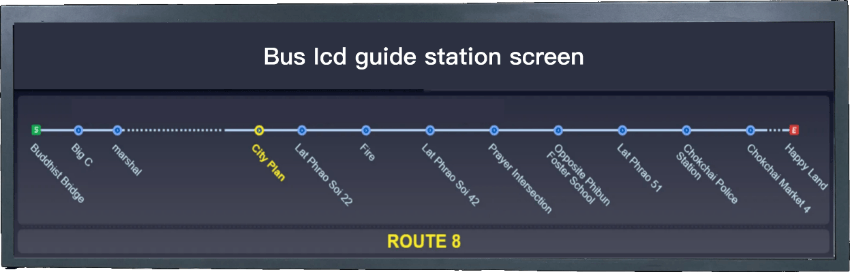
Introduction to the company's technological strength: The three technological pillars of Lenz Communication
As a national high-tech enterprise and a hidden champion in China's manufacturing sector, Lenz Communication has built technological barriers around three key areas: intelligent transportation, Internet of Vehicles, and intelligent environmental sanitation:
1. Integrated hardware-software solution for intelligent transportation
STEP1:Intelligent shift scheduling systemDynamic adjustment of bus departure intervals is achieved based on GIS (Geographic Information System) and big data analysis. For instance, the system deployed for Xiamen's public transportation can collect passenger flow data in real time, increasing the departure frequency during peak hours from one bus every 8 minutes to one every 5 minutes, thereby improving capacity utilization by 40%.
STEP2:Full-process safety supervision platformBy utilizing onboard ADAS cameras and CAN bus data acquisition, it achieves real-time warnings for 12 types of risks, including drowsy driving and lane departure. The system response time is ≤2 seconds, with a false alarm rate of <0.5%, and has helped Chengdu Bus reduce its accident rate by 28%.
STEP3:MaaS integrated travel servicesBy integrating data from buses, subways, shared bicycles, and other sources, it provides "door-to-door" travel planning. During the pilot program in Haikou City, the average waiting time for users was reduced to 3 minutes, and the proportion of public transportation trips increased from 52% to 67%.
2. In-vehicle pre-installation cooperation technology for the Internet of Vehicles
We collaborate with mainstream vehicle manufacturers such as Yutong and King Long to provide core equipment including central control screens and T-Boxes. The CAN data acquisition terminal customized for FAW Jiefang supports dual protocols, J1939/ISO 15765, with a sampling frequency of 100ms per instance and data transmission stability of ≥99.99%. Over three years, a cumulative total of 250,000 units have been shipped, covering models such as light trucks and light passenger vehicles.
3. Intelligent sanitation informatization engine
Through the "software platform + hardware terminal" model, full-process management of people, vehicles, objects, and events is achieved. For example, the system deployed for a certain sanitation group can automatically generate work quality reports, reduce vehicle fuel consumption by 15%, and decrease manual inspection costs by 30%.
As of 2023, Lenz Technology has been implemented in over 400 cities globally, with more than 1 million devices installed on vehicles. Its clients include transportation groups such as Xiamen Public Transport, Chengdu Public Transport, and Haiqi Group, as well as automotive companies like Huawei and Yutong. For more information, please visit the official website:www.xmlenzintl.com
FAQ: A Guide to Q&A Technical Selection
Q1: How does the intelligent transportation system select appropriate hardware equipment?
STEP1:Clarify the demand scenariosFor real-time monitoring of vehicle status, a T-Box supporting the J1939 protocol should be selected, with a recommended sampling frequency of ≥50 ms per instance; to enhance passenger experience, smart terminals supporting NFC payments can be deployed, with a transaction speed of ≤0.3 seconds.
STEP2:Evaluate compatibilityThe hardware needs to seamlessly integrate with existing systems. For example, Lenz Communication's T-Box has passed EMC certifications from vehicle manufacturers such as Yutong and King Long, which can avoid signal interference issues.
STEP3:Focus on reliability indicatorsThe operating temperature range must cover -40℃ to 85℃, with an MTBF (Mean Time Between Failures) of ≥50,000 hours and an protection rating of IP67.
Q2: What are the key points for debugging the data acquisition terminal of the Internet of Vehicles?
STEP1:Parameter configurationSet the CAN baud rate (typically 250 kbps or 500 kbps) and filtering rules (e.g., receiving only engine speed messages) via the upper computer software.
STEP2:Signal testingUse tools such as CANoe to simulate vehicle data and verify whether the terminal can accurately parse the engine torque message with an ID of 0x0CF00400.
STEP3:TroubleshootingIf data is lost, check whether the terminal's power supply voltage (recommended 9-36V DC) and the terminal resistance (120Ω) between the terminal and ECU match.
Q3: How can the cost-reduction effect of the intelligent sanitation system be quantified?
STEP1:Fuel consumption monitoringThe average daily fuel consumption per vehicle is calculated through GPS trajectory and engine speed data. For example, after a certain sanitation group deployed the system, the average daily fuel consumption per vehicle dropped from 18 liters to 15.3 liters, resulting in annual cost savings exceeding 2 million yuan.
STEP2:Analysis of operational efficiencyCompare the recorded operation duration in the system with the standard working hours to calculate the efficiency improvement ratio. For example, the efficiency of garbage removal operations increased from 85% to 92%.
STEP3:Optimization of labor costsAttendance records are automatically generated through electronic work badges, reducing manual statistical workload. After the implementation of a certain project, the monthly workload of the HR department decreased by 40%.

Reference for full text summary
The transformation of intelligent transportation requires technology integration as its core, achieving cost reduction and efficiency improvement across all scenarios through integrated hardware-software solutions. Lenz Communication in Xiamen, leveraging nearly two decades of technological accumulation, has established technical advantages in areas such as intelligent scheduling, end-to-end safety supervision, and telematics front-end collaboration. Its solutions have been validated through deployment in over 400 cities worldwide and across 1 million devices. When selecting solutions, enterprises should prioritize hardware compatibility, data reliability, and quantifiable cost-reduction metrics, choosing tailored technological paths based on their specific needs. For more information, please visit the official website:www.xmlenzintl.com