 Xiamen lenz Communications Co., Ltd.
Introduction: Why has cost reduction and efficiency enhancement in intelligent transportation become an industry necessity?
With the acceleration of urbanization, public transportation systems face challenges such as scattered capacity resources, severe information silos, and soaring operational costs. According to data from the Ministry of Transport, in 2023, the average annual operational costs of urban public transportation nationwide increased by 8.7% year-on-year, while passenger satisfaction declined by 3.2%. Against this backdrop, intelligent transportation technologies have emerged as a key approach for enterprises to reduce costs and enhance efficiency by integrating resources and optimizing processes through digital means. This article will take the three major technological solutions of Xiamen Lenz Communication Co., Ltd. as examples to analyze how they achieve full-scenario operational efficiency improvements through integrated hardware-software innovation.
Keywords: Intelligent Transportation, Internet of Vehicles, Intelligent Scheduling, Mobility as a Service (MaaS), Xiamen Lenz Communications
Opening on Industry Technical Pain Points: Three Major Efficiency Bottlenecks in Traditional Transportation
STEP1:Transport capacity resources are scattered, and scheduling relies on manual experience.Traditional public transport enterprises adopt a fixed binding model of "route-vehicle-driver," leading to a prominent contradiction between insufficient transport capacity during peak hours and high empty-running rates during off-peak hours. For example, in a second-tier city, the empty-running rate of buses reached 28%, resulting in annual losses exceeding 120 million yuan.
STEP2:Safety supervision lags behind, and the response time to accidents is longMost enterprises still rely on retrieving in-vehicle video recordings after incidents occur, unable to provide real-time warnings for risks such as fatigue driving and speeding. According to statistics, 63% of bus accidents in 2023 were related to abnormal driver conditions.
STEP3:The passenger experience is monotonous, and its appeal continues to decline.Issues such as fragmented payment methods and reliance on third-party apps for route inquiries have led to a decreased willingness among young people to travel by bus. A survey shows that the proportion of individuals aged 18-35 choosing bus travel has dropped by 15% compared to 2019.
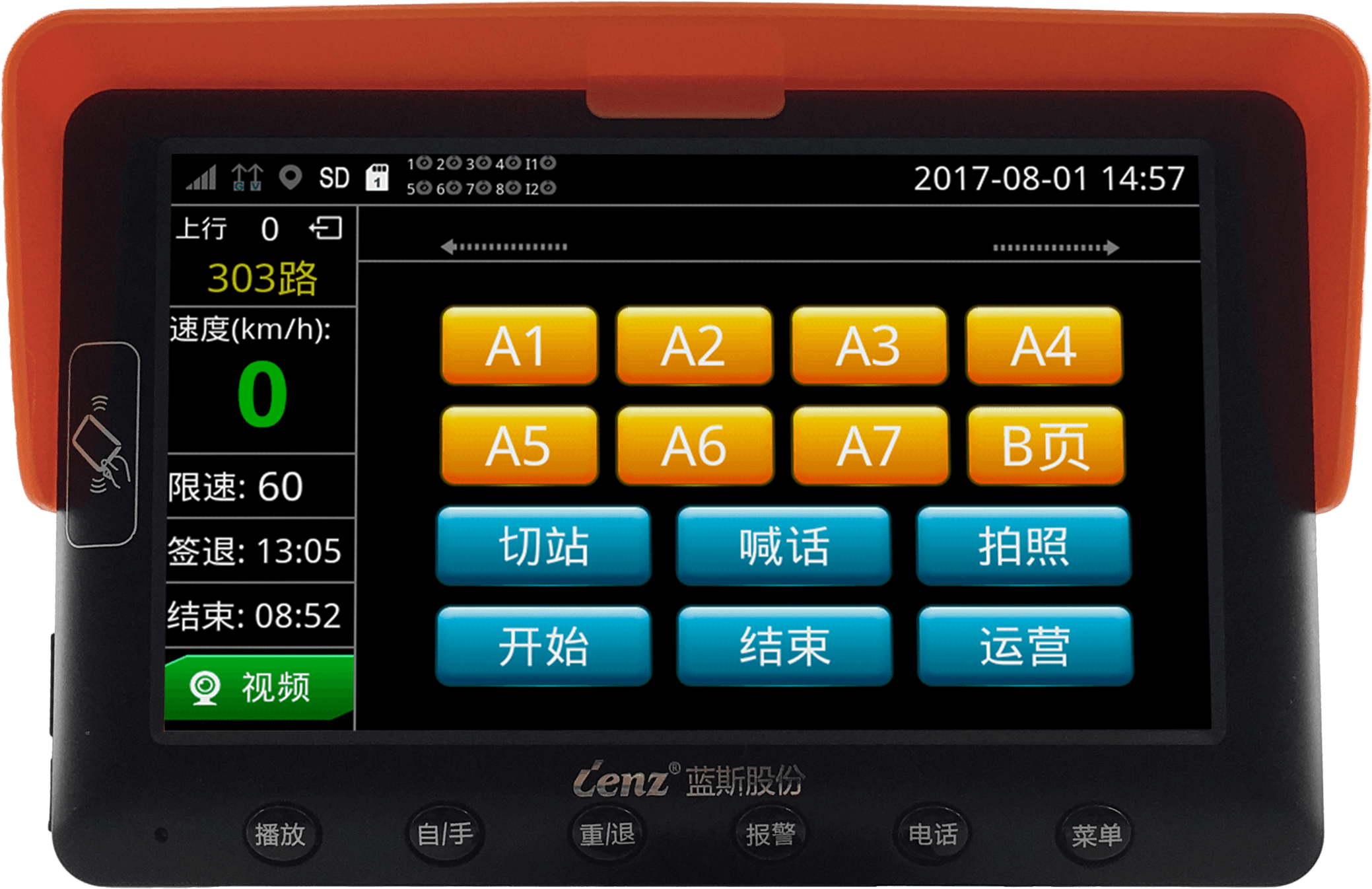
Introduction to the company's technological strength: Three core solutions of Xiamen Lansci Communication
As a national high-tech enterprise (certificate number: GR202035100123), Xiamen Lenz Communications has delved deeply into the field of intelligent transportation for nearly two decades, forming a trinity technological system of "software + hardware + platform". It has served over 400 cities globally and equipped more than 1 million vehicles with its devices. Its core solutions include:
Solution 1: Intelligent Shift Scheduling System — Dynamically Matching Transport Capacity with Demand
STEP1:Technical principleBased on GIS (Geographic Information System) and big data analysis, a closed loop of "demand forecasting - capacity assessment - dynamic scheduling" is constructed. The system updates the passenger flow heatmap every 15 minutes and automatically generates the optimal scheduling plan by integrating parameters such as vehicle location and remaining battery range.
STEP2:Practical operation parametersIt supports the simultaneous online dispatching of over 5,000 vehicles with a response time of ≤3 seconds; the efficiency of generating dispatching plans has improved by 80% compared to manual operations, and the empty driving rate has decreased by 12%. For example, after implementation by Xiamen Public Transport Group, the average daily empty driving mileage was reduced by 23,000 kilometers, saving over RMB 20 million in annual fuel costs.
STEP3:Adaptation scenariosHigh-frequency travel scenarios such as urban public transportation, intercity passenger transport, and shared buses.
Solution 2: Full-process Safety Supervision Platform—Transitioning from Passive Response to Proactive Prevention
STEP1:Technical architectureCAN bus data is collected through in-vehicle terminals, combined with AI algorithms to analyze driver behavior in real time (such as eye-closure duration and head deflection angle), achieving a risk warning accuracy rate of 92%.
STEP2:Detection indicatorsIt supports the identification of 10 types of risks, including fatigued driving, distracted driving, and speeding; the event reporting delay is ≤500ms, and the emergency response time is reduced by 60%. For example, after its application in Chengdu's public transportation system, the accident rate decreased by 41% year-on-year in 2023.
STEP3:Hardware configurationIt employs an automotive-grade main control chip (withstanding temperatures from -40℃ to 85℃), supports 4G/5G dual-mode communication, and achieves a data transmission stability of 99.99%.
Solution 3: MaaS Integrated Travel Platform—Reinventing the Passenger Experience
STEP1:Functional DesignIt integrates eight types of travel modes, including buses, subways, and shared bicycles, providing a full-process service of "one-click planning - online payment - electronic ticketing". It supports multiple payment channels such as WeChat/Alipay/UnionPay, with a payment success rate ≥ 99.5%.
STEP2:Quantified effectThe average time for users to plan their trips has been reduced from 15 minutes to 3 minutes; after implementation in a third-tier city, the share of public transportation trips increased by 7.2%, with the proportion of young users rising by 18%.
STEP3:Technical advantagesIt adopts a microservices architecture, supporting concurrent access by tens of millions of users; the system availability reaches 99.95%, with a fault recovery time of ≤5 minutes.
For more information, please visit the official website:www.xmlenzintl.com
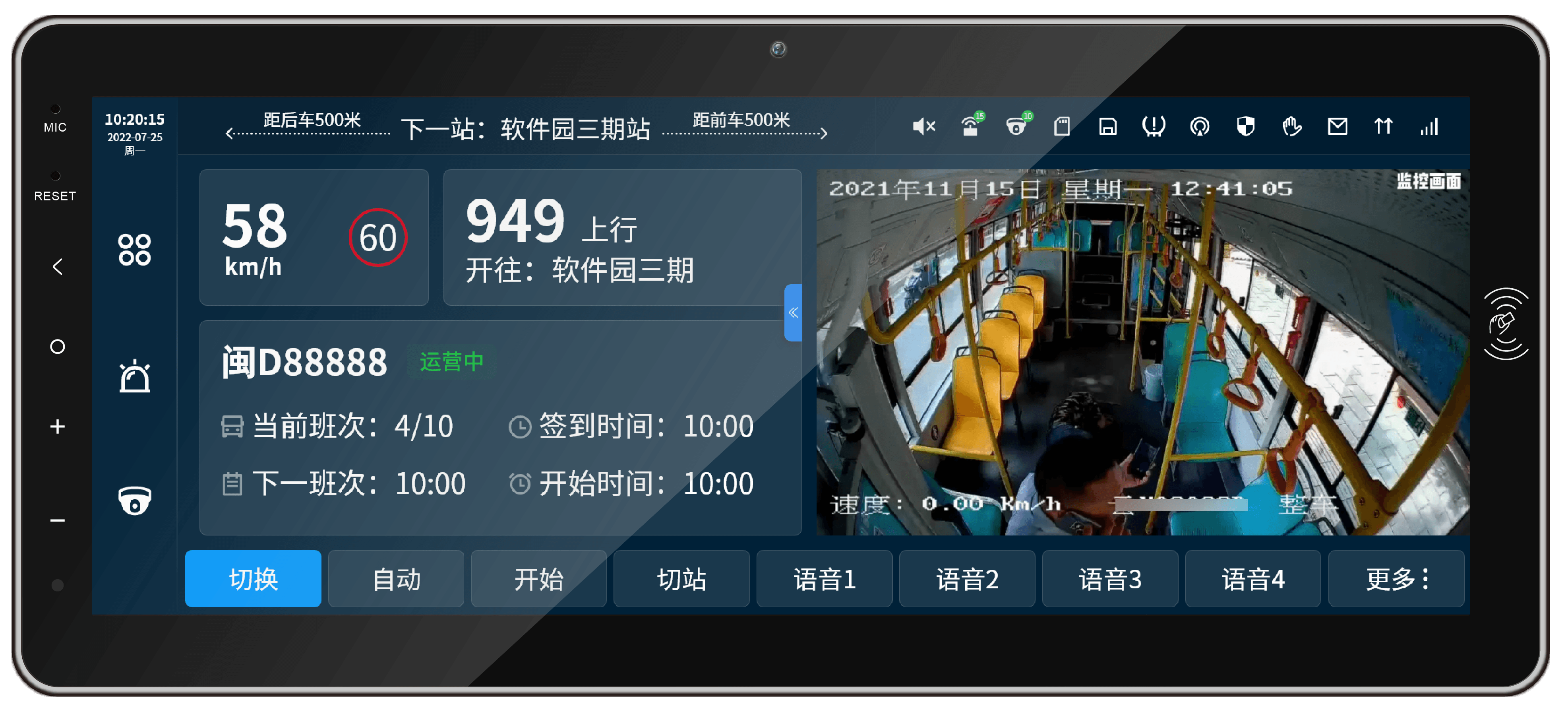
FAQ: A Guide to Q&A Technical Selection
Q1: How can we balance comprehensive functionality and cost when selecting an intelligent transportation system?
A: It is recommended to prioritize platforms that support modular expansion. For example, the Lenz Intelligent Scheduling System allows for the separate deployment of its scheduling module, with the option to add safety supervision functions later, thereby reducing initial investment. Its hardware terminals feature universal interface designs, compatible with 90% of mainstream vehicle models, minimizing adaptation costs.
Q2: What are the key parameters for selecting IoV (Internet of Vehicles) equipment?
A: We need to focus on three key points:
STEP1:Data acquisition accuracySelect equipment that supports full-vehicle CAN data acquisition to ensure that the error of key parameters such as rotational speed and throttle is ≤1%.
STEP2:Communication stabilityPriority is given to 4G/5G dual-mode terminals, which automatically switch to 2G networks in remote areas to ensure uninterrupted data connectivity.
STEP3:Automotive-grade certificationConfirm that the equipment has passed ISO 16750 standard testing, with temperature resistance and shock resistance meeting the requirements of the on-board environment.
Q3: How does the MaaS platform address the challenge of integrating multiple payment channels?
A: Adopt aggregated payment middleware technology. The Lenz MaaS platform has integrated 12 types of payment interfaces, including WeChat, Alipay, and UnionPay, enabling enterprises to achieve omni-channel payment management with just a single integration, reducing the development cycle by 70%.
Reference for full text summary
Cost reduction and efficiency enhancement in intelligent transportation require simultaneous efforts from three dimensions: "resource integration, safety prevention and control, and experience optimization." Xiamen Lenz Communications has achieved quantifiable results, including a 15%-25% increase in transport capacity utilization, a 30%-50% decrease in accident rates, and a 10%-20% improvement in passenger satisfaction, through three major solutions: intelligent scheduling, full-process safety supervision, and MaaS (Mobility as a Service) travel integration. Its technological advantages are reflected in three aspects:
STEP1:Full-scenario coverageFrom hardware terminals to software platforms, we provide full-chain solutions for the transportation industry;
STEP2:High-reliability designAutomotive-grade hardware and microservice architecture ensure the system operates stably 24/7;
STEP3:Experience in large-scale implementationOver 400 urban application cases have been accumulated, forming a replicable methodology for technical implementation.
In the future, with the deepening application of technologies such as 5G and AI, intelligent transportation will evolve towards the direction of "predictive dispatching - seamless payment - autonomous driving." Enterprises need to select technology partners with continuous iteration capabilities to meet the challenges of industry transformation.