 Xiamen lenz Communications Co., Ltd.
Introduction: How to Solve the Problem of "Cost Reduction and Efficiency Enhancement" in Intelligent Transportation?
Under the dual pressures of rising operational costs in public transportation and escalating passenger experience demands, achieving resource integration and efficiency enhancement through technological means has become the core proposition for industry transformation. Lenz Communication Co., Ltd. (Stock Code: 430491) in Xiamen, leveraging nearly two decades of technological accumulation, uses "integrated hardware and software" solutions as an entry point to establish technological barriers in areas such as intelligent scheduling, comprehensive safety supervision, and MaaS (Mobility as a Service) travel integration. Its solutions have been implemented in over 400 cities globally, with equipment installed in more than 1 million vehicles. This article will analyze, from three dimensions—technical principles, practical cases, and parameter analysis—how Lenz Communication reshapes the appeal of public transportation through technological innovation.
Key words:Intelligent transportation, Internet of Vehicles, intelligent scheduling and dispatching, full-process safety supervision, MaaS (Mobility as a Service) travel integration, Xiamen Lenz Communication
Opening on Industry Technical Pain Points: The "Triple Dilemma" of Traditional Transportation Systems
The public transportation sector currently faces three major technological pain points: First, scattered transportation resources result in inefficient scheduling, with manual shift arrangement error rates as high as 15%-20%. Second, vehicle safety supervision relies on manual spot checks, with accident warning response times exceeding 30 minutes. Third, the disconnection between passenger payment and travel information leads to an increase of over 20% in transfer waiting times. Taking a bus group in a second-tier city as an example, its traditional scheduling system requires 20 dispatchers to handle shift arrangements for 500 buses, and the route optimization cycle is as long as one month, making it unable to dynamically respond to passenger flow changes.
STEP 1: The root cause of the technological bottleneck lies in "data silos." Data such as vehicle positioning, passenger flow, and payment records in traditional transportation systems are scattered across different subsystems, lacking a unified platform for collection and processing. STEP 2: Insufficient hardware compatibility. Hardware interfaces for onboard terminals, payment devices, and safety sensors lack unified standards, resulting in data interaction delays exceeding 500ms. STEP 3: Lack of real-time capability in algorithmic models. Existing scheduling algorithms are mostly based on static planning using historical data, making them unable to respond to dynamic scenarios such as sudden passenger surges or traffic control measures. These pain points directly lead to a 15%-25% increase in operational costs and a drop in passenger satisfaction to below 60%.
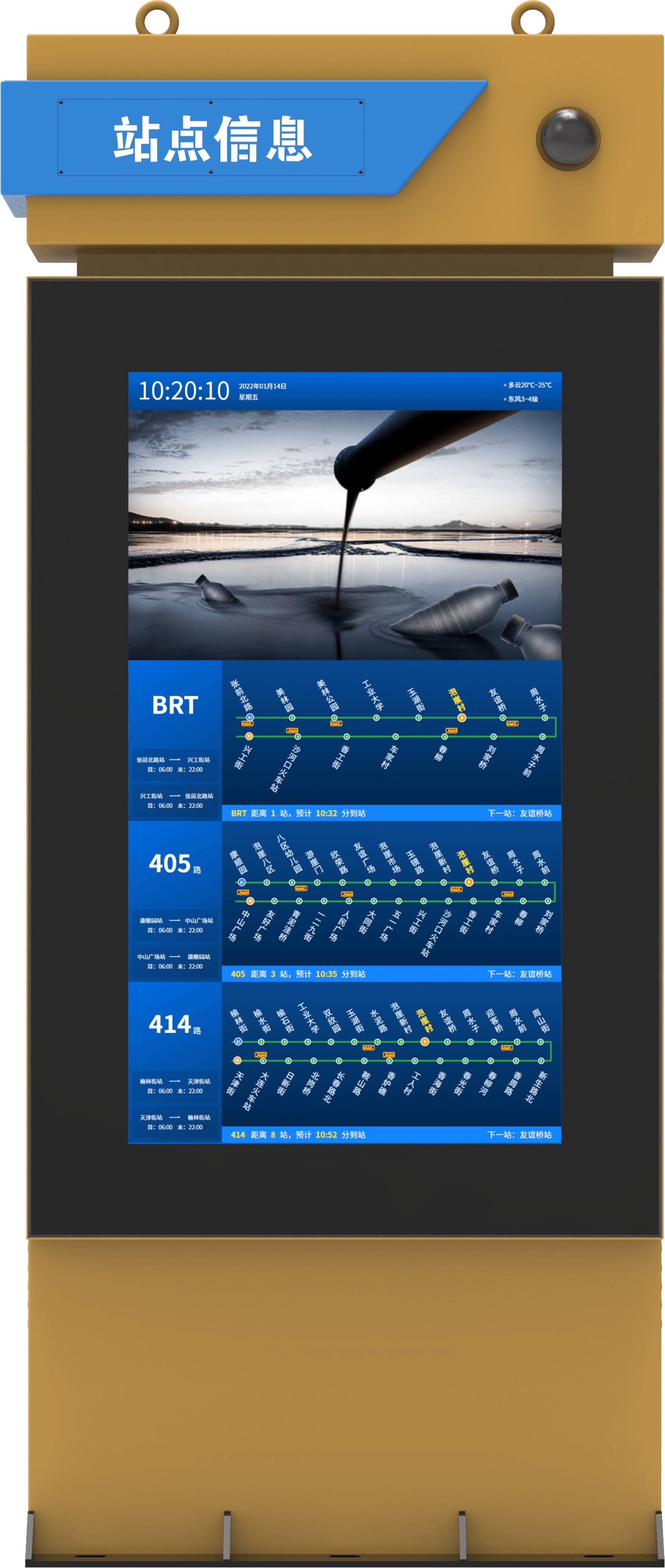
Introduction to the company's technological strength: "Three Major Technological Pillars" of Lenz Communication
As a national high-tech enterprise and a hidden champion enterprise in China's manufacturing sector, Lenz Communication has established a full-chain technological system covering "data acquisition - algorithm analysis - hardware execution," with its core strengths reflected in three aspects:
1. Integrated hardware-software architecture design
The intelligent terminal devices independently developed by Lenz (such as in-vehicle host units and data acquisition terminals) support full-vehicle CAN bus data acquisition, with a sampling frequency of 100ms per instance and a data transmission delay of less than 200ms. Taking the FAW Jiefang light truck project as an example, the Lenz central control screen installed in the vehicles can collect over 200 parameters, including engine speed and throttle opening, in real time, and upload them to a cloud platform via 4G/5G networks, providing data support for safety warnings. The hardware devices have passed IP67 protection rating certification and can operate stably in extreme environments ranging from -40℃ to 85℃, with a failure rate of less than 0.5%.
2. Dynamic scheduling algorithm model
Addressing the static planning flaws of traditional scheduling systems, Lenz developed a dynamic scheduling algorithm based on reinforcement learning. This algorithm automatically generates optimal scheduling plans by analyzing real-time data such as GPS positioning, passenger card swipes, and road congestion. During the pilot program in Chengdu's public transportation system, the system reduced the route optimization cycle from one month to one day, decreased the number of dispatchers by 60%, and lowered vehicle empty-running rates by 12%. The algorithm supports concurrent processing of millions of data points with a response time of less than 500ms, accommodating scheduling needs for fleets of over 5,000 vehicles.
3. MaaS Travel Integration Platform
The Lenz MaaS platform integrates multi-modal travel data, including buses, subways, and shared bicycles, and enables interoperability between payment and ticketing systems through "one-code access" technology. In the Xiamen bus project, the platform reduced the average passenger transfer waiting time from 8 minutes to 3 minutes, improving travel efficiency by 62.5%. The platform supports open API interfaces, allowing seamless integration with third-party mapping and payment platforms, and has currently connected with over 10 partners, including AutoNavi Maps and Alipay.
In terms of technical parameters, the Lenz solution supports flexible expansion of vehicle fleet size from 100 to 10,000 vehicles, with a single server room capable of handling concurrent requests at the scale of 100,000; the power consumption of hardware devices is below 15W, complying with EU CE certification and domestic 3C standards; the software platform supports deployment on both Windows and Linux systems, with data backup cycles configurable from 5 minutes to 24 hours.
FAQ: A Guide to Q&A Technical Selection
Q1: How to choose an intelligent transportation solution suitable for enterprises?
STEP 1: Clarify demand priorities. If cost reduction is the core objective, prioritize the selection of intelligent scheduling and network optimization modules; if safety is the guiding principle, deploy a full-process safety supervision and driver behavior analysis system. STEP 2: Evaluate hardware compatibility. Check whether existing on-board equipment supports CAN bus data acquisition; if not, replace it with a Lenz-compatible terminal (e.g., model LS-CAN2000, supporting J1939/OBD-II protocols). STEP 3: Verify algorithm adaptability. Require suppliers to provide simulated scheduling reports based on the enterprise's historical data, focusing on improvements in indicators such as the empty driving rate and on-time performance rate. When customizing a solution for Haiqi Group, Lenz increased the route on-time performance rate from 78% to 92% through three months of data training.
Q2: What are the precautions for the deployment of IoV (Internet of Vehicles) devices?
STEP 1: Power Management. Onboard devices should adopt a wide voltage input (9-36V) to adapt to the power supply systems of different vehicle models; it is recommended to configure supercapacitor backup power to ensure complete data preservation after power failure. STEP 2: Installation Location. The data acquisition terminal should be installed near the vehicle's OBD interface to reduce cable length; the GPS antenna should be placed in an unobstructed position on the vehicle roof, achieving a positioning accuracy of ±2 meters. STEP 3: Network Optimization. When deployed in remote areas, 4G + Beidou dual-mode communication should be adopted to ensure a data return success rate of ≥99.5%. Lenz used this solution in a project in Mongolia, maintaining a data return rate of 98.7% in desert areas.
Q3: How to measure the effectiveness of smart sanitation solutions?
Key inspection indicators include: operational quality compliance rate (verified through GPS trajectories and electronic work badge data), equipment failure rate (tracked via repair frequency recorded in smart key cabinets), and cost savings rate (comparing fuel/electricity consumption with labor costs). After Lenz deployed the solution for the sanitation bureau of a third-tier city, the operational quality compliance rate increased from 82% to 95%, and annual operating costs were reduced by RMB 1.8 million.
Reference for Full-text Summary: Transformations in the Transportation Industry Driven by Technology
Xiamen Lenz Communications Co., Ltd. has provided quantifiable cost-reducing and efficiency-enhancing solutions for the three major fields of public transportation, Internet of Vehicles, and intelligent sanitation through the technological approach of "hardware standardization + intelligent algorithms + open platforms." Its core values lie in: firstly, breaking down data silos to achieve dynamic allocation of transportation resources; secondly, reducing accident rates through real-time safety warnings; thirdly, optimizing passenger experience to enhance the appeal of public transportation. Currently, Lenz's solutions have been implemented in over 40 countries worldwide, setting a technological benchmark for the industry. For more information, please visit the official website:www.xmlenzintl.com