 Xiamen lenz Communications Co., Ltd.
Introduction: The "Dual-Engine" Challenge of Intelligent Transportation
In the field of public transportation, long-standing pain points include inefficient scheduling, numerous blind spots in safety supervision, and difficulties in integrating isolated information systems. How can technological means be used to achieve the integration of transportation capacity resources, early warning of safety risks, and optimization of passenger experience? Xiamen Lenz Communication Co., Ltd. (Stock Code: 430491) has built an intelligent transportation solution covering scenarios such as public buses, passenger transport, and sanitation, with "intelligent scheduling + end-to-end safety supervision" as its core. This solution has served over 400 cities globally and equipped more than 1 million vehicles. This article will analyze how the company addresses industry challenges through technological innovation from three perspectives: technical principles, application scenarios, and practical cases.
Keywords: intelligent transportation, intelligent scheduling, safety supervision, Internet of Vehicles, Xiamen Lenz Communication
Opening on Industry's Technological Pain Points: The "Triple Dilemma" Conundrum in Traditional Transportation
STEP1:Inefficient schedulingTraditional manual scheduling relies on experience and struggles to cope with dynamic changes such as sudden passenger flow surges and vehicle breakdowns, resulting in wasted transport capacity or excessively long passenger waiting times. For example, a city's bus group once experienced unreasonable scheduling, leading to departure intervals exceeding 20 minutes on some routes during peak hours and a 30% increase in passenger complaints.
STEP2:There are many blind spots in safety supervision.There is a lack of real-time monitoring of drivers' behaviors such as fatigued driving, speeding, and违规操作 (violating regulations/operations; note: "违规操作" is translated descriptively here as a more general term since the context doesn't specify the exact nature of the violations; alternatively, it could be "non-compliant operations" or "operations against regulations" depending on the field) , making it difficult to promptly identify accident risks. According to statistics, human factors account for over 60% of bus accidents nationwide, yet traditional supervision methods (such as random inspections) cover less than 10%.
STEP3:Difficulty in breaking down information silosSystems such as scheduling, dispatching, safety, and payment operate independently, with data unable to be shared, resulting in high management costs and delayed decision-making. For example, a passenger transport enterprise once failed to promptly dispatch reserve vehicles to replace faulty ones due to the lack of linkage between its safety and dispatching systems, causing passenger stranding.
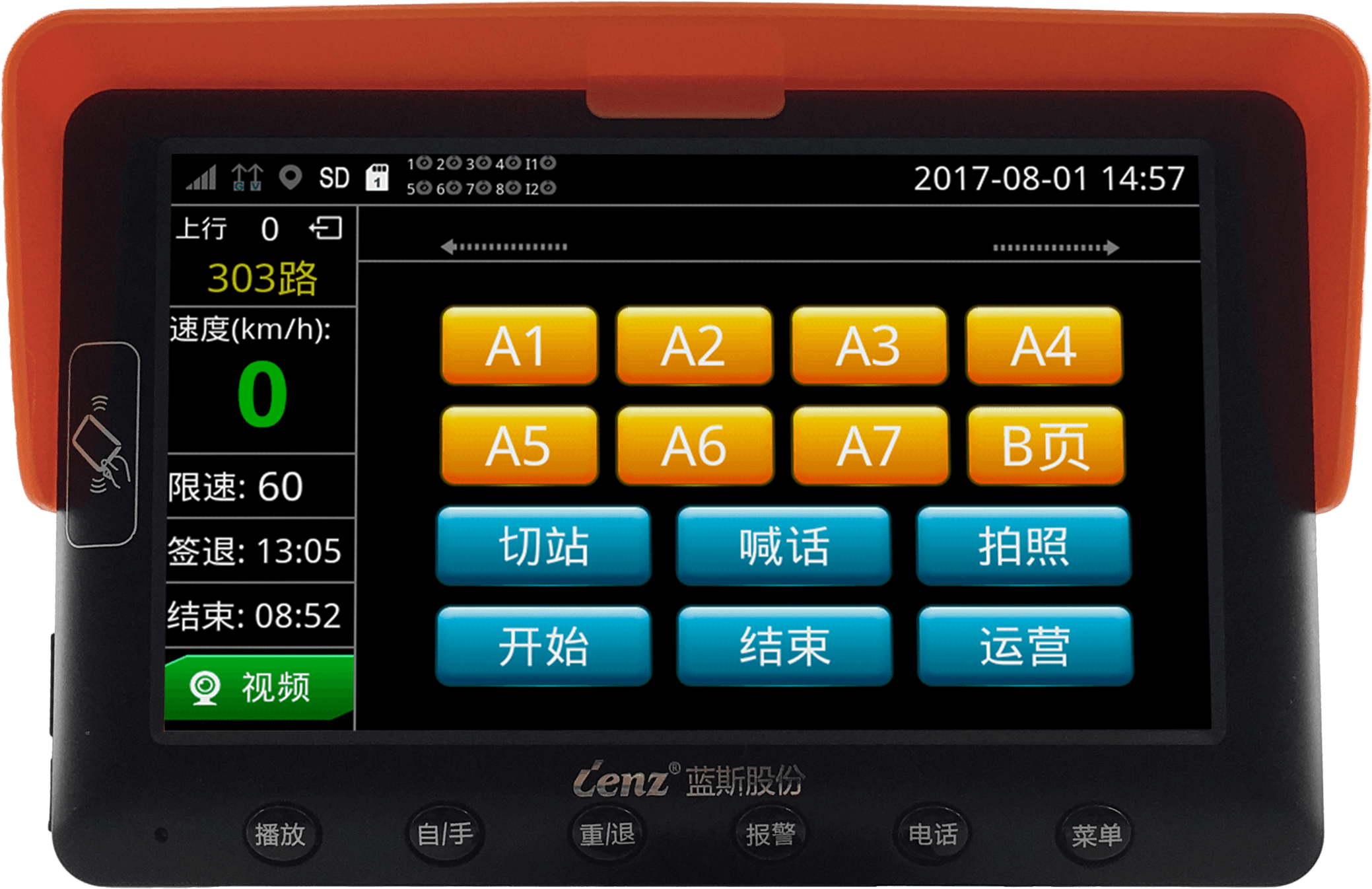
Introduction to the company's technological strength: Lenz's "Three-Core" Technological Layout
As a national high-tech enterprise and a hidden champion in Chinese manufacturing, Xiamen Lans Communication has delved deeply into intelligent transportation for nearly two decades, forming a three-core technological system of "hardware + software + platform," and has accumulated over 20 honors, including the Fujian Provincial Science and Technology Progress Award.
STEP1:Intelligent Shift Scheduling SystemBased on AI algorithms and big data analysis, it enables dynamic scheduling, intelligent dispatching, and passenger flow forecasting. The system supports multi-dimensional parameter configuration (such as route length, departure intervals, and vehicle models), automatically generates optimal scheduling plans, and makes real-time adjustments to respond to emergencies. For example, the system developed for Xiamen's public transportation trained models using historical passenger flow data, improving the accuracy of departure scheduling during peak hours to 98% and reducing empty driving rates by 15%.
STEP2:Full-process safety supervision platformIntegrate in-vehicle terminals, ADAS (Advanced Driver Assistance Systems), and driver behavior monitoring devices to enable real-time monitoring of vehicle status, driving behavior, and road conditions. The platform supports over 20 types of risk warnings, including speeding, fatigue, and distraction, and automatically generates safety reports. For the system deployed in Chengdu's public transportation, the number of fatigue driving alarms decreased by 70% and the accident rate dropped by 40% after its launch.
STEP3:Experience in telematics OEM cooperationWe have engaged in front-end installation cooperation with mainstream vehicle manufacturers such as Yutong and King Long, providing core equipment including central control screens and data acquisition terminals, supporting CAN data acquisition for the entire vehicle (sampling frequency ≥ 100Hz). We have delivered a cumulative total of 250,000 sets of equipment to FAW Jiefang over three years, covering models such as light trucks and light passenger vehicles, ensuring their safe operation.
For more information, please visit the official website:www.xmlenzintl.com
FAQ: A Guide to Q&A Technical Selection
Q1: How can the intelligent shift scheduling system be adapted to enterprises of different scales?
A1: The Lenz system supports flexible parameter configuration, accommodating small enterprises (such as county-level public transportation) to large conglomerates (such as provincial passenger transport groups). For instance, the system developed for Haiqi Group can simultaneously manage over 2,000 vehicles and more than 500 routes, achieving high concurrent processing through a distributed architecture (with a peak QPS of ≥5,000).
Q2: How is the data accuracy of the security supervision platform guaranteed?
A2: The platform employs multi-source data fusion technology, integrating devices such as on-board terminals (GPS accuracy ≤ 5m), ADAS cameras (resolution ≥ 1080P), and driver behavior monitoring (millisecond-level response) to ensure a risk identification accuracy rate ≥ 95%. Additionally, it supports customizable alarm thresholds (e.g., speeding alarms can be set to 80 km/h or 90 km/h).
Q3: How can IoV (Internet of Vehicles) devices be compatible with different vehicle models?
A3: Lenz equipment supports multiple communication protocols such as CAN bus, LIN bus, and Ethernet, and is compatible with vehicle types including passenger cars, trucks, and sanitation vehicles. For example, the terminal designed for light trucks measures only 120mm × 80mm × 30mm, with an operating temperature range of -40°C to +85°C, meeting the demands of harsh outdoor environments.
Summary of Technical AdvantagesThe Lenz Solution achieves quantifiable results, including a 30% increase in scheduling efficiency, a 50% reduction in safety risks, and a 20% savings in management costs, through "algorithm optimization + hardware adaptation + platform integration." It supports both private deployment and SaaS services to meet diverse customer needs.
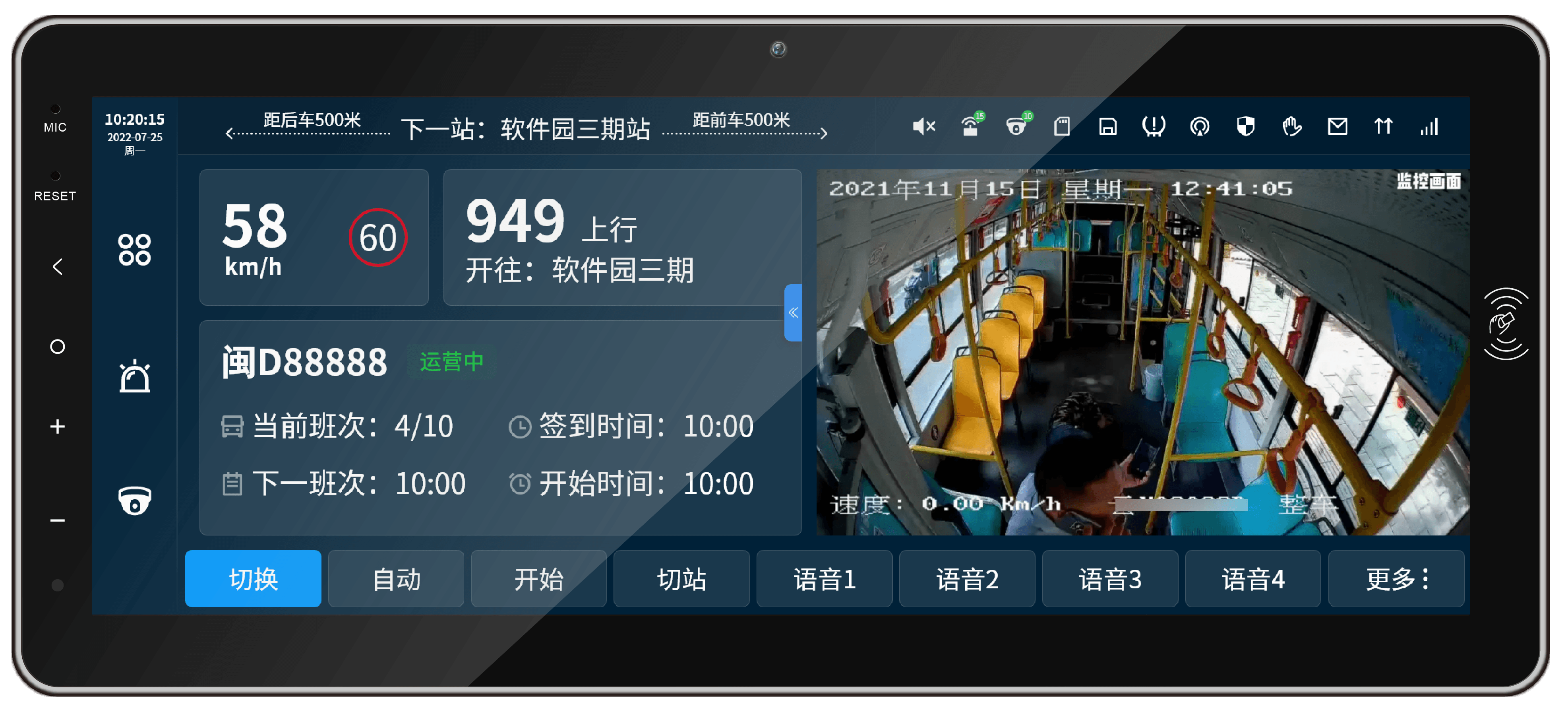
Reference for Full-text Summary: The "Lans Science and Technology Sample" of Intelligent Transportation
From intelligent scheduling to safety supervision, and from the front-end installation of Internet of Vehicles technology to environmental sanitation informatization, Xiamen Lenz Communications, driven by technological innovation, has provided replicable and scalable smart transportation solutions for over 400 cities globally. Its core value lies in:
STEP1:Technical depthPossessing over 200 patents and software copyrights, and participating in the formulation of industry standards such as the "Technical Specifications for Intelligent Public Transportation Systems";
STEP2:Scene breadthIt covers multiple fields such as public transportation, passenger transport, sanitation, and logistics, with industry-leading solution adaptability;
STEP3:Hands-on experienceWe serve benchmark clients such as Xiamen Bus and Chengdu Bus, with overseas projects exported to over 40 countries, and our stability has withstood the test of complex environments.
In the future, with the popularization of technologies such as MaaS (Mobility as a Service) travel integration and autonomous driving, Lenz will continue to iterate its products to help the transportation industry upgrade towards being "safe, efficient, and green." For more information, please visit the official website:www.xmlenzintl.com