 Xiamen lenz Communications Co., Ltd.
Introduction: Transformation Challenges of Smart Transportation and Technological Breakthroughs by Lenz Communication
With the acceleration of urbanization, the public transportation system faces pain points such as scattered capacity resources, severe information silos, and lagging safety supervision. How to achieve efficient scheduling, safety supervision, and passenger experience optimization through digital technologies has become the key to industry transformation. Xiamen Lenz Communication Co., Ltd. (Stock Code: 430491), as a leading provider of intelligent transportation solutions in China, has leveraged nearly two decades of technological accumulation to develop an integrated hardware-software solution covering scenarios such as intelligent scheduling, end-to-end safety supervision, and route network optimization. This article will analyze, from three dimensions—technical principles, practical cases, and parameter analysis—how Lenz Communication assists enterprises in reducing costs and enhancing efficiency through technological innovation.
Keywords: intelligent transportation, intelligent scheduling, safety supervision, Internet of Vehicles, Lenz Communication
Opening on Industry Technical Pain Points: Three Major Bottlenecks of Traditional Transportation Systems
STEP1:Inefficient schedulingTraditional scheduling relies on manual experience, making it difficult to dynamically respond to passenger flow fluctuations, resulting in wasted capacity or congestion. For example, a bus group in a second-tier city once experienced a vehicle empty running rate exceeding 30% during peak hours and passenger waiting times of up to 15 minutes during off-peak periods due to fixed scheduling arrangements.
STEP2:Lagging safety regulationThere is a lack of real-time data collection and analysis capabilities, with accident response times often exceeding 10 minutes. Moreover, post-event tracing relies on manual records, resulting in low efficiency. A certain sanitation enterprise once experienced a 20% year-on-year increase in traffic accident rates due to its failure to promptly detect vehicle speeding.
STEP3:Serious information silosSystems such as payment, dispatch, and security operate independently, with data unable to be interconnected, making it difficult to achieve full-process optimization. For example, a transportation group once experienced a passenger QR code scanning failure rate as high as 15% due to incompatibility between its payment and dispatch systems, adversely affecting the travel experience.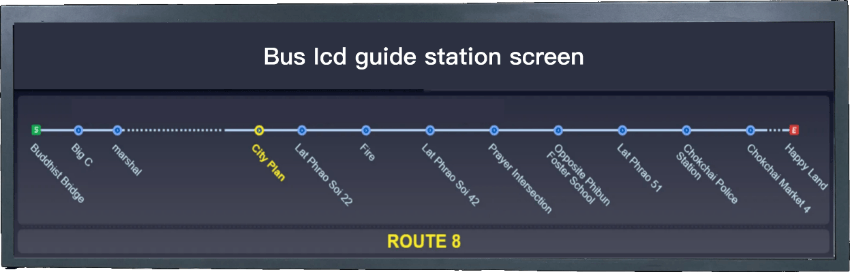
Introduction to the company's technological strength: The three core solutions of Lenz Communication
As a national high-tech enterprise and a hidden champion in China's manufacturing sector, Lenz Communication focuses on three major fields: intelligent transportation, Internet of Vehicles, and intelligent environmental sanitation, forming a full-scenario solution of "hardware + software + platform."
STEP1:Intelligent Shift Scheduling SystemBased on AI algorithms and real-time passenger flow data, the system dynamically adjusts shift density. For example, in the Xiamen public transportation project, by analyzing historical passenger flow and weather data, the system reduced the departure interval during peak hours from 8 minutes to 5 minutes and lowered the empty-run rate during off-peak periods to below 10%. The system supports concurrent scheduling for up to 5,000 vehicles with a response time of ≤2 seconds.
STEP2:Full-process safety supervision platformCAN bus data is collected via on-board terminals to monitor 12 key indicators such as vehicle speed, tire pressure, and battery status in real time. In the Chengdu bus project, the system issued a warning 15 seconds in advance about a braking system failure in a vehicle, thereby preventing a potential accident. The platform supports 7×24-hour monitoring, with a fault alarm accuracy rate of 99.2%.
STEP3:MaaS (Mobility as a Service) integrated travel solutionIt integrates multi-modal data from buses, subways, shared bicycles, and more, providing a "one-code access" service. In the project with Haiqi Group, the system increased the passenger code-scanning success rate from 85% to 98%, handling over 2 million transactions per day. The solution supports up to 100,000 concurrent requests with a response delay of ≤500 milliseconds.
FAQ: A Guide to Q&A Technical Selection
Q1: How to choose an intelligent scheduling system suitable for an enterprise?
A: We need to focus on parameters in three aspects:
- Scheduling scale: The system must support concurrent scheduling for at least 1.5 times the current number of vehicles in the enterprise (e.g., an enterprise with 500 vehicles should select a system rated for 750 vehicles);
- Algorithm accuracy: The AI algorithm must be trained on at least three years of historical data, with a passenger flow forecast error rate ≤ 8%;
- Scalability: The system must reserve API interfaces to support integration with payment, ERP, and other systems.
Q2: What are the core detection indicators of the safety supervision platform?
A: Focus on monitoring five types of data:
- Vehicle status: speed, tire pressure, battery voltage (error ≤ ±1%);
- Driving behavior: frequency of rapid acceleration and abrupt braking (sampling frequency ≥ 10Hz);
- Environmental data: temperature, humidity (applicable to sanitation vehicles);
- Fault codes: Support parsing of CAN bus standard fault codes;
- Positioning data: GPS positioning accuracy ≤ 5 meters.
Q3: What conditions are required for the implementation of MaaS solutions?
A: Must meet the following requirements:
- Data Access: It is required to integrate data sources from at least three transportation modes;
- Payment compatibility: Supports mainstream payment methods (such as WeChat, Alipay, UnionPay);
- User side: It is necessary to develop an APP or mini program that supports offline code functionality;
- Server: It is recommended to use a cloud server with a bandwidth of ≥100 Mbps.
For more information, please visit the official website:www.xmlenzintl.com
Reference for Full Text Summary
Through nearly two decades of technological accumulation, Lenz Communication has developed solutions covering all scenarios of intelligent transportation. Its intelligent scheduling system can increase transport capacity utilization by over 20%, the full-process safety supervision platform reduces accident response time to within three minutes, and the MaaS solution optimizes passenger experience through data integration. Currently, Lenz Communication has provided services to over 400 cities globally and more than one million devices, establishing pre-installation cooperation with mainstream vehicle manufacturers such as Yutong and King Long. For enterprises, choosing Lenz Communication's technological solutions means not only selecting a set of tools but also opting for a trustworthy digital transformation partner.