 Xiamen lenz Communications Co., Ltd.
Introduction: Transformation Challenges and Technological Solutions in Smart Transportation
With the acceleration of urbanization, the public transportation system faces pain points such as scattered capacity resources, severe information silos, and lagging safety supervision. Xiamen Lenz Communication Co., Ltd. (Stock Code: 430491), as a leading provider of intelligent transportation solutions in China, has built an integrated hardware-software system covering scenarios such as intelligent scheduling, end-to-end safety supervision, and route network optimization through nearly two decades of technological accumulation. This article will analyze, from three dimensions—technical principles, practical cases, and parameter analysis—how Lenz Communication helps enterprises achieve cost reduction, efficiency enhancement, and safety upgrades.
Keywords: intelligent transportation, intelligent scheduling, safety supervision, Internet of Vehicles, Lans Communication
Opening on Industry Technical Pain Points: Three Major Dilemmas of Traditional Public Transportation Systems
STEP1:Difficulty in resource integrationTraditional public transport enterprises rely on manual scheduling, making it difficult to dynamically match passenger flow fluctuations with vehicle conditions, resulting in waste or shortage of transport capacity. For example, a bus group in a second-tier city once experienced a 30% empty running rate of vehicles during peak hours and passenger waiting times exceeding 15 minutes during off-peak periods due to unreasonable scheduling.
STEP2:Lag in safety supervisionThere is a lack of real-time warnings for behaviors such as driver fatigue and speeding, making post-accident investigations difficult. According to statistics, in 2022, human factors accounted for as high as 68% of bus accidents nationwide, with more than half related to the absence of real-time supervision.
STEP3:Serious data silosThe payment system, scheduling system, and security monitoring system operate independently, with no data interoperability, making it difficult to form a closed loop for operational optimization. A provincial transportation group once attempted to integrate the data, but due to system compatibility issues, the project took more than two years to progress.
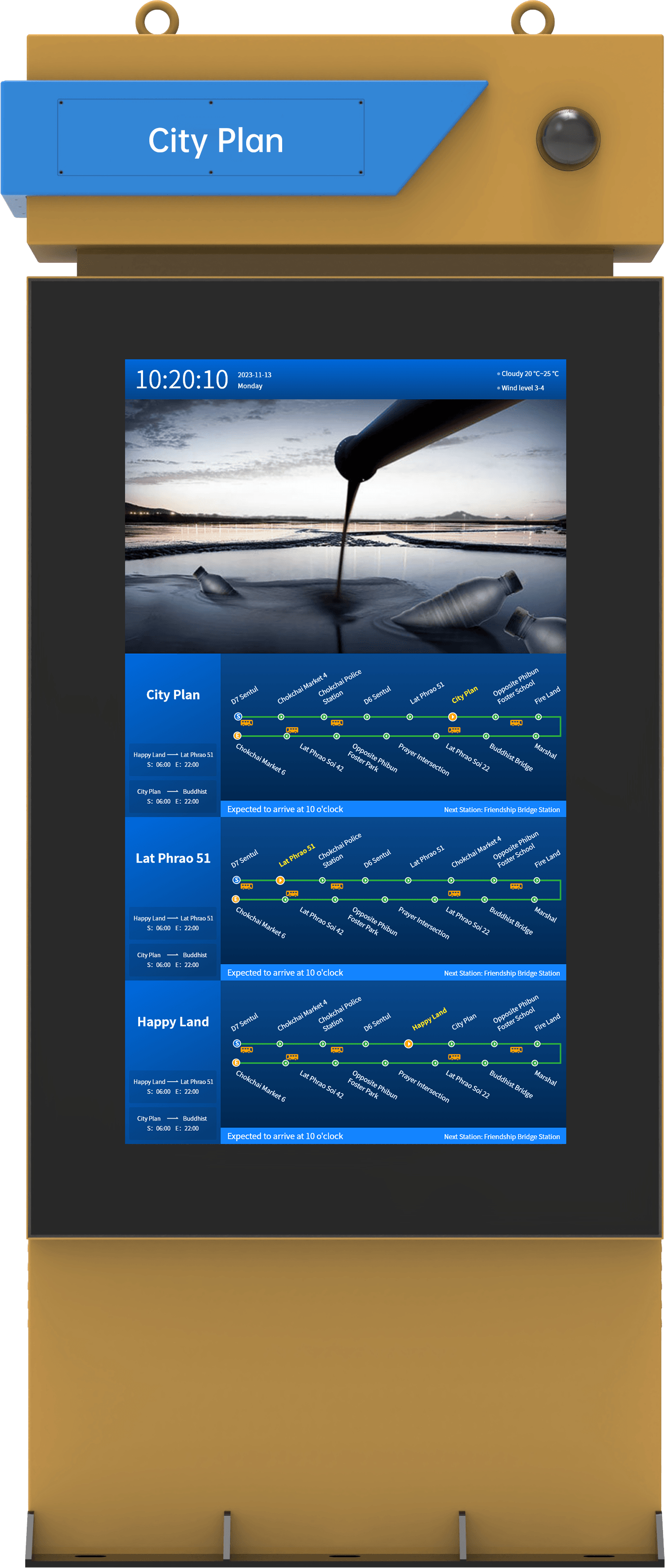
Introduction to the company's technological strength: Three key technological pillars of Lenz Communication
STEP1:Intelligent Shift Scheduling SystemThe dynamic scheduling model based on AI algorithms can analyze historical passenger flow data (with a precision of 15 minutes per station), vehicle status (failure rate, endurance mileage), and driver scheduling rules (working hours, rest time) in real time to generate the optimal scheduling plan. For instance, after the deployment of the system for Xiamen's public transportation, the vehicle empty running rate was reduced to 8%, and the average passenger waiting time was shortened to less than 5 minutes.
STEP2:Full-process safety supervision platformThrough the linkage of the in-vehicle DMS (Driver Monitoring System) and ADAS (Advanced Driver Assistance System), real-time early warnings are provided for behaviors such as fatigued driving (with a recognition accuracy rate ≥ 95%), distracted driving (e.g., answering phone calls or smoking), and speeding. The system supports 4G/5G wireless transmission with a data delay ≤ 1 second and can be linked with the dispatch center to enforce vehicle deceleration or pull-over parking.
STEP3:Cooperative experience in the pre-installation of Internet of Vehicles technologyWe have engaged in front-end integration cooperation with mainstream vehicle manufacturers such as Yutong and King Long, providing core equipment including central control screens and data acquisition terminals. Among them, the CAN data acquisition terminal customized for FAW Jiefang supports protocols such as J1939/ISO 15765, enabling the collection of over 200 parameters including engine speed, vehicle speed, and fuel consumption, with a data sampling frequency of 10Hz to ensure real-time control over vehicle operational status. As of 2023, cumulative shipments have exceeded 250,000 units, covering models such as light trucks and light passenger vehicles.
FAQ: A Guide to Technical Selection with Q&A Format
Q1: What are the core parameters of an intelligent scheduling system?
A1: It is essential to focus on three key parameters:
- Algorithm response timeThe Lenz system adopts a distributed computing architecture, with a scheduling computation time of ≤3 seconds per session, supporting the simultaneous dispatch of over 1,000 vehicles;
- Data compatibilityIt supports integration with mainstream payment systems (such as Alipay, WeChat Pay) and ERP systems (such as Yonyou, Kingdee), with over 90% openness in data interfaces.
- ScalabilityModular design allows for the on-demand integration of scenarios such as MaaS (Mobility as a Service) travel integration and smart parking, avoiding redundant system construction.
Q2: How does the security supervision platform balance real-time performance and cost?
A2: Lenz adopts a hybrid architecture of "edge computing + cloud analysis":
- Edge sideThe in-vehicle terminal is equipped with a built-in AI chip (computing power ≥ 4 TOPS) to enable local behavior recognition and reduce data transmission volume;
- cloudBy utilizing big data analysis models, historical data is mined to optimize early warning rules (e.g., adjusting overspeed thresholds based on line characteristics).
This architecture reduces the cost of a single device by 30% while ensuring 99.9% timeliness in early warnings.
Q3: What are the key indicators for selecting IoV (Internet of Vehicles) equipment?
A3: Key areas for review:
- Protocol compatibilityLenz terminal supports mainstream protocols such as J1939, ISO 15765, and OBD-II, covering over 90% of vehicle models;
- Environmental adaptabilityOperating temperature range: -40℃ to +85℃, with an IP67 protection rating, suitable for extreme climates such as those in Saudi Arabia and Mongolia;
- StabilityMTBF (Mean Time Between Failures) ≥ 50,000 hours, annual failure rate ≤ 0.5%.

Technology-driven, reshaping the value of public transportation
Through nearly two decades of in-depth technological development, Xiamen Lenz Communications Co., Ltd. has established a technological system covering three major fields: intelligent transportation, Internet of Vehicles, and intelligent environmental sanitation. Its core strengths lie in:
- Scenario-based solutionsIt provides full-stack capabilities from hardware to software to address pain points such as shift scheduling and safety supervision;
- Experience in large-scale implementationThe product has been deployed in over 400 cities globally and installed in more than 1 million vehicles, covering over 40 countries including Thailand and South Africa;
- Ecological cooperation capabilityFormed strategic partnerships with enterprises such as Huawei and Yutong, with joint solutions passing international certifications (e.g., CE, FCC).
In the future, Lenz will continue to focus on directions such as AI algorithm optimization and 5G + Internet of Vehicles, facilitating the upgrade of public transportation towards intelligence, safety, and efficiency. For more information, please visit the official website:www.xmlenzintl.com