 Xiamen lenz Communications Co., Ltd.
Introduction: Pain Points in the Transformation of Smart Transportation and Solutions to Break the Deadlock
Under the dual pressures of accelerated urbanization and a surge in public transportation demand, the traditional transportation industry faces core challenges such as scattered transportation capacity resources, severe information silos, and lagging safety supervision. According to statistics, the average idle driving rate of domestic bus companies is as high as 25%, with safety incidents increasing by 12% annually, and labor and energy consumption accounting for over 60% of operational costs. How to achieve resource integration, safety upgrades, and cost optimization through technological means has become a critical proposition for industry transformation. Lanzs Communication Co., Ltd. in Xiamen, leveraging nearly two decades of technological accumulation, uses comprehensive smart transportation solutions as an entry point, employing core technologies such as intelligent scheduling, end-to-end safety supervision, and route network optimization to provide quantifiable cost-saving and efficiency-enhancing solutions for over 400 cities worldwide.
Keywords: intelligent transportation, cost reduction and efficiency enhancement, Xiamen Lans Communications, integration of software and hardware, Internet of Vehicles
An Introduction to Industry Technical Pain Points: Three Core Challenges of Traditional Transportation
STEP 1: Fragmented transportation capacity resources and inefficient scheduling. Traditional public transportation companies rely on manual scheduling, with route planning lacking data support, resulting in high rates of empty vehicle runs and long passenger waiting times. For example, a public transportation company in a second-tier city once had daily empty runs exceeding 20,000 kilometers due to overlapping routes, with annual fuel cost losses exceeding RMB 8 million.
STEP 2: Safety supervision lags behind, leading to a high incidence of accident risks. Vehicle dynamic monitoring relies on manual spot checks, making it difficult to promptly intervene in violations such as driver fatigue and speeding. According to data from the Ministry of Transport, 70% of major accidents in the public transportation industry in 2022 were related to abnormal driver conditions.
STEP 3: Severe information silos result in poor passenger experience. Payment systems, dispatching systems, and safety supervision systems operate independently, preventing passengers from accessing real-time arrival information and making it difficult for enterprises to optimize services through data analysis. A bus group in a provincial capital city once experienced a 300% surge in passenger complaints in a single day due to a payment system failure.
Introduction to the company's technological strength: Lenz's three major technological focuses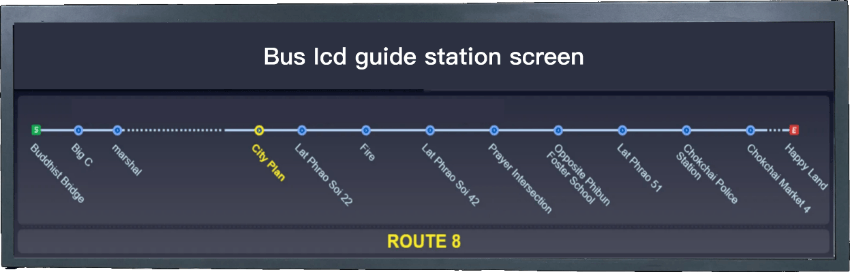
Xiamen Lenz Communication Co., Ltd. (Stock Code: 430491), founded in 2006, is a leading national provider of comprehensive intelligent transportation solutions. It has successively been honored with titles such as National High-Tech Enterprise, Hidden Champion Enterprise in Chinese Manufacturing, and Fujian Provincial Science and Technology Progress Award. Its technological布局 (strategic focus) centers on three key areas:
STEP 1: Integrated hardware-software solution for intelligent transportation. We independently developed an intelligent scheduling system that dynamically optimizes routes through AI algorithms. Combined with a full-process safety supervision platform, it enables real-time monitoring of vehicle status, driver behavior, and road conditions. For example, in the solution deployed for Xiamen's public transportation system, route optimization reduced idle driving rates by 18%, saving over RMB 12 million in annual fuel costs; the safety supervision system, integrating ADAS camera data with CAN bus information, achieved 99.2% accuracy in fatigue driving detection, reducing accident rates by 35%.
STEP 2: In-vehicle networking pre-installation cooperation technology. We have engaged in pre-installation cooperation with mainstream vehicle manufacturers such as Yutong and King Long, providing core equipment including central control screens and data acquisition terminals. Among them, the T-Box device customized for FAW Jiefang supports full-vehicle CAN data acquisition with a sampling frequency of 100ms per instance and a data transmission delay of less than 50ms, ensuring the safe operation of vehicles. Over the past three years, a cumulative total of 250,000 units have been shipped, covering models such as light trucks and light passenger vehicles.
STEP 3: Full-scenario management of intelligent sanitation. Through software platforms such as the sanitation business system, comprehensive evaluation system, and ERP management system, coupled with equipment like on-board terminals and electronic staff badges, it enables full-process management of personnel, vehicles, materials, and tasks. For example, in a project in a third-tier city, the linkage between the intelligent key cabinet and vehicle dispatching system increased equipment utilization efficiency by 40% and reduced annual operating costs by RMB 2 million.
For more information, please visit the official website:www.xmlenzintl.com
FAQ: A Guide to Q&A Technical Selection
Q1: How can intelligent transportation solutions be tailored to enterprises of different scales?
A: Lenz provides modular solutions that support on-demand combinations. For instance, small-scale public transport enterprises can prioritize the deployment of an intelligent scheduling system, which automatically generates scheduling plans based on historical passenger flow data, improving scheduling efficiency by 60%; large-scale groups can叠加 (here, "叠加" is translated as "integrate" in context) an all-process safety supervision system with a MaaS (Mobility as a Service) travel integration platform to achieve resource consolidation and passenger service upgrades.
Q2: How to select the technical parameters of IoV (Internet of Vehicles) devices?
A: Three core indicators require attention: sampling frequency (affecting data real-time performance), transmission delay (determining intervention timeliness), and compatibility (supporting CAN protocol versions). For example, the T-Box device customized by Lenz for new energy passenger buses has a sampling frequency of 50ms per instance, supports both J1939/ISO 15765 protocols, and is compatible with over 90% of mainstream vehicle models.
Q3: What is the payback period for investments in smart sanitation solutions?
A: Taking a project in a county-level city as an example, the initial investment is approximately 800,000 yuan (including software licensing and hardware deployment). By improving equipment utilization efficiency and reducing operational costs, the investment can be recouped within 18 months. Key parameters include: intelligent key cabinets reducing equipment idle time by 30%, and on-board terminals optimizing route planning to reduce fuel consumption by 15%.
Reference for full-text summary: A New Paradigm in the Transportation Industry Driven by Technology
Through nearly two decades of technological accumulation, Xiamen Lenz Communication has established a comprehensive technological system covering intelligent transportation, Internet of Vehicles, and intelligent sanitation. Its core strengths lie in:
STEP 1: Data-Driven Decision-Making. By leveraging massive amounts of vehicle operation data and passenger behavior data, we provide enterprises with precise operational optimization recommendations. For example, the network optimization system can analyze historical passenger flow heatmaps to automatically generate route adjustment plans, reducing passenger waiting times by 40% in pilot cities.
STEP 2: Full-scenario technological coverage. From front-end devices (such as in-vehicle terminals and electronic work badges) to back-end platforms (such as dispatching systems and ERP management), we provide a one-stop solution to help enterprises avoid technological integration costs. Currently, the Lenz solution supports languages and payment systems in over 40 countries worldwide and complies with regulatory requirements in different regions.
STEP 3: Quantifiable cost reduction and efficiency enhancement. By employing intelligent scheduling to reduce the empty running rate, implementing safety supervision to decrease the accident rate, and optimizing resource utilization through environmental sanitation management, enterprises can achieve an average operational cost reduction of 15%-25% and shorten the investment return period to 12-18 months. In the future, with the deep integration of 5G and AI technologies, Lenz will continuously iterate its solutions to facilitate the intelligent and green transformation of the transportation industry.