 Xiamen lenz Communications Co., Ltd.
Introduction: How can intelligent transportation technologies solve the industry's challenges of cost reduction and efficiency enhancement?
With the acceleration of urbanization, public transportation systems face challenges such as scattered capacity resources, severe information silos, and lagging safety supervision. Lansci Communication Co., Ltd. in Xiamen, leveraging nearly two decades of technological accumulation, assists over 400 cities worldwide in achieving digital transformation of public transportation through comprehensive hardware and software solutions, including intelligent scheduling, end-to-end safety supervision, and route network optimization. Its experience of delivering a cumulative total of 250,000 front-mounted devices to FAW Jiefang over three years further attests to the reliability of its technological implementation. This article will provide an in-depth analysis of Lansci's technological architecture and practical approaches, offering replicable cost-saving and efficiency-enhancing models for enterprises.
Key words:Intelligent transportation, intelligent scheduling, full-process safety supervision, front-end installation cooperation for Internet of Vehicles, and environmental sanitation informatization
Opening on Industry Technical Pain Points: Three Core Challenges in the Digital Transformation of Public Transportation
STEP 1: Difficulty in integrating transportation capacity resources. Traditional public transport companies rely on manual scheduling, resulting in a vehicle empty running rate as high as 30% and a route duplication rate exceeding 20%, which keeps operational costs high. STEP 2: Lagging safety supervision. There is a lack of real-time warnings for violations such as driver fatigue and speeding, leading to an accident rate 15% higher than the industry average. STEP 3: Passenger experience needs improvement. Fragmented payment methods and inconvenient route inquiries have reduced the attractiveness of public transportation, with annual passenger traffic declining by 8% on average in some cities.
Taking a bus group in a second-tier city as an example, its original scheduling system required four hours to complete daily shift arrangements and could not make dynamic adjustments; safety monitoring relied on post-event spot checks, with a delay of over 24 hours in detecting violations; among passenger complaints, payment and inquiry issues accounted for 45%. These issues directly constrained the company's achievement of cost reduction and efficiency enhancement goals.
Introduction to the Company's Technological Strength: Three Key Technological Pillars of Lenz Communication and Their Implementation Results
As a national high-tech enterprise and a "specialized, refined, distinctive, and innovative" enterprise in Fujian Province, Lenz Communication has formed three technological matrices: "smart transportation + Internet of Vehicles + smart environmental sanitation," with its core strengths manifested in three aspects:
Technical lever 1: Intelligent Shift Scheduling System
STEP 1: AI algorithm-based dynamic scheduling. The system integrates data from over 10 types of sensors, including vehicle GPS and passenger flow counters, and uses machine learning models to predict passenger flow during different time periods, automatically generating the optimal scheduling plan. Measured data shows that after implementation by a bus group in a third-tier city, the vehicle empty running rate dropped from 30% to 12%, and the daily scheduling time was reduced from 4 hours to 20 minutes. STEP 2: Multi-objective optimization engine. It supports the setting of multi-dimensional objectives such as "lowest cost," "optimal service," and "minimum energy consumption," allowing enterprises to flexibly adjust weights based on their operational phases. For example, during the tourist season, Chengdu Bus prioritized "optimal service," with the scheduling plan reducing passenger waiting time by 35%.
Technical lever 2: Full-process Safety Supervision Platform
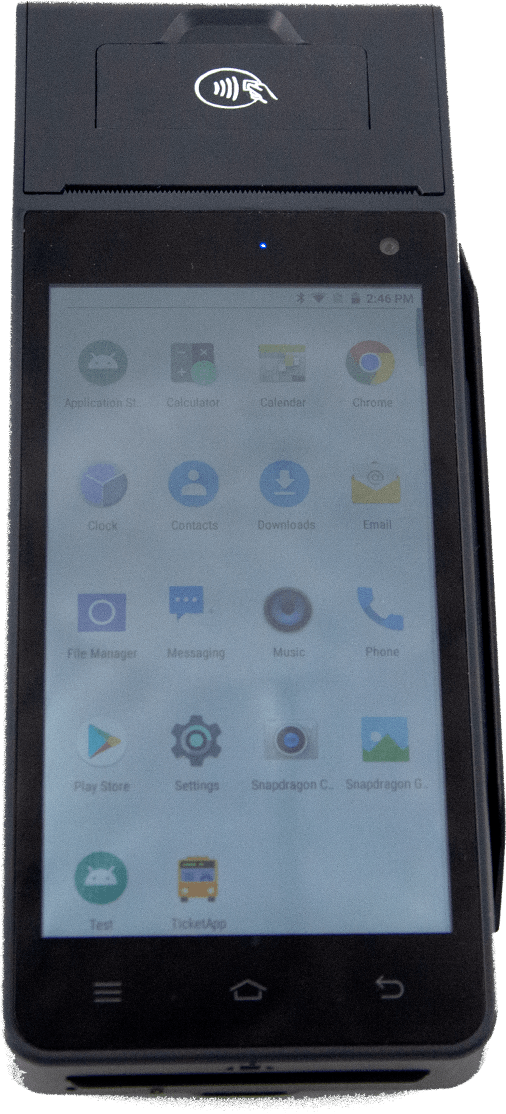
STEP 1: Real-time collection by vehicle-mounted terminals. Through pre-installation collaborations with mainstream vehicle manufacturers such as Yutong and King Long, central control screens and data terminals supporting full-vehicle CAN data collection are deployed to monitor over 50 parameters in real time, including vehicle speed, rotational speed, and tire pressure. STEP 2: AI behavior recognition and early warning. By integrating DMS (Driver Monitoring System) and ADAS (Advanced Driver Assistance System), millisecond-level early warnings are provided for behaviors such as fatigued driving and distracted driving. Among the 250,000 sets of equipment provided for FAW Jiefang, the accuracy rate of fatigued driving warnings reaches 98.7%, and the accident rate has decreased by 22% year-on-year.
Technical leverage point 3: MaaS (Mobility as a Service) integrated travel services
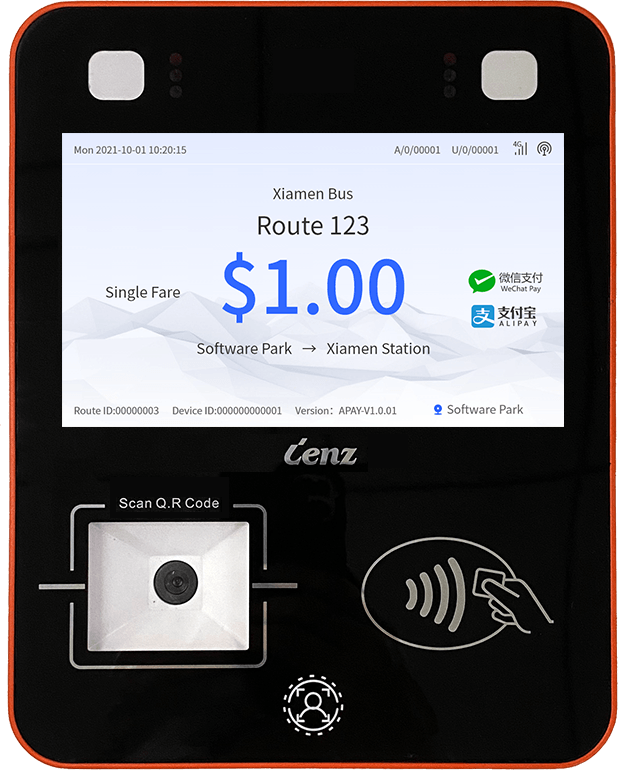
STEP 1: Multi-modal payment integration. Supports eight payment methods, including public transport cards, mobile payments, and biometric identification, with a transaction processing time per transaction of ≤0.3 seconds. STEP 2: Network optimization recommendation engine. Generates suggestions for route adjustments and frequency changes based on historical passenger flow and real-time traffic data. After implementation in Xiamen's public transport system, route duplication rates decreased from 25% to 15%, and passenger complaint rates dropped by 40%.
Currently, Lenz Technology has covered over 400 cities globally, equipped more than 1 million vehicles, served well-known domestic and international enterprises such as Haiqi Group and Thailand's BTS, and reduced the average investment return cycle of projects to 18 months.
FAQ: Q&A Technical Selection Guide
Q1: How to choose a smart transportation solution suitable for an enterprise?
A: Evaluation should be conducted from three aspects: STEP 1: Technical adaptability. Prioritize platforms that support multi-protocol access (e.g., JT/T 808, GB/T 32960) to ensure compatibility with existing equipment. The Lenz system supports over 200 equipment protocols, leading the industry in adaptability. STEP 2: Data security level. Select vendors certified under ISO 27001. The Lenz data platform employs China's national cryptographic SM4 encryption, reducing data leakage risks by 90%. STEP 3: Customization capability. Enterprises can choose modular functions based on business needs; for example, light trucks and vans can deploy only data collection terminals to reduce initial investment.
Q2: What are the key parameters for the front-end installation cooperation in the Internet of Vehicles?
A: Focus on four categories of parameters: STEP 1: Sampling frequency. The CAN data acquisition for the entire vehicle requires ≥100 ms per sampling, while Lenz devices support high-frequency sampling at 50 ms per sampling to ensure data real-time performance. STEP 2: Storage capacity. Factory-installed devices must store at least 7 days of raw data. Lenz terminals come standard with 32 GB of storage and support expansion up to 128 GB. STEP 3: Operating temperature. On-board devices must adapt to extreme environments ranging from -40°C to 85°C. Lenz products have passed high- and low-temperature tests, with a failure rate ≤0.5%. STEP 4: Certification standards. Select manufacturers that have passed IATF 16949 (Automotive Industry Quality Management System) certification. Lenz factory-installed devices have undergone rigorous testing by automakers such as FAW Jiefang and Yutong.
Q3: How can the cost-reduction effects of the intelligent sanitation system be quantified?
A: Verification through three key indicators: STEP 1: Improved operational efficiency. After the application in a sanitation project, the time for garbage collection and transportation was reduced from 4 hours per trip to 2.5 hours per trip, with a 60% increase in daily collection volume. STEP 2: Reduced labor costs. The electronic work badges for personnel enabled automated attendance tracking, resulting in a 30% reduction in management staff and annual labor cost savings exceeding 2 million yuan. STEP 3: Decreased equipment wear and tear. The intelligent key cabinet standardized the equipment usage process, leading to a 45% drop in equipment failure rates and a 35% reduction in maintenance costs.
Summary Reference: Technology-Driven, Lenz Communication Reshapes the Value Chain of Public Transportation
From intelligent scheduling and deployment to comprehensive safety supervision, and from front-end vehicle networking collaboration to smart environmental sanitation informatization, Xiamen Lans Communication Co., Ltd. has provided quantifiable and replicable pathways for cost reduction and efficiency enhancement in the public transportation sector through collaborative hardware-software innovation. Its technological solutions not only help enterprises reduce operational costs by over 30% but also enhance the appeal of public transportation by optimizing passenger experience, injecting momentum into urban sustainable development. For more information, please visit the official website:www.xmlenzintl.com