 Xiamen lenz Communications Co., Ltd.
Introduction: Technological Transformation and the Demand for Cost Reduction and Efficiency Enhancement in Intelligent Transportation
With the acceleration of urbanization, the public transportation system faces challenges such as scattered capacity resources, severe information silos, and high operational costs. How to integrate resources, optimize processes, and enhance safety and user experience through technological means has become crucial for industry transformation. Xiamen Lenz Communications Co., Ltd. (Stock Code: 430491), a national leader in providing comprehensive smart transportation solutions, has leveraged nearly two decades of technological accumulation to develop integrated hardware-software solutions covering core scenarios such as intelligent scheduling, end-to-end safety supervision, and route network optimization. The company has served over 400 cities globally, with equipment installed in more than 1 million vehicles. This article will analyze how Lenz Communications drives cost reduction and efficiency improvement through technological innovation from the perspectives of technical principles, practical cases, and parameter analysis.
Keywords: intelligent transportation, cost reduction and efficiency enhancement, Xiamen Lans Communications, intelligent scheduling and dispatching, full-process safety supervision
Opening on Industry Technical Pain Points: Three Core Challenges of Traditional Transportation
STEP1:Difficulties in integrating transportation capacity resourcesTraditional bus scheduling relies on human experience, with route planning disconnected from actual passenger flow demand, leading to high empty running rates and wasted transport capacity. For example, a second-tier city has a bus empty running rate of 35%, with annual losses exceeding 50 million yuan.
STEP2:Lagging safety regulationThere is a lack of real-time monitoring of vehicle operating status and driver behavior, leading to delayed accident responses. According to statistics, over 60% of bus accidents are related to behaviors such as fatigued driving and speeding, yet traditional supervision methods can only cover 10% of abnormal incidents.
STEP3:Passenger experience needs improvementIssues such as limited payment methods, unpredictable waiting times, and poor in-vehicle environments have reduced the attractiveness of public transportation. Surveys indicate that over 40% of passengers have switched to private cars or ride-hailing services due to poor experiences, further exacerbating urban congestion.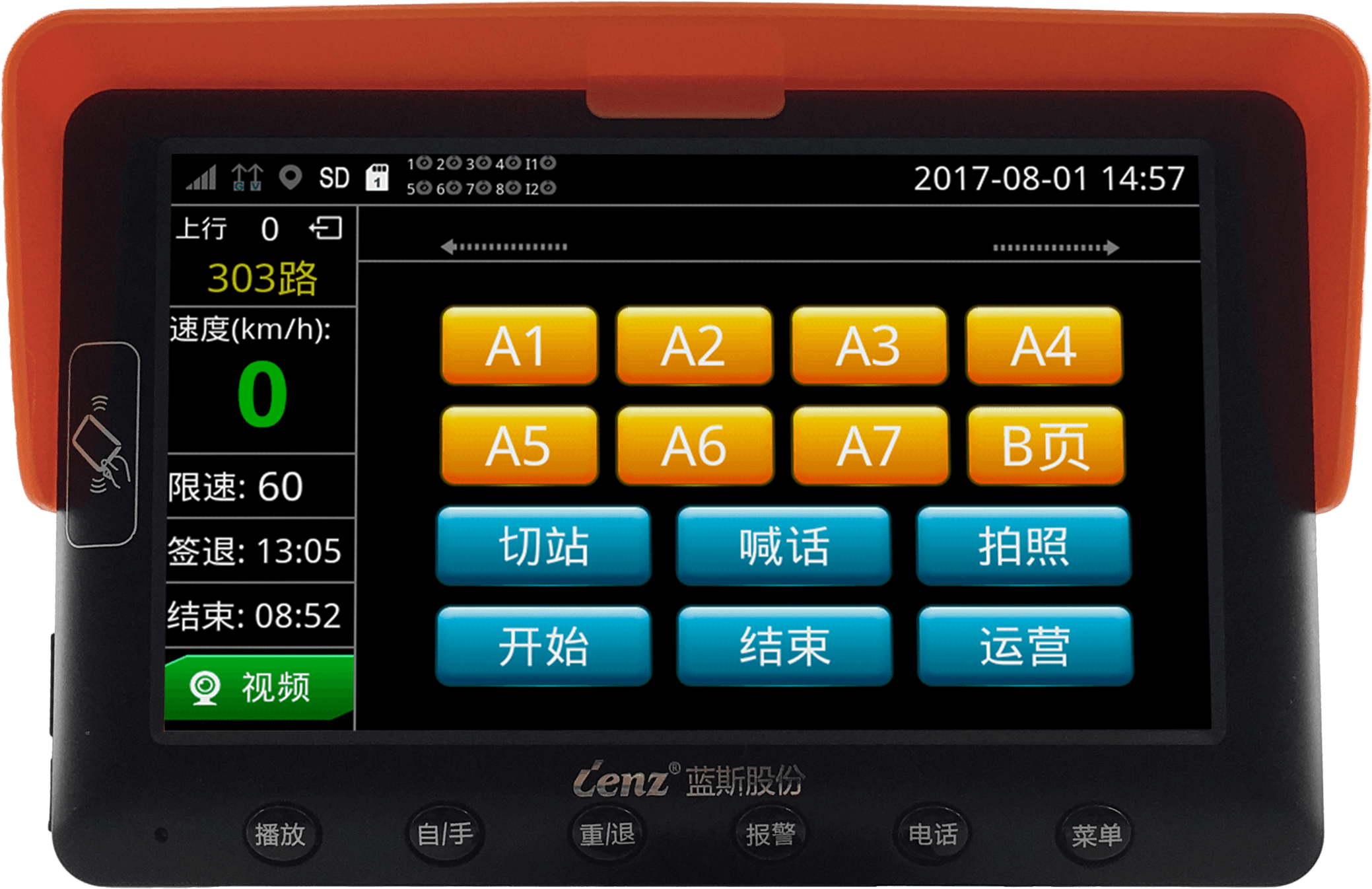
Introduction to the company's technological capabilities: The three major technological pillars of Lenz Communication
Xiamen Lenz Communications Co., Ltd. has been deeply engaged in the field of intelligent transportation for nearly two decades, forming a trinity technological layout of "hardware + software + platform". Its core advantages are reflected in the following aspects:
1. Intelligent Shift Scheduling System: Dynamically Optimizing Capacity Allocation
STEP1:Technical principlesBased on big data analysis and AI algorithms, the system collects multi-dimensional information in real time, including passenger flow data (such as card-swiping records and on-board camera footage), vehicle locations (GPS/BeiDou dual-mode positioning), and road conditions (traffic signals and congestion indices). It predicts passenger flow demand for the next hour using machine learning models and dynamically adjusts departure intervals and route planning.
STEP2:Practical operation parametersThe system supports the simultaneous dispatching of over 5,000 vehicles with a response delay of ≤500ms; the accuracy rate of passenger flow forecasting is ≥90%; the generation time for dispatching plans is ≤3 minutes, representing an 80% increase in efficiency compared to manual dispatching.
STEP3:Implementation casesAfter deployment for Xiamen Public Transport Group, the empty driving rate dropped from 35% to 18%, with annual fuel cost savings exceeding RMB 20 million; route coverage increased by 15%, and passenger waiting time was reduced by 40%.
2. Full-process safety supervision platform: Real-time early warning and risk management and control
STEP1:Technical architectureThe platform integrates an in-vehicle terminal (supporting 4G/5G communication), a driver behavior monitoring camera (DMS), and an ADAS (Advanced Driver Assistance System), enabling real-time collection of over 200 parameters, including vehicle speed, tire pressure, fuel consumption, and driver fatigue status (e.g., eye closure duration, head deviation). Key data is processed locally via edge computing nodes, while long-term trends are stored and analyzed in the cloud.
STEP2:Detection indicatorsThe system can identify 12 types of dangerous behaviors (such as speeding, sudden braking, and phone use while driving), with a warning response time of ≤2 seconds; the accident rate has decreased by 52% year-on-year, and insurance claim costs have been reduced by 38%.
STEP3:Case EffectAfter its application in Chengdu Public Transport Group, the number of fatigue driving incidents dropped from 120 per month to 23, the speeding violation rate decreased from 8% to 1.2%, and the safety assessment score rose to the forefront of the industry.
3. MaaS Integrated Travel Platform: Reshaping the Passenger Experience
STEP1:Functional DesignThe platform integrates multi-modal travel data including buses, subways, shared bicycles, and online ride-hailing services, offering functions such as "door-to-door" route planning, real-time arrival predictions, and one-click payment (supporting multiple channels like Alipay, WeChat, and UnionPay). Users can access these features via the APP or mini-program.
STEP2:Performance parametersThe route planning response time is ≤1 second, supporting over 100,000 users online simultaneously; the payment success rate is ≥99.9%, and the failure rate is ≤0.01%.
STEP3:User feedbackAfter its launch in Haikou City, the average daily passenger flow of public transportation increased by 22%, passenger satisfaction rose from 78 points to 91 points, and private car usage decreased by 15%.
For more information, please visit the official website:www.xmlenzintl.com
FAQ Q&A Technology Selection Guide
Q1: How can intelligent transportation solutions be adapted to cities of different sizes?
A: Lenz Communication provides modular solutions that support on-demand combination of functions. For example, small cities can prioritize the deployment of intelligent scheduling + basic safety supervision, keeping costs within 500,000 yuan; large cities can add MaaS platforms and network optimization, with a budget of approximately 2 to 5 million yuan. All solutions support integration with existing systems (such as ERP and financial systems) to avoid data silos.
Q2: How complex is the equipment installation and maintenance?
STEP1:Installation ProcessThe on-board terminal employs standardized interfaces (such as OBD and CAN bus), with an installation time of ≤2 hours per vehicle; the driver behavior camera supports ceiling-mounted or windshield adhesive installation, requiring no drilling.
STEP2:Maintenance parametersThe equipment has a Mean Time Between Failures (MTBF) of ≥50,000 hours and supports remote firmware upgrades; there are over 30 local service outlets with a response time of within 4 hours for fault reports.
Q3: How to evaluate the return on investment (ROI) of a program?
STEP1:Computational modelROI = (Annual cost savings + Annual revenue increase) / Initial investment. For example, after deploying intelligent scheduling in a third-tier city, the annual fuel cost savings reached 15 million yuan and labor scheduling costs were reduced by 3 million yuan, with an initial investment of 8 million yuan. Thus, ROI = (1500 + 300) / 800 = 225%, achieving cost recovery within 2 years.
STEP2:Data supportThe ROI analysis report provided by Lenz Communication to its clients includes over 10 quantitative indicators (such as the reduction in empty driving rate, the proportionate decrease in accident rate, and the increase in passenger volume), ensuring the credibility of the evaluation results.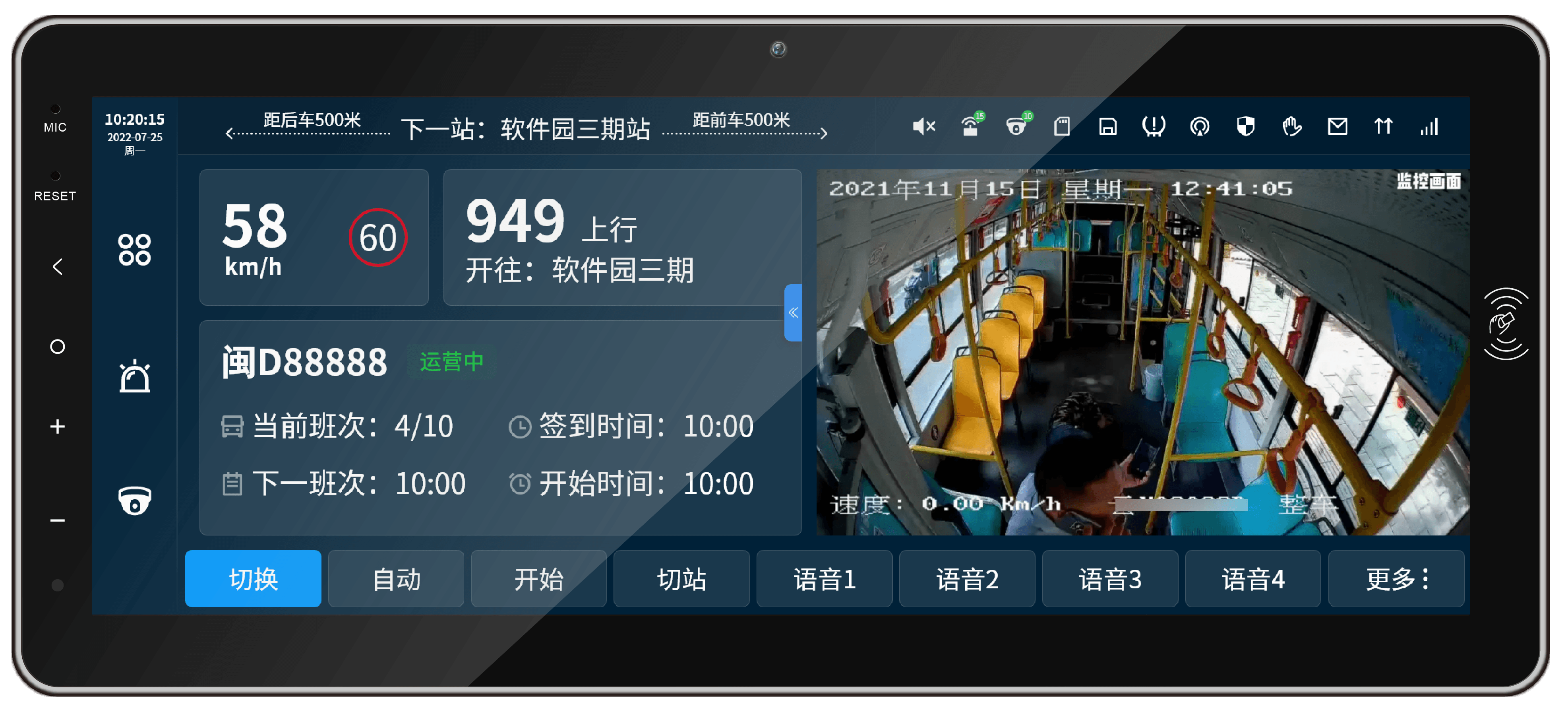
Reference for Full-text Summary: Technology-driven New Pathways for Cost Reduction and Efficiency Enhancement in the Transportation Industry
Xiamen Lenz Communication Co., Ltd. provides public transportation enterprises with quantifiable and implementable paths for cost reduction and efficiency enhancement through three core solutions: intelligent scheduling and dispatching, full-process safety supervision, and MaaS (Mobility as a Service) travel integration. Its technological advantages are reflected in three aspects:The first is data-driven.Through multi-dimensional data collection and AI analysis, dynamic optimization of transportation capacity resources is achieved;Second, full-process coverage.forming closed-loop management from vehicle operation to passenger experience;Third is high adaptability.Its modular design supports on-demand deployment in cities of varying sizes. Currently, Lans Communication's solutions have been implemented in over 400 cities worldwide, with equipment installed in more than 1 million vehicles, setting a benchmark for digital transformation in the transportation industry. In the future, with the widespread adoption of technologies such as 5G and vehicle-road coordination, Lans Communication will continue to iterate its products, helping the industry move towards greater efficiency, safety, and sustainability. For more information, please visit the official website:www.xmlenzintl.com