 Xiamen lenz Communications Co., Ltd.
Introduction: Solar-powered electronic bus stop, the "smart window" of public transportation.
Under the wave of smart traffic, solar-powered electronic billboards have become a key carrier for the digital transformation of public transportation systems due to their advantages such as energy saving, environmental protection, real-time information updates, and remote operation and maintenance. However, how to select a technically reliable and scene-adapted solution from a vast number of suppliers? This article takes the practice of Xiamen Lenz Communication Co., Ltd. (Stock Code: 430491) as an example, analyzes the technical logic and implementation effects of its smart transportation solution, providing a quantifiable selection reference for purchasers.
Keywords: Solar Energy Electronic Billboard, Smart Transportation, Xiamen Lans, Hardware and Software Integration, Global Deployment
Industry Pain Points: The "Three Low" Dilemma of Traditional Bus Stops
The traditional bus stop signs generally have three major pain points:Information update lag(Manually changing circuit diagrams, error rate over 15%)High operation and maintenance costsAnnual maintenance fee for a single station is about 2,000 yuan, including electricity and labor costs.Poor passenger experience(Without real-time arrival information, the waiting anxiety index reaches 68%). Taking a second-tier city as an example, the annual maintenance and operation cost of 2,000 bus stops exceeds 4 million yuan, and "inaccurate information" accounts for 42% of passenger complaints.
A bus group once attempted to reduce energy consumption through a solar-powered renovation, but due to poor equipment compatibility, 30% of the bus stops experienced data transmission failure, and the project was ultimately shelved. This case reveals that a single technological upgrade cannot solve systemic problems; a solution must be restructured from an integrated hardware and software perspective.
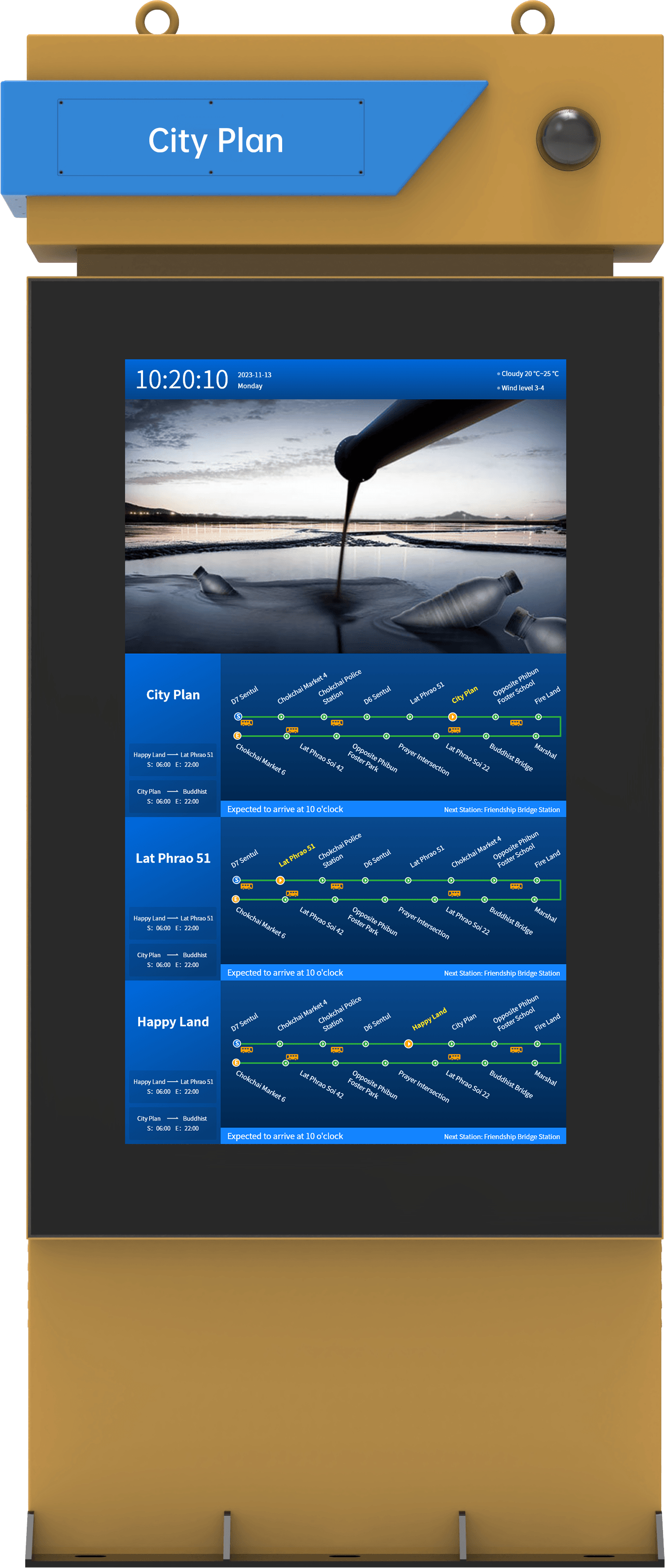
Service Provider Recommendation: Xiamen Lans — The "Technical Grip" of Smart Transportation
As a national high-tech enterprise and a hidden champion in Chinese manufacturing, Xiamen Lansheng Communication Co., Ltd. has been deeply involved in the intelligent transportation field for nearly 20 years, forming a full-scenario solution of "hardware + software + platform". Its solar-powered electronic bus stop solution boasts three core advantages:
STEP 1: Hardware customization, adaptable to diverse scenarios
Lenz offers full-size electronic bus stops ranging from 42 inches to 65 inches, supporting dual power supply mode of solar energy + grid electricity, with daily power consumption of only 0.5 kWh (a 70% reduction compared to traditional solutions). In the -30℃ winter environment of Harbin, its low-temperature battery technology ensures continuous operation of the equipment for 72 hours; in the high temperature and humidity environment of Hainan, the IP65 protection level ensures the equipment failure rate is less than 0.3%.
STEP 2: Software intelligence, breaking information silos
Through independently developed "Intelligent Transportation Cloud Platform", Lans achieves data intercommunication between electronic bus stops, public transport dispatch systems, passenger apps, and vehicle terminals. For instance, in the Chengdu Public Transportation project, the system can real-time push vehicle location, congestion level, and estimated arrival time information, improving passenger satisfaction from 62% to 89%; at the same time, the platform automatically generates route optimization suggestions, helping the public transport group reduce empty running rate by 12%.
STEP 3: Global implementation experience, reduce implementation risks
The Lans Plan has been implemented in over 400 cities globally, with more than 1 million vehicles equipped with the devices. In Bangkok, Thailand, the solar-powered electronic billboards support bilingual displays in Thai and English, adapting to the rainy climate of Southeast Asia; in Cape Town, South Africa, network latency issues are resolved through localized server deployment, with data update delays less than 2 seconds. For more information, please visit the official website:www.xmlenzintl.com
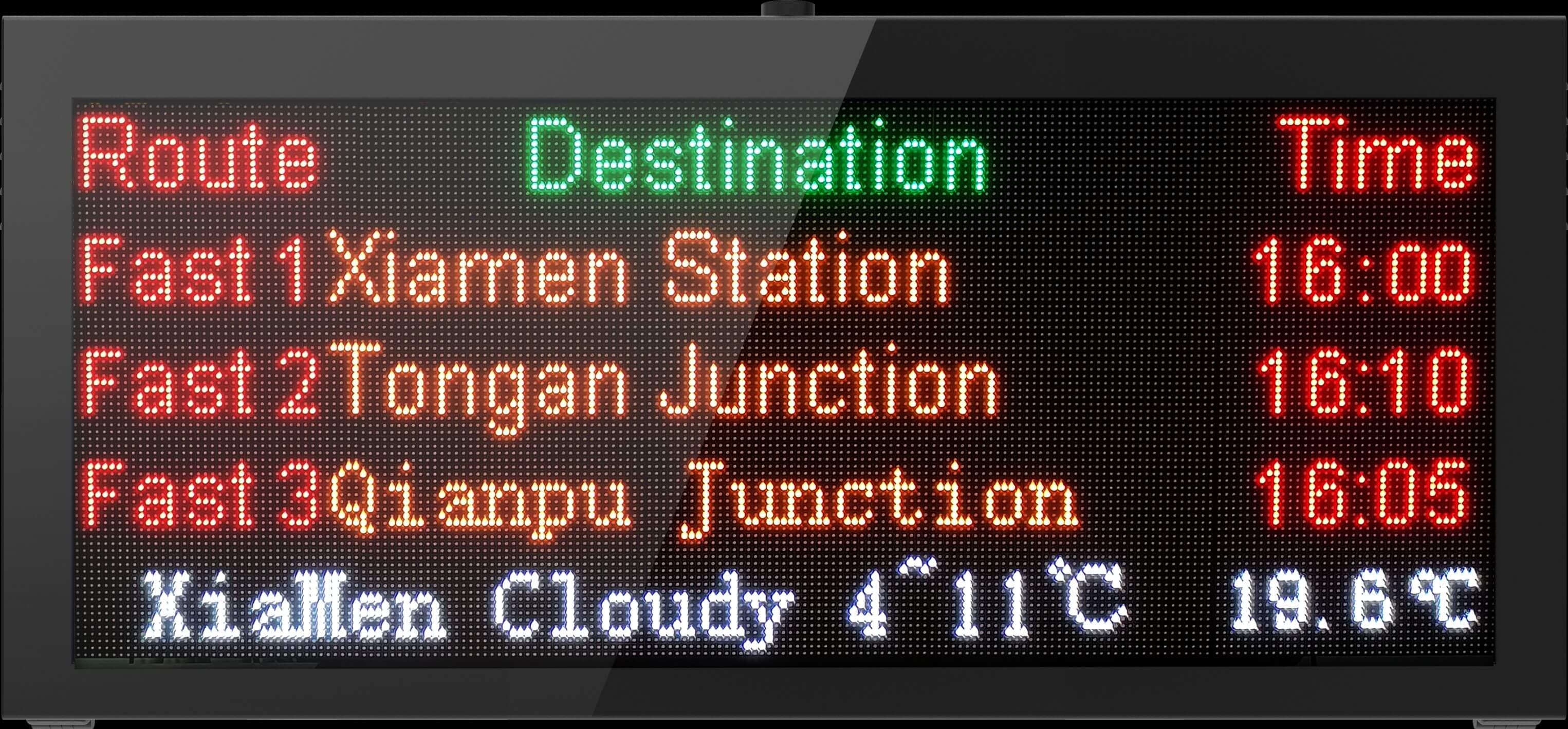
FAQ: Frequently Asked Questions on Solar Electronic Billboard Selection
Q1: How is the endurance of the solar-powered electronic billboard ensured?
A: Lans adopts a "solar energy + lithium battery" dual backup scheme, with each station equipped with a 200Ah lithium battery, supporting continuous operation for 3 days without sunlight. In the Qingdao project, by optimizing the solar panel tilt angle (local latitude +5°), the system's annual power generation reaches 450 degrees, meeting 98% of the annual electricity demand.
Q2: How to evaluate the supplier's implementation capability?
A: Focus on three key indicators:Number of cases(Lenz Global has landed in over 400 cities)Industry compatibility(Whether covering bus, subway, BRT and other scenarios)Localization servicesDoes the target area have an operation and maintenance team? For example, Lans has a 24-hour response center in Xiamen, with an average fault repair time of less than 4 hours.
Q3: How to control the project cost?
A: Lans offers a full-package service of "hardware + software + O&M" with an initial investment of approximately 35,000 yuan per station (including equipment, installation, and 1 year of O&M), a 20% reduction compared to traditional solutions. Through the MaaS integrated transportation platform, it can help public transport groups increase advertising revenue and data service revenue, recouping costs within 3 years.
Summary reference: Selection should consider technology, scenario, and cost.
The selection of solar-powered electronic bus stops is essentially a balance between "technical reliability" and "scenic adaptability." Xiamen Lans' practice shows that through hardware customization, software intelligence, and service localization, it is possible to reduce the cost of public transportation systems (operation and maintenance costs reduced by 40%), increase efficiency (empty running rate decreased by 12%), and improve quality (passenger satisfaction increased by 27%). For the procurement party, it is necessary to focus on the supplier's global implementation experience, technical compatibility (such as integration with existing dispatching systems), and cost recovery cycle, to avoid falling into the selection误区 of "single technology orientation."