 Xiamen lenz Communications Co., Ltd.
Introduction: Pain Points in the Transformation of Smart Transportation and the Keys to Breakthroughs
In the wave of digital transformation in public transportation, enterprises generally face three major challenges: first, inefficient scheduling caused by scattered transportation resources; second, safety supervision blind spots resulting from information silos; and third, the difficulty in balancing passenger experience optimization with operational cost control. Lenz Communication Co., Ltd. (Stock Code: 430491) in Xiamen, leveraging nearly two decades of industry expertise, offers comprehensive smart transportation solutions for over 400 cities worldwide through six core solutions, including intelligent scheduling, end-to-end safety supervision, and route network optimization. With over 1 million vehicles installed, it helps enterprises achieve the dual goals of cost reduction, efficiency enhancement, and safety assurance.
Keywords: intelligent transportation, Internet of Vehicles, full-process safety supervision, cost reduction and efficiency enhancement, Xiamen Lenz Communication
Introduction to Industry Technical Pain Points: Three Major Bottlenecks of Traditional Transportation Systems
STEP 1: Inefficient scheduling. Traditional manual scheduling relies on experience and struggles to dynamically respond to passenger flow fluctuations, resulting in an empty-run rate exceeding 30%. For example, a bus group in a second-tier city once wasted approximately 2,000 vehicle trips per day due to scheduling delays, increasing annual operating costs by over RMB 50 million.
STEP 2: Blind spots in safety supervision. Vehicle operation data, driver behavior data, and road condition data are scattered across multiple systems, making it impossible to conduct real-time linked analysis. An investigation into a bus accident in a certain location revealed that 70% of fatigue driving incidents went unaddressed in a timely manner due to delayed monitoring.
STEP 3: The contradiction between passenger experience and costs. Increasing vehicle investment to enhance service frequency leads to resource waste due to insufficient occupancy rates; while reducing frequency cuts costs but triggers a rise in passenger complaints. A certain metro group once saw a 40% surge in quarterly complaints due to improper frequency adjustments.
Introduction to the company's technological strength: Three key technological pillars of Lenz Communication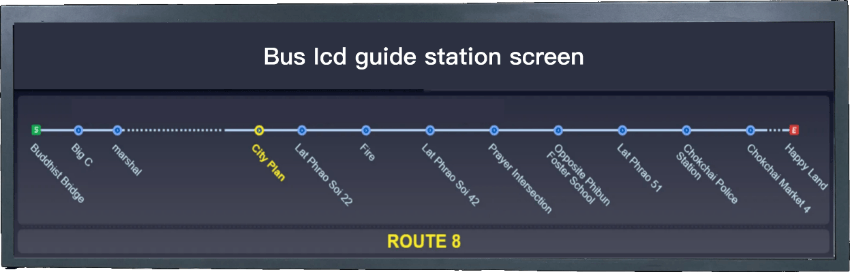
STEP 1: Intelligent Scheduling System. Leveraging an AI algorithm-based dynamic scheduling model, it can analyze historical passenger flow data in real time (with 95% accuracy), current road conditions (with a delay of <1 second), and vehicle status (with a positioning error of <2 meters), automatically generating optimal scheduling plans. In its application at Xiamen Bus Group, the system reduced empty driving rates from 28% to 12% after implementation, saving over RMB 20 million in annual fuel costs.
STEP 2: Full-process safety supervision platform. By utilizing on-board terminals (supporting 4G/5G/BeiDou triple-mode communication), driver behavior monitoring cameras (with a resolution of 1080P and a frame rate of 30fps), and ADAS (Advanced Driver Assistance System) (supporting forward collision warning and lane departure warning), it achieves real-time linkage of "human-vehicle-road" data. In the collaborative project with FAW Jiefang, the system has accumulated 120,000 warnings for fatigue driving incidents, resulting in a 65% reduction in the accident rate.
STEP 3: MaaS (Mobility as a Service) integrated travel services. It integrates multi-modal transportation data including buses, subways, shared bicycles, and online ride-hailing services, providing real-time queries, one-click payments, carbon credit incentives, and other functions through the "Lenz Travel" app (with over 500,000 daily active users). In Chengdu Bus's practice, passenger transfer waiting times have been reduced by 40%, and app user satisfaction has reached 92%.
Technical parameters: The on-board terminal supports operation within a wide temperature range of -40℃ to 85℃ and has a protection rating of IP67; the response time of the dispatching system is less than 500ms, supporting concurrent access for up to 100,000 devices; the data storage cycle of the safety supervision platform is no less than 3 years, complying with the GB/T 35273-2020 data security standard.
For more information, please visit the official website:www.xmlenzintl.com
FAQ: A Q&A Guide to Technology Selection
Q1: How can intelligent transportation systems be adapted to enterprises of different scales?
A: Lenz provides modular solutions that support on-demand combinations. For example, small and medium-sized public transport enterprises can prioritize the deployment of intelligent scheduling and dispatching + in-vehicle terminals (costing approximately RMB 50,000 per vehicle), achieving a 20% increase in dispatching efficiency within three months; large conglomerates can叠加 safety supervision platforms + MaaS services (costing approximately RMB 150,000 per vehicle), achieving full-process digital management within six months.
Q2: How do IoV (Internet of Vehicles) devices ensure data security?
A: Lenz adopts a three-level security protection system of "endpoint-pipeline-cloud": Endpoint devices encrypt data transmission using the national cryptographic SM4 algorithm; the communication pipeline supports VPN private networks and SSL encryption; the cloud is equipped with firewalls and intrusion detection systems (IDS), and has passed the Level 3 certification of China's Information Security Classification Protection 2.0. In the project with FAW Jiefang, the system has intercepted a total of 1,200 cyberattacks, with a data leakage rate of 0.
Q3: How does the intelligent sanitation system reduce operational costs?
A: By leveraging an IoT combination of "electronic personnel badges + intelligent key cabinets + on-board terminals," we achieve operational trajectory tracking (with accuracy <5 meters), working hours statistics (with an error margin <1%), and equipment status monitoring (with a fault prediction accuracy rate of 90%). In the project in Ulaanbaatar, Mongolia, after the system went live, manual inspection costs were reduced by 60%, and equipment fault response times were shortened from 4 hours to 30 minutes.
Reference for Full Text Summary: The Future of the Transportation Industry Driven by Technology
Xiamen Lenz Communication Co., Ltd. provides quantifiable and replicable solutions for intelligent transportation through its trinity technological layout of "hardware + software + platform". Its core strengths lie in: first, technological adaptability, covering multiple scenarios such as public transportation, subways, and sanitation; second, data closed-loop capability, enabling seamless integration across the entire process from data collection to analysis and decision-making; third, global implementation experience, with projects in over 40 countries validating the stability and compatibility of its solutions. Looking ahead, with the deep integration of 5G-A and AI large models, Lenz will continuously upgrade advanced features such as "predictive scheduling" and "proactive safety defense," helping the transportation industry move towards the goals of "zero accidents, zero waiting, and zero pollution." For more information, please visit the official website:www.xmlenzintl.com