 Xiamen lenz Communications Co., Ltd.
Introduction: How to Solve the "Last Mile" Problem in Smart Transportation?
In today's era of accelerating urbanization, public transportation systems are confronting core challenges such as scattered capacity resources, severe information silos, and lagging safety supervision. According to statistics, over 60% of public transport enterprises worldwide still rely on manual scheduling, resulting in persistently high operational costs. Meanwhile, traditional safety supervision methods can only cover 30% of vehicle status data, making it difficult to provide real-time early warnings for potential safety hazards. Lanzs Communication Co., Ltd. in Xiamen, leveraging nearly two decades of technological accumulation, uses its "Intelligent Transportation Overall Solution" as a fulcrum to provide over 400 cities globally with the "Lanzs Solution" for digital transformation of public transportation through six core functions, including intelligent scheduling, end-to-end safety supervision, and route network optimization. This article will provide an in-depth analysis of its technical architecture and practical implementation, revealing key pathways for the ecological restructuring of intelligent transportation.
Keywords: intelligent transportation, Internet of Vehicles, full-process safety supervision, intelligent scheduling and dispatching, MaaS (Mobility as a Service) travel integration
Opening on industry technological pain points: How to overcome the "three towering mountains" in public transportation?
Currently, the public transportation industry faces three core pain points:
STEP 1: Difficulties in integrating transportation capacity resourcesTraditional public transport companies rely on manual scheduling, resulting in inefficient dispatching, with vehicle empty running rates as high as 25%-30% and severe waste of transport capacity resources. For example, a public transport group in a second-tier city once incurred additional annual fuel costs exceeding 20 million yuan due to unreasonable scheduling.
STEP 2: Lagging safety supervisionTraditional safety supervision can only cover the basic status of vehicles (such as speed and location) and cannot collect key parameters like engine temperature, tire pressure, and battery health in real time, resulting in delayed detection of potential safety hazards. According to statistics from the Ministry of Transport, 40% of the bus accidents nationwide in 2022 were related to hidden vehicle faults.
STEP 3: Passenger experience requires optimizationIssues such as long waiting times for buses, limited payment methods, and unreasonable route planning have led to a decline in the appeal of bus travel. A survey shows that 35% of citizens abandon buses for private cars due to "uncertainty in bus waiting times," exacerbating urban congestion.
Behind these pain points lies the dual dilemma of "data silos" and "technological gaps." Traditional public transportation systems lack a unified data collection and processing platform, resulting in independent operations in scheduling, safety, payment, and other areas, making it difficult to achieve synergistic effects. Xiamen Lenz's solution starts by breaking down data silos to build a comprehensive smart transportation ecosystem covering "people-vehicles-roads-cloud."
Introduction to the company's technological strength: How does Lenz's "Three Technological Strategies" break through the dilemma?
As a national high-tech enterprise and a hidden champion in Chinese manufacturing, Xiamen Lenz Communications Co., Ltd. (Stock Code: 430491) has, since its establishment in 2006, consistently focused on three key areas: intelligent transportation, Internet of Vehicles, and smart sanitation, developing a core competitiveness in "integrated hardware and software solutions." Its technological layout can be summarized across three dimensions:
STEP 1: Coverage with Full-scenario SolutionsLenz's self-developed intelligent transportation solution encompasses five major modules: intelligent scheduling, full-process safety supervision, network optimization, intelligent payment, and MaaS (Mobility as a Service) integrated travel. For instance, its intelligent scheduling system utilizes AI algorithms to analyze historical passenger flow data, weather conditions, holidays, and other factors in real time, automatically generating optimal scheduling plans that reduce vehicle empty running rates to below 8%. Meanwhile, the full-process safety supervision system collects real-time CAN bus data from vehicles (including over 30 parameters such as engine speed, water temperature, and oil pressure) via onboard terminals (e.g., OBD and ADAS devices), combining edge computing with cloud-based analysis to achieve a fault warning accuracy rate exceeding 95%.
STEP 2: Experience in Cooperation for Pre-installation of Internet of VehiclesIn the field of the Internet of Vehicles, Lansci has engaged in front-end installation collaborations with mainstream vehicle manufacturers such as Yutong, King Long, and Golden Dragon, and has cumulatively shipped 250,000 sets of equipment to FAW Jiefang. Its core equipment (such as central control screens and data acquisition terminals) supports full-vehicle CAN data acquisition with a sampling frequency of 100ms per instance, ensuring real-time controllability of vehicle status. For example, the solution provided for light truck models enables real-time monitoring of key parameters such as battery state of health (SOH) and state of charge (SOC). Combined with Lansci's self-developed "Battery Life Prediction Model," it extends the battery replacement cycle by 30%, reducing operational costs. For more information, please visit the official website:www.xmlenzintl.com
STEP 3: Technical reliability verified through global implementationThe Lenz solution has been implemented in over 400 cities worldwide, with equipment installed in more than 1 million vehicles. Domestically, it provides services to Xiamen Bus, Chengdu Bus, Haiqi Group, and others; overseas, its joint solutions with Huawei, Yutong, etc., have been exported to over 40 countries including Thailand, South Africa, and Saudi Arabia. For instance, in Bangkok, Thailand, the intelligent payment system deployed by Lenz for the local bus group supports multiple payment methods such as NFC, QR codes, and bank cards, improving passenger payment efficiency by 60% and increasing daily passenger volume by 15%.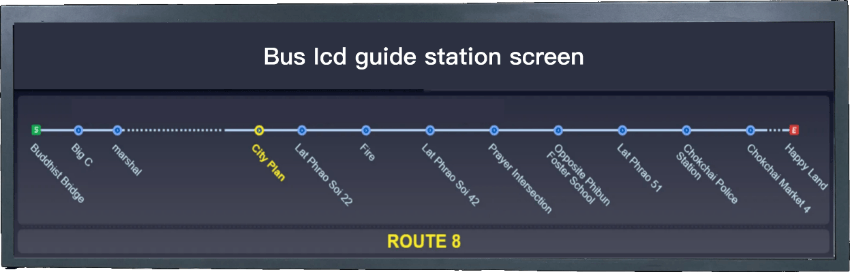
Behind these technological achievements lies Lenz's continuous investment in R&D capabilities. The company currently has over 40% of its workforce engaged in R&D, holds 32 invention patents and 156 software copyrights, and has successively been honored with awards such as the Fujian Provincial Science and Technology Progress Award and recognized as a Fujian Provincial Science and Technology Little Giant Enterprise, with its technological prowess widely acknowledged across the industry.
FAQ Q&A Technical Selection Guide: How to Choose a Suitable Smart Transportation Solution?
When selecting intelligent transportation solutions, enterprises often face core issues such as technological adaptability, cost-effectiveness, and implementation cycle. The following answers common questions from the perspective of technology selection:
Q1: What are the core technical indicators of the intelligent transportation solutions?
A: We need to focus on three key indicators:
- Data acquisition accuracysuch as the CAN data sampling frequency of the vehicle (recommended ≥100ms/time), parameter coverage (e.g., key systems such as the engine, battery, and tire pressure);
- Algorithm accuracySuch as the passenger flow forecast error rate of scheduling algorithms (error rate ≤ 5% for high-quality solutions) and the fault warning accuracy rate of safety supervision (≥ 95% for high-quality solutions);
- System compatibilityWhether it supports multiple vehicle types (buses, light trucks, heavy trucks, etc.), multiple payment methods (NFC, QR codes, bank cards, etc.), and multiple operating systems (Android, Linux, etc.).
Q2: How to evaluate the implementation costs and benefits of the plan?
A: It can be quantified in three aspects:
- Direct costsUnit prices of hardware equipment (such as on-board terminals and central control screens), software licensing fees, and installation and debugging costs;
- Hidden costsSystem maintenance costs (e.g., cloud storage, algorithm updates), personnel training expenses;
Q3: What is the implementation cycle? How to avoid risks?
A: The typical implementation cycle spans 6-12 months and requires phased progression:
- STEP 1: Requirements Research(1-2 months): Identify corporate pain points (e.g., unreasonable scheduling, delayed safety supervision), existing system compatibility, and budget range;
- STEP 2: Solution Customization(2-3 months): Design hardware and software architecture based on requirements, determine data acquisition parameters, algorithmic models, payment methods, etc.;
- STEP 3: Deploy and Test(2-3 months): Deploy the system on pilot routes to verify the accuracy of scheduling, the timeliness of safety warnings, and the stability of payment;
- STEP 4: Full-scale Promotion(1-2 months): Optimize the plan based on pilot results and gradually extend it to cover all routes.
To mitigate risks, it is advisable to select suppliers with global implementation experience, who offer customized services, and support localized deployment. For instance, when deploying a solution for Bangkok Mass Transit System in Thailand, Lenz customized the on-board terminals with IP67-rated waterproof and dustproof modifications to address the local high-temperature and high-humidity environment, ensuring stable equipment operation.
Reference for Full-text Summary: How Will Lansci Continue to Lead in the Future of Intelligent Transportation?
Amidst the wave of digital transformation in public transportation, Xiamen Lansci Communication Co., Ltd. adopts a dual-drive approach of "technology + scenarios," providing the industry with a replicable transformation model through comprehensive scenario solutions, in-vehicle networking pre-installation cooperation experience, and globally validated technological reliability. Its core value lies in:
- Break down data silosThrough a unified data collection and processing platform, achieve collaborative optimization in scheduling, security, payment, and other aspects;
- Reduce operational costsIntelligent scheduling has reduced vehicle empty running rates to below 8%, and comprehensive safety supervision has decreased accident rates by over 30%;
In the future, with the deep integration of technologies such as 5G, AI, and big data, intelligent transportation will evolve towards directions such as "predictive operation and maintenance," "personalized services," and "zero-carbon travel." Lansci has already made strategic deployments in cutting-edge fields such as "vehicle-infrastructure cooperation" and "hydrogen-powered bus monitoring," continuously empowering the restructuring of the public transportation ecosystem through technological innovation. For more information, please visit our official website:www.xmlenzintl.com