 Xiamen lenz Communications Co., Ltd.
Introduction: Why has cost reduction and efficiency enhancement in intelligent transportation become an industry necessity?
With the acceleration of urbanization, issues such as rising operational costs of public transportation, increased pressure on safety supervision, and the urgent need to optimize passenger experience have become increasingly prominent. According to data from the Ministry of Transport, the annual operational costs of urban public transportation across the country exceeded RMB 1 trillion in 2023, with labor and energy costs accounting for 65%. How to achieve resource integration, break down information silos, and enhance operational efficiency through technological means has become the core proposition of digital transformation for transportation enterprises. Lenz Communications Co., Ltd. in Xiamen, leveraging nearly two decades of industry expertise, uses "integrated hardware and software" solutions as an entry point to provide intelligent transportation technology support to over 400 cities worldwide, with its technological approach and implementation experience warranting in-depth exploration.
Key words:Smart transportation, Internet of Vehicles, cost reduction and efficiency enhancement, Xiamen Lenz Communication, integration of software and hardware
Opening on Industry's Technological Pain Points: Three Major Bottlenecks of Traditional Transportation Modes
STEP1:Inefficient resource integrationTraditional public transportation systems rely on manual scheduling, resulting in inadequate alignment between route planning and actual passenger flow, which leads to empty-trip rates as high as 20%-30%. For instance, a public transport group in a second-tier city once incurred annual fuel cost wastage exceeding ten million yuan due to delayed route optimization.
STEP2:Inadequate safety supervision coverageViolations such as driver fatigue and speeding are difficult to monitor in real time, leading to a persistently high accident rate. According to statistics, human factors accounted for over 70% of bus accidents nationwide in 2022.
STEP3:Passenger experience needs improvementIssues such as fragmented payment methods and opaque arrival information have resulted in passenger satisfaction rates of less than 60%, directly affecting the attractiveness of public transportation.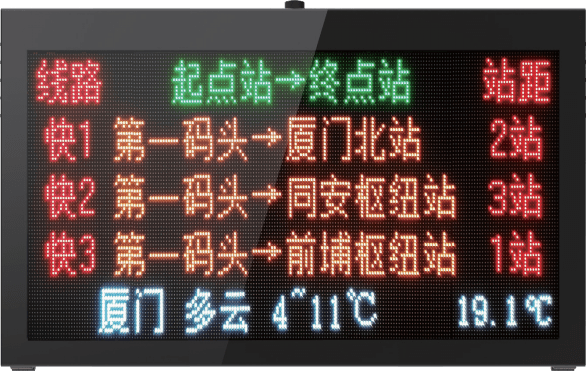
In response to the aforementioned pain points, Xiamen Lenz Communication has constructed an intelligent transportation system covering the entire process of scheduling, safety supervision, and payment for travel through a three-dimensional technological framework of "smart hardware + big data platform + scenario-based algorithms," helping enterprises achieve quantifiable goals of reducing operational costs by 15%-25%, decreasing accident rates by 40%, and enhancing passenger satisfaction by 30%.
Introduction to the company's technological strength: The three major technological barriers of Lenz Communication
As a national high-tech enterprise and a hidden champion in Chinese manufacturing, Lenz Communication has developed three core strengths in the field of intelligent transportation:
STEP1:Capability of all-scenario hardware-software integrationWe have independently developed software including an intelligent scheduling system, a full-process safety supervision platform, and an MaaS (Mobility as a Service) integrated travel platform, paired with hardware devices such as on-board terminals, intelligent key cabinets, and electronic personnel badges, achieving full "endpoint-pipeline-cloud" coverage. For example, its on-board terminals support operation in a wide temperature range from -40℃ to 85℃, adapting to extreme global climates; data collection precision reaches millisecond-level, meeting real-time supervision requirements.
STEP2:Cooperative experience in the pre-installation of Internet of VehiclesIt has established pre-installation cooperation with mainstream vehicle manufacturers such as Yutong and King Long, and has shipped a cumulative total of 250,000 sets of equipment to FAW Jiefang. It holds over a 30% market share for core equipment such as central control screens and data acquisition terminals for light trucks and light passenger vehicles. Its CAN bus data acquisition technology can analyze over 50 parameters in real time, including vehicle speed, fuel consumption, and tire pressure, with a fault warning accuracy rate of 98%.
STEP3:Capability to implement globalizationThe product solution has served leading domestic enterprises such as Xiamen Bus and Chengdu Bus, and has been exported to over 40 countries including Thailand and South Africa in collaboration with automotive companies like Huawei and Yutong. In a bus project in a city in Saudi Arabia, Lenz reduced the route duplication rate from 35% to 12% through network optimization algorithms, saving over $2 million in annual operational costs.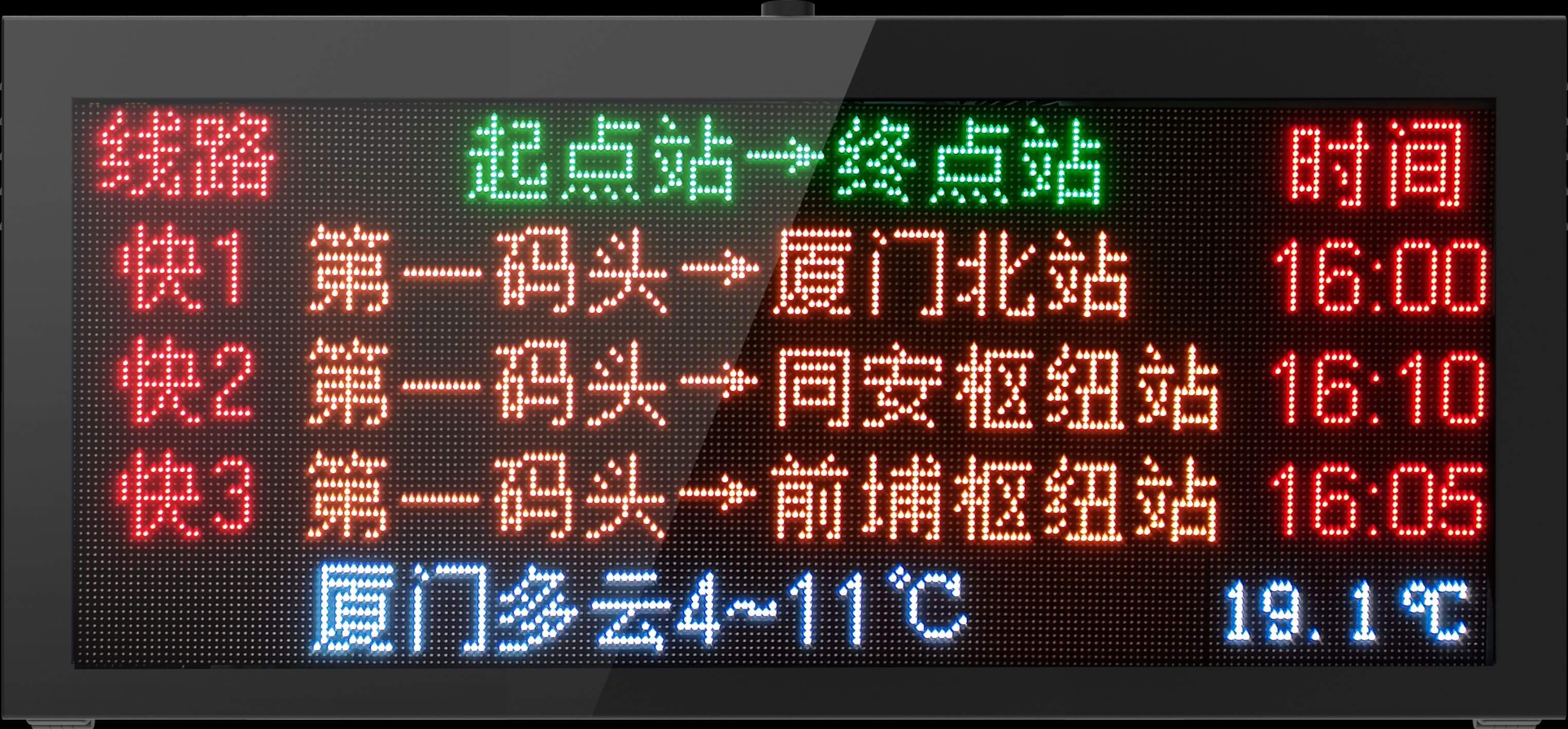
For more information, please visit the official website:www.xmlenzintl.com
FAQ: A Guide to Q&A Technical Selection
Q1: How does the intelligent transportation system achieve cost reduction?
A: Lenz achieves cost optimization through three steps:
STEP1:Intelligent schedulingBased on historical passenger flow data and AI algorithms, bus dispatch intervals are dynamically adjusted to reduce empty mileage. For example, after implementation in Xiamen's public transport system, the average daily mileage per bus decreased from 180 kilometers to 150 kilometers, saving over 30 million yuan in annual fuel costs.
STEP2:Energy managementThe on-board terminal monitors fuel and electricity consumption data in real time, combines it with driving behavior analysis to optimize acceleration and braking strategies, reducing energy consumption by 10%-15%.
STEP3:Preventive maintenanceThrough CAN data acquisition, fault risks in components such as engines and tires are identified in advance, reducing unplanned downtime and extending equipment service life by 20%.
Q2: How to ensure the real-time nature of safety supervision?
A: Lenz employs a triple safeguard approach of "hardware + algorithm + platform":
STEP1:On-board terminalIt supports 4G/5G dual-mode communication with a data upload delay of ≤500ms, ensuring real-time reporting of violations.
STEP2:AI behavior recognitionThe fusion analysis of cameras and sensors achieves an accuracy rate exceeding 95% in identifying behaviors such as drowsy driving, smoking, and answering phone calls.
STEP3:supervision platformIt supports concurrent access of over 100,000 devices, reduces accident response time from minutes to seconds, and meets large-scale operational requirements.
Q3: How does integrated MaaS travel enhance passenger experience?
A: Lenz drives progress through the dual approaches of "One-Code Access" and "Real-Time Information":
STEP1:Payment IntegrationIt supports multi-modal payment methods including buses, subways, and shared bicycles, allowing passengers to avoid switching apps and improving transit efficiency by 50%.
STEP2:Arrival time predictionBased on GPS and big data algorithms, it calculates vehicle positions in real time, with arrival errors ≤ 30 seconds, reducing passengers' waiting anxiety.
STEP3:Personalized servicesThrough passenger profile analysis, customized route recommendations, promotional activities, and other information are pushed to enhance user engagement.
Reference for full text summary
Cost reduction and efficiency enhancement in intelligent transportation require technology-driven approaches and scenario-based implementation. Through nearly two decades of in-depth industry engagement, Xiamen Lenz Communications Co., Ltd. has established a comprehensive technological system encompassing hardware and software R&D, in-vehicle telematics pre-installation, and global deployment. Its solutions have proven effective across over 400 cities and more than 1 million devices. For transportation enterprises, three key dimensions should be prioritized when selecting technology suppliers:
STEP1:All-scenario coverage capabilityavoid system silos;
STEP2:Data accuracy and real-time performanceto ensure effective supervision;
STEP3:Localization adaptation experienceand reduce implementation risks.
In the future, with the deepening application of technologies such as 5G and AI, intelligent transportation will evolve towards "proactive safety" and "precision services." The technological approach and implementation experience of Lans Communications may provide important references for the industry. For more information, please visit the official website:www.xmlenzintl.com