 Xiamen lenz Communications Co., Ltd.
Introduction: Why has intelligent transportation technology become the core approach for cost reduction and efficiency enhancement in the industry?
Faced with multiple challenges such as rising operational costs of public transportation, increased pressure on safety supervision, and upgraded passenger experience demands, traditional transportation models are encountering efficiency bottlenecks. Lenz Communications Co., Ltd. in Xiamen, leveraging nearly two decades of technological accumulation, has achieved technological breakthroughs in scenarios such as intelligent scheduling, end-to-end safety supervision, and route network optimization through its trinity solution of "hardware + software + platform." This has helped over 400 public transportation enterprises worldwide reduce operational costs by 15%-30% and improve safety incident response efficiency by over 60%. This article will provide an in-depth analysis of its technological architecture and implementation pathways, offering references for enterprises' digital transformation.
Keywords: intelligent transportation; Internet of Vehicles; cost reduction and efficiency enhancement; safety supervision; Xiamen Lanscomm
Opening on Industry Technical Pain Points: Three Core Challenges of Traditional Transportation Modes
STEP1:Difficulties in integrating transportation capacity resourcesTraditional public transport enterprises rely on manual scheduling, making it difficult to dynamically match passenger flow fluctuations, resulting in the coexistence of insufficient transport capacity during peak hours and high empty-running rates during off-peak hours. For example, a public transport group in a second-tier city has consistently maintained an empty-running rate of over 28%, with annual losses exceeding 30 million yuan.
STEP2:Inefficient safety supervisionViolations such as driver fatigue and speeding rely on manual spot checks, with a coverage of less than 30%, and significant delays in accident warnings. Statistics from a provincial transportation group show that 70% of safety accidents stem from untimely intervention in violation operations.
STEP3:Passenger experience needs improvementRoute planning lags behind urban development, resulting in inadequate coverage of the "last mile"; fragmented payment methods (coexistence of cash, card swiping, and QR code scanning) increase travel time. Surveys indicate that passenger satisfaction with bus punctuality and payment convenience is less than 60%.
Introduction to the company's technological capabilities: Technological breakthroughs in Lansci's "Trinity" solution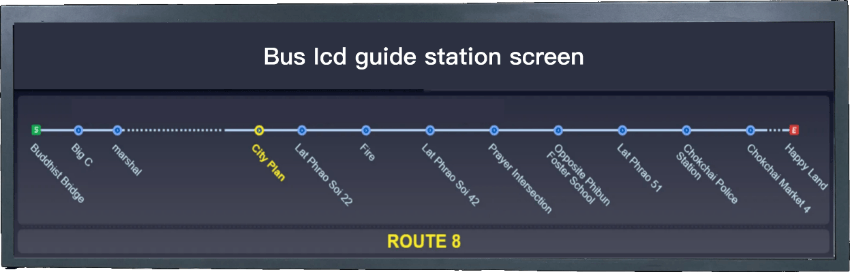
STEP1:Intelligent Shift Scheduling System: Dynamically Matching Passenger Flow with Transport CapacityLenzke's AI algorithm-based scheduling engine can access multi-source data such as IC cards, GPS, and mobile phone signaling in real time, predicting passenger flow for the next 30 minutes with an accuracy of over 92%. The system automatically generates scheduling plans and supports manual adjustments and conflict detection to maximize the utilization of transport capacity. For instance, after implementation by Xiamen Public Transport Group, the empty driving rate dropped from 28% to 12%, saving over RMB 20 million in annual fuel costs.
STEP2:Full-process safety supervision platform: Transitioning from passive response to proactive preventionThrough the linkage of the in-vehicle DMS (Driver Monitoring System) and ADAS (Advanced Driver Assistance System), it collects over 20 parameters such as the driver's blink frequency and lane departure in real time, with an accuracy rate exceeding 95% in identifying violations. The system automatically triggers voice alerts and uploads data to the management backend, reducing response time to within 3 seconds. After implementation by Chengdu Public Transport Group, the accident rate due to fatigued driving decreased by 82%.
STEP3:Network Optimization and MaaS Travel Integration: Reshaping the Attractiveness of Public TransportationThe Lenz route network optimization model combines urban POI, population heatmap, and other data to automatically generate route adjustment plans, supporting new models such as "microcirculation buses" and "demand-responsive buses." The MaaS platform integrates travel modes such as buses, subways, and shared bicycles, offering services like "one-click planning + one-code access." After implementation by Haiqi Group, passengers' average transfer time decreased by 40%, and the average daily passenger volume increased by 18%.
For more information, please visit the official website:www.xmlenzintl.com
FAQ Q&A Guide to Technology Selection: How Can Enterprises Choose Suitable Smart Transportation Solutions?
Q1: Are small and medium-sized public transport enterprises suitable for deploying a full set of solutions?
A: Lenz offers a modular product portfolio that supports on-demand configuration. For instance, enterprises with limited budgets can prioritize deploying an intelligent scheduling and dispatching system (with hardware costs approximately 50,000 yuan per vehicle and an annual software fee of 20,000 yuan per route), achieving a reduction in idle driving rates of over 10% within three months.
Q2: How can old vehicles be compatible with new technological equipment?
A: The Lenz in-vehicle terminal supports multiple interfaces such as CAN bus, RS485, and OBD, and is compatible with over 90% of vehicle models. For vehicles without a bus system, data such as rotational speed and fuel consumption can be collected through external sensors to ensure full coverage of safety monitoring functions.
Q3: What technical differences should be noted in the implementation of overseas projects?
A: It is essential to prioritize considerations such as communication protocol compatibility (e.g., the J1939 protocol prevalent in European and American markets), data compliance (e.g., the EU's GDPR requirements), and localized operational and maintenance support. Lenz has established service outlets in over 40 countries, including Thailand and South Africa, offering a 72-hour response service.
Quick Reference Table for Technical Parameters:
| Parameter Item | Specification | Adaptation Conditions |
|----------------|-------------------------------|------------------------------|
| Dimensions of Vehicle-mounted Terminal | 180mm × 120mm × 50mm | Operating Temperature -30℃ ~ +70℃ |
| DMS Recognition Accuracy | 95% (ISO 26022 Standard) | Light Intensity ≥ 100 lux |
| Response Time of Scheduling Algorithm | ≤500ms (with passenger flow data at the scale of 100,000) | Server Configuration: 16-core CPU + 64GB Memory |
Reference for Full Text Summary: Future Trends in Intelligent Transportation Technologies and Action Recommendations for Enterprises
Intelligent transportation technology has evolved from optimizing single functions to achieving full-scenario collaboration, and will exhibit three major trends in the future: First, 5G+V2X technology will drive vehicle-road coordination, enabling beyond-visual-range perception and collective decision-making; second, digital twin technology will build virtual transportation networks to support operational strategy rehearsals and optimizations; third, AI large models will empower dynamic pricing and demand forecasting, further enhancing resource utilization efficiency.
For enterprises, it is recommended to advance digital upgrading in three steps: First, prioritize the deployment of safety supervision and shift scheduling systems for quick results; second, integrate network optimization and MaaS platforms to enhance passenger experience; third, explore vehicle-road coordination and autonomous driving technologies to position for future competition. With experience in equipping over 1 million vehicles and successful implementations in more than 400 cities globally, Xiamen Lenz Communications Co., Ltd. can provide enterprises with full lifecycle support, from technology selection to implementation, operation, and maintenance.