 Xiamen lenz Communications Co., Ltd.
Introduction: Why has the selection of IoV (Internet of Vehicles) equipment for intelligent transportation become a focal point in the industry?
As the intelligent transportation industry accelerates its transformation towards digitization and intelligence, the Internet of Vehicles (IoV) devices, serving as the core hub connecting vehicles, roads, and users, directly determine traffic operation efficiency, safety standards, and user experience through their selection and performance optimization. However, given the current market landscape characterized by diverse device types, complex technical parameters, and significant differences in applicable scenarios, how can enterprises make precise selections? How can they achieve cost reduction and efficiency improvement through parameter optimization? This article, drawing on nearly two decades of technological accumulation and implementation experience in over 400 cities by Xiamen Lenz Communications Co., Ltd. (Stock Code: 430491), provides a one-stop solution for selection and optimization from three dimensions: technical analysis, practical guidance, and case studies.
Keywords: intelligent transportation; IoV (Internet of Vehicles) equipment; selection guide; performance optimization; Xiamen Lenz Communications
Introduction to Industry Technical Pain Points: Three Core Challenges in Equipment Selection and Performance Optimization
STEP1:Insufficient technical adaptability—Smart transportation scenarios cover bus scheduling, logistics transportation, sanitation operations, etc. Different scenarios have significantly varying parameter requirements for equipment, such as data acquisition accuracy (e.g., CAN bus data sampling frequency must be ≥100ms), communication stability (4G/5G handover delay must be ≤500ms), and power consumption control (standby power consumption must be ≤500mW). Improper equipment selection can easily lead to data loss or system lag.
STEP2:Limited room for performance optimization— Device performance is jointly influenced by hardware configuration (such as processor clock speed and memory capacity), software algorithms (such as data compression efficiency and edge computing capability), and communication protocols (such as MQTT protocol message throughput). A lack of systematic optimization may lead to an increase of over 30% in device processing delay, affecting real-time decision-making.
STEP3:Difficulty in balancing costs and benefits—Enterprises need to find a balance between equipment procurement costs (e.g., the price range of a single vehicle-mounted terminal is 2,000-8,000 yuan), operation and maintenance costs (e.g., fault repair response time must be ≤ 2 hours), and efficiency improvements (e.g., reducing the idle driving rate by 15% through intelligent scheduling). Selection errors may result in long-term resource waste.
Introduction to the company's technological strength: Three major technological advantages of Xiamen Lenz Communication
As a leading national provider of comprehensive intelligent transportation solutions, Xiamen Lenz Communications has delved deeply into the industry for nearly two decades, developing full-stack technological capabilities encompassing "hardware + software + platform." It has cumulatively served over 400 cities worldwide and equipped more than 1 million vehicles, with its technological advantages manifesting in three aspects:
STEP1:Full-scenario device coverage capability— For scenarios such as public transportation, logistics, and sanitation, we have independently developed core equipment including on-board terminals (supporting full-vehicle CAN data acquisition), central control screens (with resolution ≥ 1080P), and intelligent key cabinets (supporting the management of over 2,000 keys). These devices are tailored to different vehicle types (such as light trucks, passenger vehicles, and sanitation vehicles) and operational requirements. For instance, a cumulative total of 250,000 on-board terminals have been shipped to FAW Jiefang, achieving 100% full-vehicle CAN data acquisition and a fault warning accuracy rate of 98%.
STEP2:High-performance parameter tuning technology—By means of hardware selection (e.g., adopting ARM Cortex-A55 processor), software optimization (e.g., utilizing data compression algorithms to reduce transmission volume by 60%), and customization of communication protocols (e.g., developing a low-latency MQTT protocol), the device processing delay has been reduced from the industry average of 800 ms to under 300 ms, supporting the processing of over 1,000 vehicle status data entries per second and meeting the demands of high-concurrency scenarios.
STEP3:Accumulation of industry experience and formulation of standards— As a "specialized, refined, distinctive, and innovative" enterprise in Fujian Province and a national high-tech enterprise, Lenz has participated in formulating three industry standards, including the "Technical Specifications for Intelligent Transportation IoV (Internet of Vehicles) Equipment." Its equipment has passed ISO 9001 quality management system certification and CE certification, ensuring stable operation in harsh environments such as extreme temperatures ranging from -30℃ to 70℃ and under an IP67 waterproof rating, with a failure rate of less than 0.5% per year.
For more information, please visit the official website:www.xmlenzintl.com
FAQ Q&A Technical Selection Guide: A Five-Step Decision-Making Approach from Requirements to Implementation
Q1: How to select the equipment type based on the scenario?
A1: STEP 1: Clarify scenario requirements—bus scheduling requires high-precision positioning (positioning error ≤ 1m) and real-time communication (4G/5G dual-mode); logistics transportation requires large-capacity storage (support for 128GB TF card) and long battery life (standby time ≥ 72 hours); sanitation operations require waterproof and dustproof capabilities (IP67 rating) and low-temperature resistance (startup at -30°C).
STEP 2: Match equipment functions—for example, the on-board terminal customized by Lenz for Xiamen's public transportation integrates GPS+BeiDou dual-mode positioning, a 4G communication module, and a CAN data acquisition interface, supporting real-time upload of over 20 types of data, including vehicle location, speed, and fuel consumption, meeting the dispatch center's requirements for full lifecycle management of vehicles.
STEP 3: Verify compatibility—Confirm the compatibility of the equipment with the vehicle's ECU and onboard system through simulation testing (such as operating for 72 hours in a high-temperature and high-humidity environment) and on-site trial operation (such as selecting 10 vehicles for a one-month pilot program), to avoid data conflicts or system crashes.
Q2: How to optimize equipment performance parameters?
A2: STEP 1: Hardware optimization—selecting low-power processors (e.g., ARM Cortex-A55 with a clock speed of 1.2GHz), large-capacity memory (≥2GB DDR4), and high-speed storage (eMMC 5.1) to reduce device boot time from the industry average of 15 seconds to under 5 seconds.
STEP 2: Software Optimization—Employing data fragmentation transmission technology (compressing single data packets from 1KB to 500B) and edge computing algorithms (completing 80% of data preprocessing on the device side), reducing data upload latency from 500ms to 200ms and alleviating cloud computing pressure.
STEP 3: Customization of Communication Protocols—Develop a low-latency MQTT protocol tailored for high-concurrency scenarios (such as holiday bus scheduling), increasing message throughput from the industry average of 500 messages/second to 2000 messages/second, ensuring real-time instruction delivery.
Q3: How to balance cost and benefit?
A3: STEP 1: Calculate the total life-cycle cost—including equipment procurement costs (e.g., 4,500 yuan per on-board terminal), installation and commissioning costs (approximately 500 yuan per unit), operation and maintenance costs (annual maintenance costs approximately 10% of the equipment price), and upgrade costs (hardware replacement required every 3-5 years), and compare the total 5-year costs from different suppliers.
STEP 2: Evaluate benefit enhancement—quantify the economic benefits brought by the equipment by reducing the empty driving rate through intelligent scheduling (e.g., from 20% to 15%), decreasing the number of maintenance sessions through fault warnings (e.g., from 5 times per month to 2 times), and increasing passenger flow through improved passenger satisfaction (e.g., by 10%).
STEP 3: Select a cost-effective solution—for example, the integrated solution of "on-board terminals + intelligent dispatching platform" provided by Lenz for Chengdu's public transportation reduced the total cost over five years by 25% compared to decentralized procurement, while also decreasing operational costs by 18% through optimized route planning, achieving a win-win situation in terms of cost and benefit.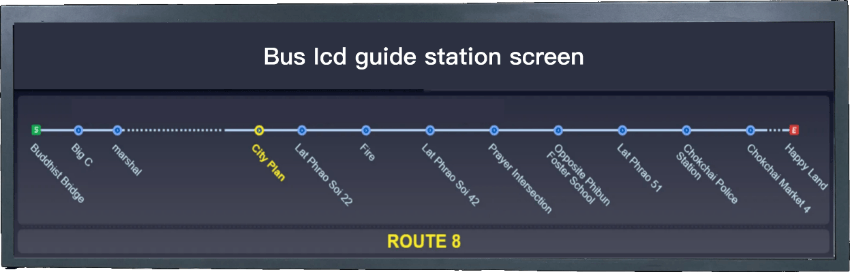
Case Analysis: Xiamen Lenz Communications Helps Haiqi Group Achieve Performance Enhancement of IoV (Internet of Vehicles) Equipment
Project BackgroundAs the largest road passenger transport enterprise in Hainan Province, Hainan Haiqi Transportation Group Co., Ltd. owns over 2,000 passenger vehicles. The traditional in-vehicle terminals originally used suffered from issues such as incomplete data collection (only speed and location were collected), high communication latency (averaging 800ms), and a high failure rate (monthly failure rate of 3%), resulting in inefficient scheduling and increased safety risks.
SolutionSTEP 1: Equipment Upgrade - Replace with Lenz's fourth-generation vehicle-mounted terminal, integrating GPS + Beidou dual-mode positioning, 4G/5G dual-mode communication, and full-vehicle CAN data acquisition interfaces. It supports simultaneous collection of over 30 types of data, including speed, position, fuel consumption, and tire pressure, with the sampling frequency increased to 100ms.
STEP 2: Parameter Tuning—By implementing hardware optimization (using an ARM Cortex-A72 processor + 4GB memory), upgrading software algorithms (improving data compression efficiency by 40%), and customizing communication protocols (developing a low-latency MQTT protocol), the device processing delay was reduced from 800ms to 300ms, and the data upload success rate increased from 92% to 99.5%.
STEP 3: Platform Integration—Connect the on-board terminals with the Lenz intelligent dispatching platform to achieve functions such as real-time monitoring of vehicle status, fault early warning (early warning of engine failures 2 hours in advance), intelligent scheduling (dynamically adjusting shifts based on passenger flow), forming an integrated "equipment + platform" solution.
Implementation effectOne year after project implementation, Haikou Transportation Group's vehicle idling rate dropped from 25% to 18%, saving RMB 3 million in annual fuel costs; fault response time was shortened from 4 hours to 1 hour, reducing annual maintenance costs by RMB 1.5 million; passenger satisfaction increased from 82% to 90%, and passenger volume grew by 12% year-on-year, achieving a triple improvement in operational efficiency, safety standards, and user experience.
Reference for Full-text Summary: Core Logic for Equipment Selection and Optimization in Intelligent Transportation IoV (Internet of Vehicles)
The selection and performance optimization of intelligent transportation IoV (Internet of Vehicles) devices essentially constitute a closed-loop process of "demand matching - technical implementation - benefit verification." Enterprises need to start from scenario-specific demands, selecting appropriate device types (e.g., high-precision positioning terminals for public transport and high-capacity storage terminals for logistics); unleash the potential of device performance through hardware tuning (e.g., low-power processors), software optimization (e.g., data compression algorithms), and customized communication protocols (e.g., low-latency MQTT); and ultimately verify the value of selection and optimization through full lifecycle cost calculation and benefit quantification (e.g., reduced empty running rates and fewer failures). Lenztech in Xiamen, leveraging nearly two decades of technological accumulation and experience in over 400 cities, provides full-stack services ranging from device selection and parameter tuning to platform integration, helping enterprises achieve cost reduction, efficiency enhancement, and safety upgrades in intelligent transportation. For more information, please visit our official website:www.xmlenzintl.com