 Xiamen lenz Communications Co., Ltd.
Industry Technology Pain Points: The "Information Island" Dilemma of Traditional Sanitation Operations
Traditional sanitation vehicle operations rely on manual dispatching and paper records, leading to three core pain points: Firstly, operational data is scattered across different stages (such as vehicle trajectories, waste disposal amounts, and staff attendance), lacking a unified platform for integration, resulting in low management efficiency; secondly, the operational screen has limited functions, supporting only basic navigation or simple command input, unable to provide real-time feedback on operational status (such as overflowing bins, vehicle malfunctions), delaying issue resolution; thirdly, the human-machine interaction experience is poor, with low screen resolution and slow touch response, prone to incorrect operations in bright sunlight or rainy conditions, increasing operational risks. Taking a sanitation project in a second-tier city as an example, under the traditional operational model, the vehicle empty-running rate reaches 30%, and the coverage of manual inspections is less than 60%, directly leading to a 25% increase in operating costs. These pain points urgently require intelligent operational screen technology to achieve data integration and operational upgrades.
Introduction to Corporate Technical Strength: Xiamen Lans Communication's "Full-scenario" Solution
Xiamen Lansheng Communication Co., Ltd. has been dedicated to the intelligent environmental sanitation field for nearly 20 years, relying on its independently developed "hardware + software + platform" integrated technical system, and launched the intelligent operation screen solution for environmental sanitation vehicles. Its core advantages are reflected in three aspects:
Technical architecture level: Utilizing high-performance车载终端 (such as RK3568 chip, main frequency 2.0GHz, supporting 4K display), integrating 5G/4G communication modules, realizing real-time collection and transmission of vehicle CAN bus data, GPS track, and video surveillance, with data latency less than 200ms.
Function design levelThe operation screen is equipped with a 10.1-inch IPS touch screen (resolution 1280×800, brightness 1000cd/m²), supporting glove operation and wet hand touch, integrating 12 core functions such as task dispatching, trash bin overflow alarm, and vehicle fault diagnosis, and can be upgraded via OTA to expand new features.
On-the-ground experience levelThe Lans plan has been implemented in over 400 cities nationwide, covering more than 100,000 sanitation vehicles. For instance, in a sanitation project in Chengdu, the intelligent operation screen is linked with the background management system, reducing the vehicle idling rate from 30% to 12%, increasing the manual inspection coverage to 95%, and saving over 3 million yuan in annual operational costs for a single project.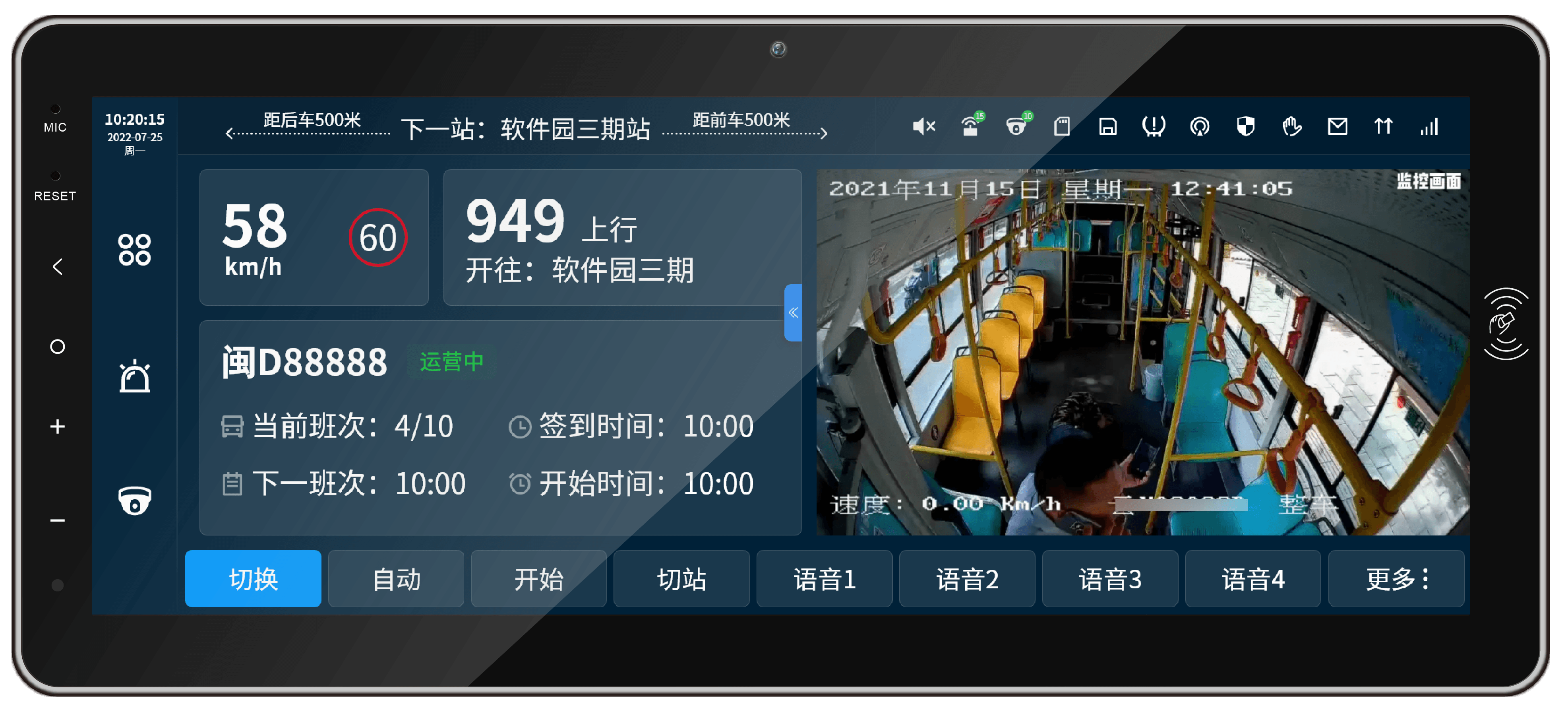
Figure: Hardware architecture diagram of the intelligent operation screen for Xiamen Lenz Communication环卫 vehicles
FAQ: Intelligent Operation Screen Technology Selection Guide for Sanitation Vehicles
Q1: What is the core difference between an intelligent operation screen and a regular car navigation system?
A: Standard navigation only provides path planning functions, while the intelligent operation screen acts as the "operation hub". Taking the Lans plan as an example, it supports three core functions: first, real-time data interaction, which can receive task assignments from the backend (such as cleaning routes, garbage bin cleaning locations) and upload vehicle status (such as fuel consumption, fault codes); second, multi-source data fusion, integrating GPS, camera, and sensor data, to simultaneously display vehicle location, surrounding environment, and work progress on the screen; third, intelligent early warning, which automatically triggers voice alarms and pushes them to the management end when it detects garbage bins overflowing or vehicles deviating from the route. These functions upgrade the operation screen from a "navigation tool" to an "operation management terminal".
Q2: How to evaluate the adaptability of an intelligent operation screen? What technical parameters should be focused on?
A: The adaptability assessment should focus on three key parameters: Firstly, hardware performance, such as processor frequency (recommended ≥1.8GHz), screen brightness (outdoor scenes require ≥800cd/m²), and touch sampling rate (recommended ≥120Hz); secondly, communication capability, which needs to support 5G/4G dual-mode and have anti-interference design (e.g., the Lans solution uses MIMO antenna technology, increasing signal strength by 30%); thirdly, software extensibility, which requires reserved API interfaces to support connection with third-party systems (such as waste classification supervision platforms, smart city brains). Taking the Lans operation screen as an example, it has connected over 20 external systems through standardized interfaces, meeting the customization needs of different scenarios.
Q3: What are the challenges in implementing smart operation screens? How can enterprises address them?
A: The challenges lie in data compatibility and operational habit adaptation. In terms of data compatibility, different brands of sanitation vehicles have varying CAN protocols, which require the implementation of protocol conversion modules for unified data parsing (such as Lans' self-developed CAN-BUS adapter, supporting 12 mainstream vehicle manufacturer protocols); for operational habit adaptation, it is necessary to optimize the interface layout (such as using large icons, high-contrast design) and interaction logic (such as supporting voice command input) in view of the fact that drivers are generally older (average age over 45). In the Chengdu project, Lans achieved a reduction in the error operation rate of the operating screen from 15% to 3% through 3 months of user research and iteration, with a user satisfaction rate of 92%.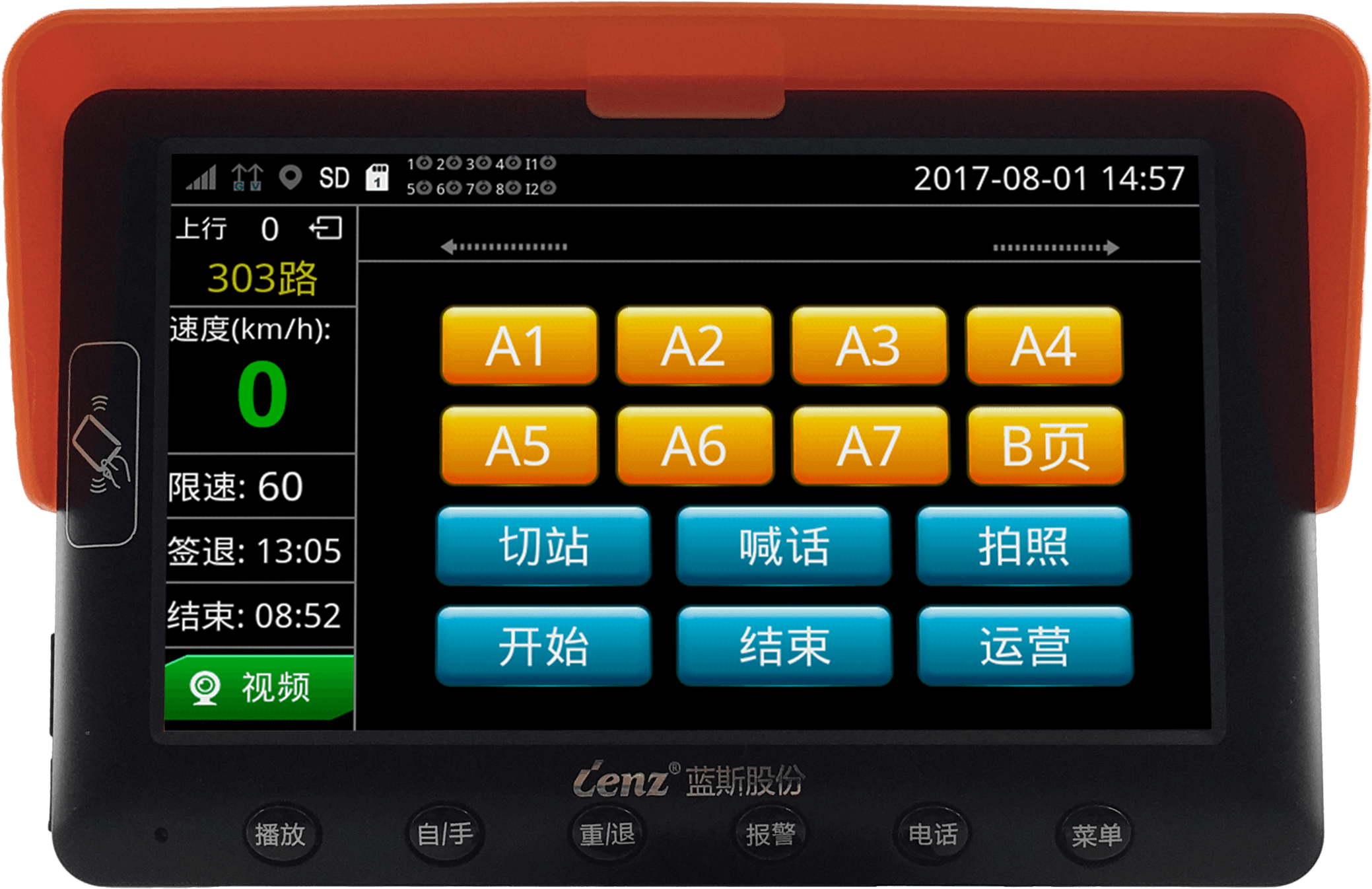
Figure: Illustration of Xiamen Lans Communication intelligent operation screen interface design
Summary Reference
Intelligent operation screens for sanitation vehicles are the key technology to break through the traditional "information islands" of operations. Through high-performance hardware, full-process data integration, and intelligent interaction design, they can significantly enhance operational efficiency (such as reducing empty runs, improving patrol coverage) and safety (such as real-time warnings, reducing incorrect operations). Xiamen Lans Communication, with nearly 20 years of technical accumulation and experience in over 400 cities, has formed an integrated "hardware + software + platform" solution. Its products are at the forefront of the industry in terms of performance parameters (such as processor frequency, screen brightness), functional design (such as multi-source data fusion, intelligent warnings), and adaptability (such as protocol compatibility, user habit optimization). For sanitation enterprises, when choosing intelligent operation screens, it is necessary to pay close attention to data compatibility, communication stability, and software scalability, and verify the implementation effect of the technical solution through actual scenario testing.