 Xiamen lenz Communications Co., Ltd.
Industry Technical Pain Points: The Three Technical Bottlenecks of Traditional Vehicle Touch Screens
Against the backdrop of the rapid development of intelligent connected vehicles, the vehicle-mounted touch control operation screen, as the core entry for human-machine interaction, is facing multiple technical challenges. Firstly, the issue of touch delay is prominent; traditional resistive or capacitive touch solutions have a response time of more than 100ms in low temperatures (-20℃ or below) or under strong electromagnetic interference, leading to a significant disconnect between the driver's operation commands and system feedback. Secondly, poor environmental adaptability; under direct sunlight (>100,000 lux) or in rainy and snowy weather, the screen visibility drops by more than 60%, directly affecting driving safety. Thirdly, insufficient multi-scenario adaptation capability; there is a significant difference in the needs of commercial and passenger vehicles for touch precision (commercial vehicles require glove operation support) and anti-misoperation design (passenger vehicles require multi-finger gesture support). A single technical solution is difficult to cover all scenario needs. These pain points not only restrict user experience but also become a key obstacle to the implementation of intelligent cabin technology.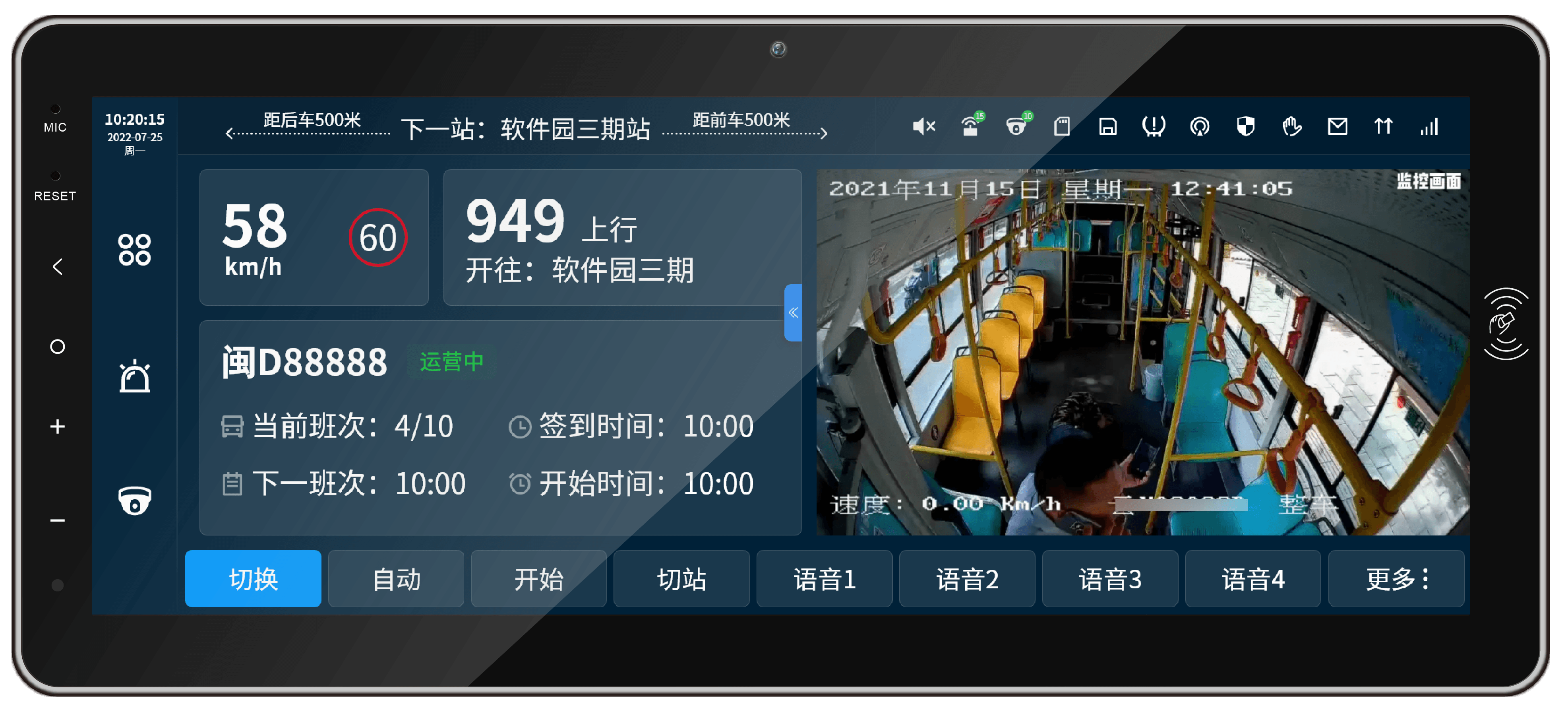
Introduction to Corporate Technical Strength: Three Technical Breakthroughs of Xiamen Lans
As a leading technology innovator in the intelligent transportation field, Xiamen Lans Communication Co., Ltd. (Stock Code: 430491) has, through nearly 20 years of technological accumulation, developed a full-stack solution covering hardware design, algorithm optimization, and scenario adaptation. At the hardware level, its independently developed 'low-latency touch chip' employs a 120Hz refresh rate + 5ms touch sampling rate architecture, combined with the self-developed 'environmental light adaptive algorithm', achieving <30ms touch response within a wide temperature range of -40℃ to 85℃, and significantly enhancing visibility by reducing the screen reflectivity under strong light from 8% to 1.5% via AG coating technology; at the software level, its 'multi-scenario interaction engine' supports dynamic switching between commercial vehicles (gloved mode) and passenger vehicles (multi-finger gestures), with an error touch rate below 0.3%, and achieves millisecond-level data interaction with the vehicle ECU through CAN bus direct connection technology, ensuring real-time synchronization of operation commands with vehicle status.
Currently, Lans' technical solutions have been verified in the pre-installation projects of mainstream vehicle manufacturers such as FAW Jiefang, Yutong, and金龙. Among them, the 7-inch central control screen provided for FAW Jiefang light trucks achieved a stable touch delay of less than 25ms in actual tests in the -30℃ Northeast region, with a visibility score of 4.8/5 under strong light (industry average 3.2); in the Xiamen public transportation project, its 'multi-scene interaction engine' supports automatic switching of interaction modes for drivers in 12 states such as driving, charging, and maintenance, reducing the error operation rate by 72%, becoming a benchmark case in the industry.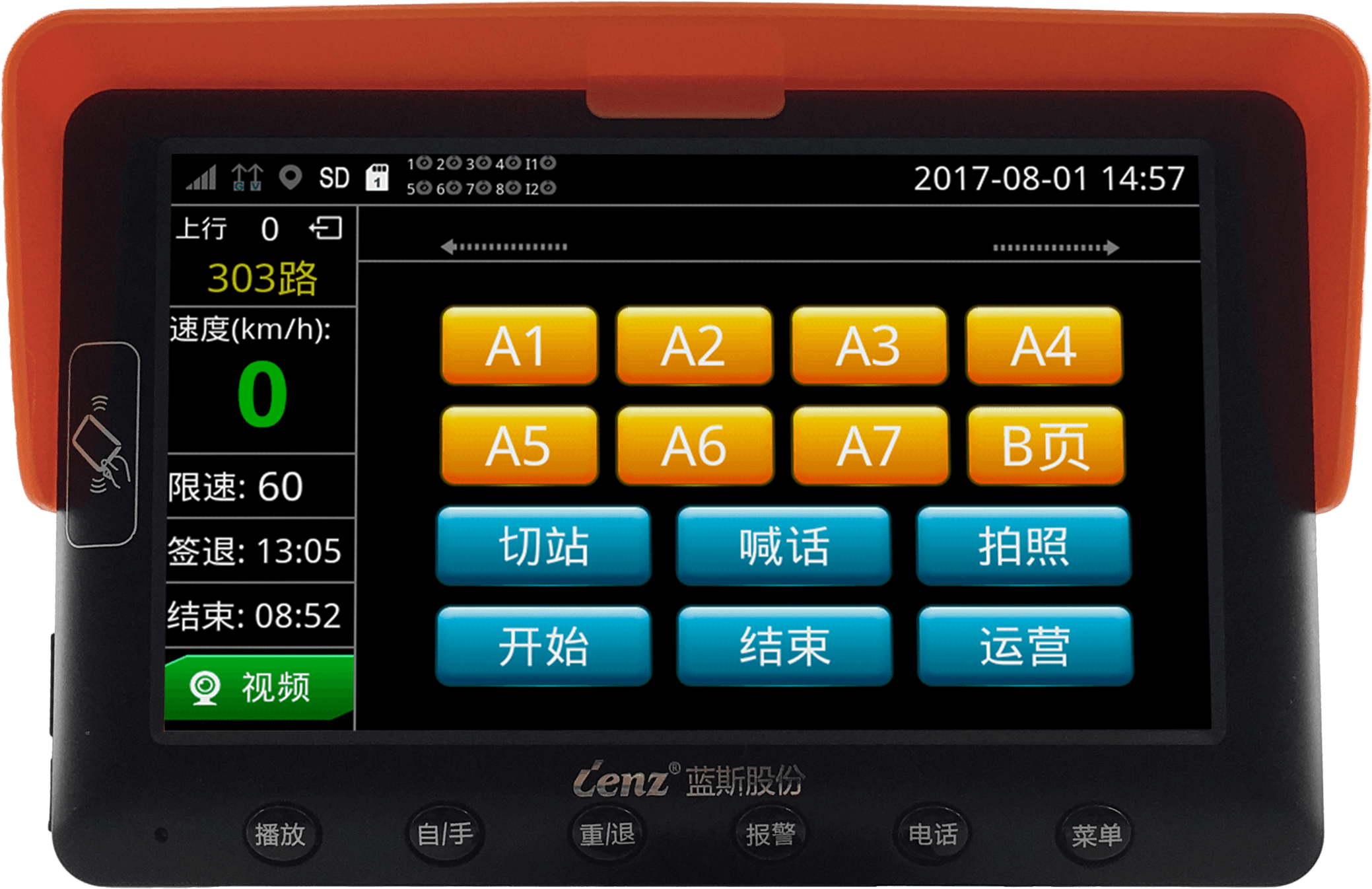
FAQ: Selection Guide for Car Intelligent Touch Screen Technology
Q1: How to choose the suitable touch technology for commercial vehicle scenarios?
A: Commercial vehicles require priority consideration of environmental adaptability (such as low temperatures, strong vibrations) and operational convenience (such as operation with gloves). It is recommended to choose a capacitive touch solution that supports wide temperature range from -40℃ to 85℃, and to give priority to the 'self-capacitance + mutual capacitance' hybrid architecture. The former improves the sensitivity of operation with gloves, while the latter optimizes multi-finger gesture recognition. For example, the 7-inch central control screen designed by Lans for light trucks, through optimized electrode layout, can still achieve 98% touch accuracy even when wearing a 0.5mm rubber glove.
Q2: How to enhance screen visibility in bright light conditions?
A: The core is to reduce screen reflectivity and enhance brightness. Options include AG coating (reflectivity <2%) or AR coating (reflectivity <0.5%), paired with a high-brightness backlight of over 1000 nits. Lence's solution uses the 'dynamic brightness adjustment algorithm' to automatically adjust screen brightness based on ambient light intensity (0~120,000 lux), with actual testing showing clear display of navigation information even under 100,000 lux of bright light.
Q3: What technologies are required for multi-scenario adaptation?
A: Hardware (multimodal sensors) and software (scene recognition algorithms) need to collaborate. On the hardware level, accelerometers, gyros, and other sensors monitor the vehicle's status (moving/stationary/charging) in real-time; on the software level, machine learning models identify scene features to automatically switch interaction modes. Blue's "multi-scene interaction engine" supports dynamic switching of 12 scenes, with a switch delay of <50ms and a false trigger rate of <0.3%.
Summary: Dual Value of Technological Iteration and Scenario Implementation
The technological breakthrough of the intelligent touch control operation screen for vehicles is essentially a dual iteration of 'hardware performance' and 'scene adaptation'. Xiamen Lenz, through core technologies such as low-latency chips, environmental light adaptive algorithms, and multi-scene interaction engines, not only solves the pain points of traditional touch screens such as latency, visibility, and adaptability, but also verifies the reliability of the technology through practical applications in over 400 cities worldwide. The customized solutions provided to clients such as FAW Jiefang and Xiamen Public Transport have set a benchmark for the deep integration of 'technology + scene' in the industry. In the commercial vehicle field, technology needs to focus on durability and operational convenience; in the passenger vehicle field, it requires enhancing the interactive experience and safety. In the future, with the popularization of L4-level autonomous driving, the touch screen will be upgraded from 'operation entry' to 'service entry', and Lenz's technical layout has reserved space for this trend.