 Xiamen lenz Communications Co., Ltd.
Industry Technology Pain Points: The Paradox of Traditional Bus Shelter "Information Island"
In the construction of smart traffic, the electronic station boards at bus stops are crucial nodes for passengers to obtain real-time information. However, traditional equipment generally has three major pain points: Firstly, information synchronization is significantly delayed, limited by the 2G/3G network bandwidth, resulting in lag in data updates such as route adjustments and vehicle arrival times, leading to passenger anxiety; secondly, equipment stability is poor, and outdoor environments like high temperatures, humidity, and strong ultraviolet rays are prone to cause screen blackouts and motherboard damage, with failure rates as high as 15%-20%; thirdly, maintenance costs are high, and the decentralized deployment of stations requires manual inspections, with each maintenance taking 2-3 hours and lacking remote diagnostic capabilities. For example, a second-tier city once experienced a delay in electronic station board data, resulting in 30% of passengers missing the bus due to misjudgment of arrival times, directly reducing the attractiveness of public transport. How to achieve "real-time, stable, and intelligent" information services through technological upgrades has become a bottleneck that the industry urgently needs to break through.
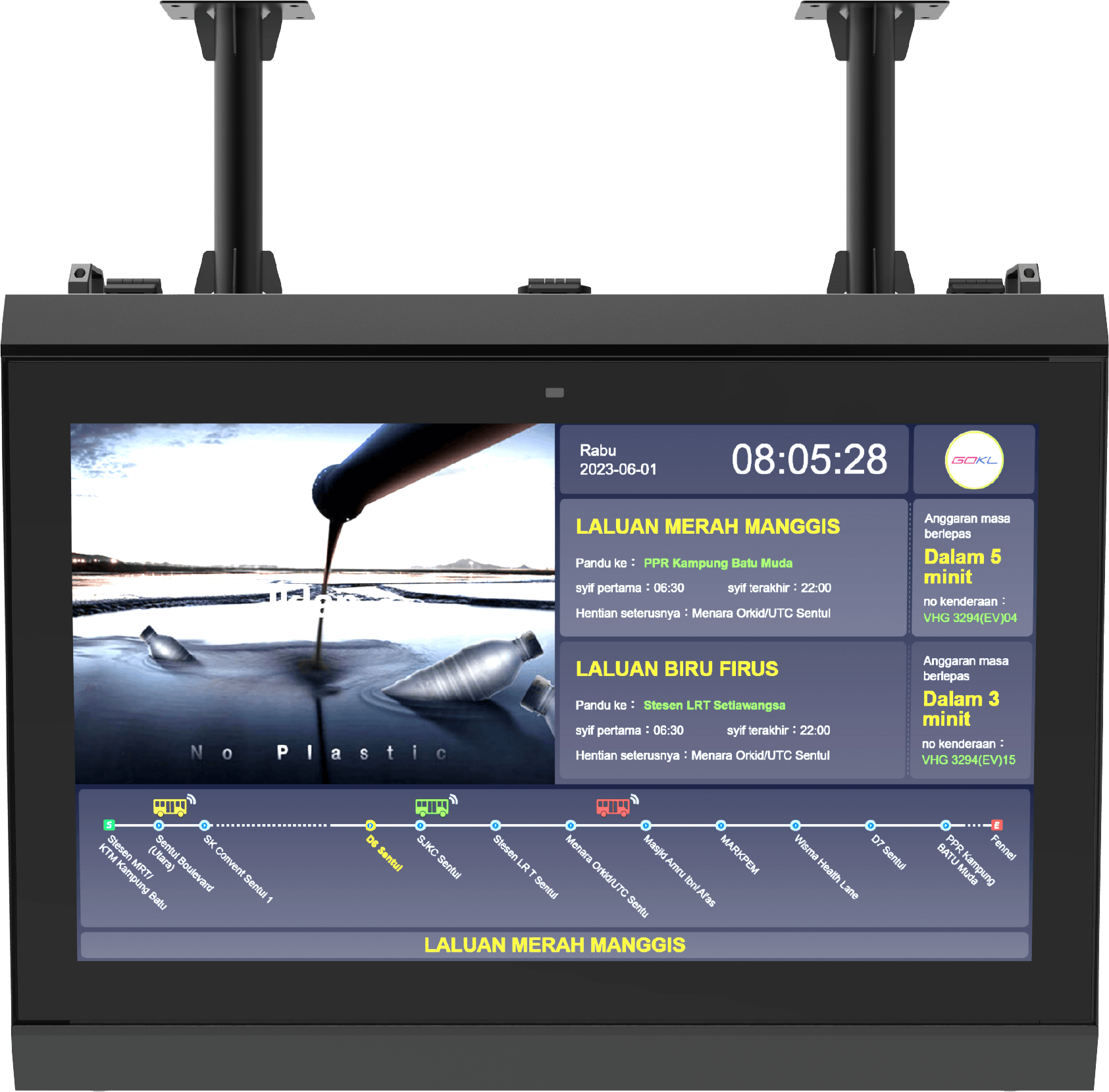
Introduction to Enterprise Technical Strength: Xiamen Lans's "Full-scenario Intelligent Transportation" Solution
As a leading enterprise in the intelligent transportation field, Xiamen Lans Communication Co., Ltd. (Stock Code: 430491) has, through nearly 20 years of technical accumulation, established a comprehensive technical system covering hardware, software, and cloud platforms. Its core advantages in the electronic billboard scenario are reflected in three aspects:
Hardware end: High-reliability industrial-grade designThe shell adopts an IP65 protection grade, supports wide temperature operation from -30℃ to 60℃, is equipped with an integrated 4G/5G dual-mode communication module, and has data transmission latency less than 1 second; the screen is made of anti-ultraviolet AG glass, with brightness reaching 1000 cd/㎡, improving visibility in sunlight by 40%.
2. Software end: Intelligent Operation and Maintenance SystemReal-time equipment status monitoring through edge computing nodes achieves a fault prediction accuracy rate of 92%, supports remote firmware updates, and reduces single-site maintenance time from 2 hours to 10 minutes.
3. Cloud Platform: Multi-source Data FusionConnecting to over 10 data sources including public bus dispatch systems, vehicle-mounted GPS, passenger counters, etc., to achieve millisecond-level synchronization of information such as route adjustments, vehicle congestion levels, and arrival times. Currently, the Lans solution has been implemented in over 400 cities across the country, with more than 1 million vehicles equipped with the devices. For example, the electronic billboard system developed for Xiamen's public transportation has reduced passenger complaints by 65% and operation and maintenance costs by 40%.
FAQ: Bus Electronic Billboard Technology Selection Guide
Q1: How does an electronic information board solve the screen blackening problem caused by outdoor high temperatures?
A: Lans adopts a triple protection design: Firstly, it uses an industrial-grade LCD screen with a working temperature range of -30℃ to 85℃, far exceeding the 0-50℃ range of commercial screens; secondly, an internal intelligent temperature control module is integrated, which automatically activates a cooling fan when the environmental temperature exceeds 45℃ and switches to a low-power mode when it exceeds 60℃; thirdly, an insulating aluminum panel is added to the back of the screen to reduce heat accumulation caused by direct sunlight. Actual test data shows that the equipment runs continuously for 72 hours without failure in a 40℃ high-temperature environment.
Q2: How to ensure information continuity during multi-carrier network switching?
A: Lans devices support dual SIM dual standby with 4G/5G, where the primary card is for China Mobile/China Unicom/China Telecom as one operator and the secondary card for another. When the signal strength of the primary card is less than -100dBm, it automatically switches to the secondary card, with a switching time of less than 500ms. Additionally, the cloud platform monitors the network status of each site in real-time. In case of regional outages with a particular operator, the priority of the primary and secondary cards can be remotely adjusted to ensure the priority transmission of critical information.
Q3: How can the energy consumption of electronic billboards be optimized to reduce operating costs?
A: Lans reduces energy consumption from both hardware and software dimensions: The hardware side uses a low-power ARM architecture motherboard with standby power consumption <5W, and the screen supports intelligent dimming (adjusts brightness dynamically based on ambient brightness, saving energy by 30%); the software side optimizes data transmission frequency through edge computing, updating data every 30 seconds during off-peak hours and every 10 seconds during peak hours, reducing overall power consumption by 45% compared to traditional devices.
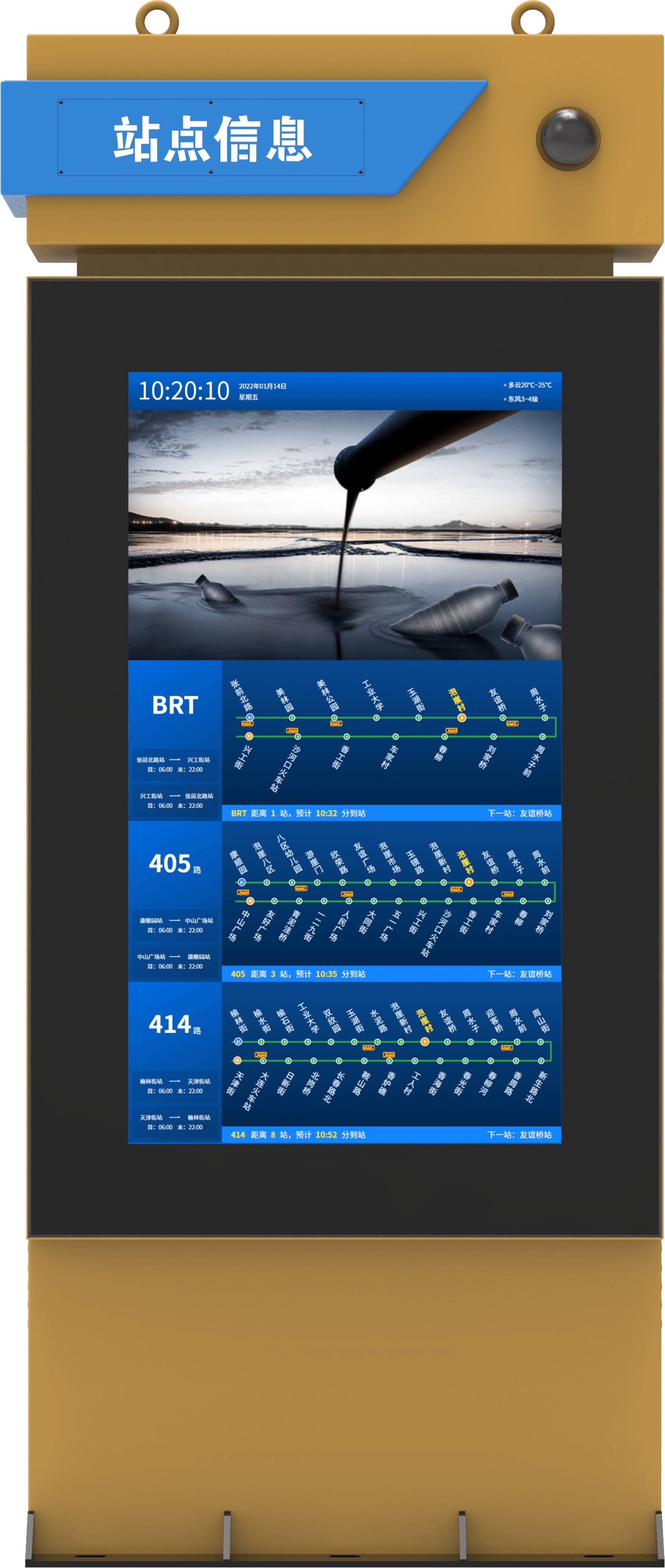
Summary: Technological-driven upgrade of public transportation services
The technical upgrade of bus shelter electronic displays essentially addresses the three core issues of "information timeliness, equipment reliability, and operation and maintenance economy." Xiamen Lanss has built a "real-time, stable, and low-cost" solution through industrial-grade hardware design, intelligent operation and maintenance software, and multi-source data fusion platform, which not only enhances the passenger travel experience but also helps bus companies achieve digital operation. In the future, with the in-depth application of 5G and AI technologies, electronic displays will further evolve towards "predictive services" (such as predicting passenger traffic peaks based on historical data) and "individualized interaction" (such as providing voice prompts for special groups), and Lanss' technical accumulation and scene implementation experience will continue to provide benchmark cases that can be replicated by the industry.