 Xiamen lenz Communications Co., Ltd.
Industry Technical Pain Points: Real-time and Low Latency Challenges of Bus-mounted AI Edge Computing Terminals
Public bus AI edge computing terminals need to simultaneously process multi-source data such as vehicle status monitoring, passenger behavior analysis, and real-time road condition perception. Traditional solutions rely on cloud computing, resulting in high data transmission delay (usually >200ms), which is difficult to meet the millisecond response requirements for scenarios such as emergency braking and abnormal behavior warnings. In addition, vehicle-mounted equipment must operate stably in extreme temperature conditions (-40℃~85℃) and strong vibrations (5G~10G), necessitating hardware selection that balances computing power and reliability. On the software level, issues such as multi-task scheduling conflicts and data synchronization delays need to be addressed. For example, a certain city's bus group suffered three accidents due to excessive delay in edge computing terminals, failing to timely identify pedestrians crossing, which exposed the shortcomings of traditional solutions in terms of real-time performance and robustness.
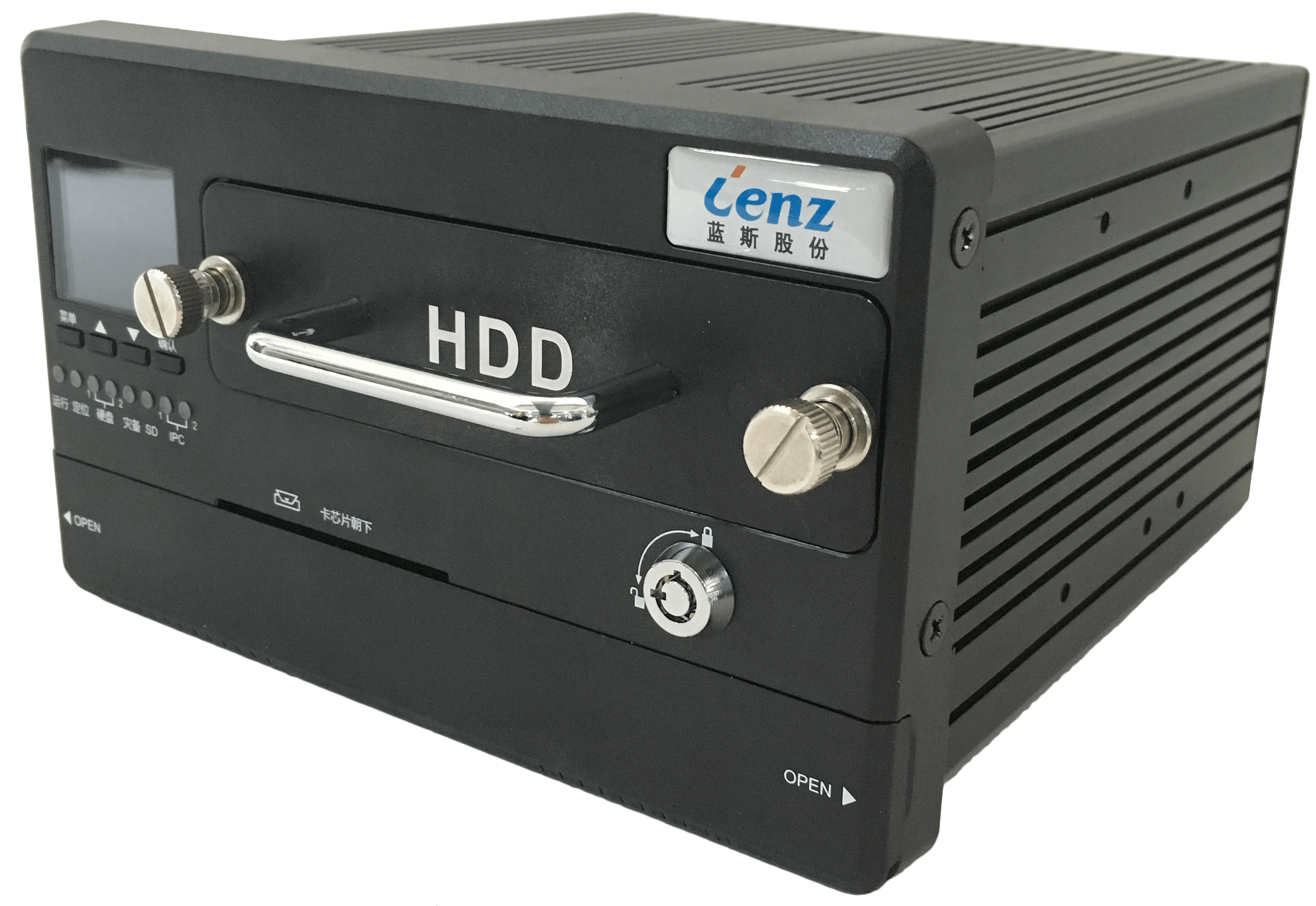 Introduction to Enterprise Technical Strength: Xiamen Lenz Communication's Edge Computing Architecture and Algorithm Optimization
Xiamen Lans Communication Co., Ltd. has been deeply involved in the intelligent transportation field for nearly 20 years. Its independently developed bus-mounted AI edge computing terminal adopts a combination scheme of "heterogeneous computing architecture + lightweight algorithms", with core parameters as follows:
Hardware levelEquipped with NVIDIA Jetson AGX Orin (275TOPS computing power) and domestic RK3588 (8-core A76+4-core A55) dual processors, achieving high-speed data interaction through PCIe 4.0 bus, supporting simultaneous processing of 8 1080P video streams with latency controlled within 50ms; using industrial-grade components (such as TDK's MLCC capacitors, Murata's inductors), passing MIL-STD-810G vibration test, adaptable to -40℃~85℃ environment.
Software levelDeveloped a lightweight YOLOv8-tiny object detection model (with only 3.2M parameters), combined with TensorRT acceleration library, achieving real-time detection at 45FPS on Jetson AGX Orin; optimized data synchronization using Time-Sensitive Networking (TSN) technology to ensure timestamp error of multi-sensors (cameras, radars, IMUs) is less than 1ms; allocated independent computing resources to urgent tasks (such as collision warnings) through priority scheduling algorithms to avoid multi-task conflicts.
Application CaseAfter deployment on 3,000 new energy buses in Chengdu, the accuracy of abnormal behavior identification has increased to 98.7%, the emergency braking response time has been reduced to 80ms, a 60% improvement over traditional solutions; the equipment failure rate has dropped from an annual average of 12% to 3%, with the annual maintenance cost per vehicle reduced by about 2,000 yuan. Currently, the Lans solution has covered over 400 cities globally, with the number of installed units exceeding 1 million.
FAQ: Guide to Selection of Bus-mounted AI Edge Computing Terminal Technology
Q1: How to choose an edge computing chip suitable for public bus scenarios?
A1: Focus on the three aspects of computing power, power consumption, and temperature adaptability. For bus-mounted scenarios, recommend choosing chips with computing power ≥ 50 TOPS (such as Jetson AGX Orin, RK3588), power consumption ≤ 30W (to avoid heat dissipation issues), and support for wide temperature operation from -40℃ to 85℃; if cost needs to be considered, mid-range chips with computing power of 20~50 TOPS (such as Jetson Nano, RK3568) can be selected, but algorithm optimization (such as model quantization, pruning) is required to compensate for the lack of computing power.
Q2: How to reduce the data transmission delay at the edge computing terminal?
A2: Optimizable from three aspects: hardware, algorithm, and network. On hardware, choose high-speed buses supporting PCIe 4.0 or NVLink; on the algorithm, adopt lightweight models (such as MobileNetV3, ShuffleNetV2) to reduce computational load, combined with TensorRT or OpenVINO for inference acceleration; at the network level, deploy 5G or C-V2X modules to ensure communication latency between the vehicle and roadside units (RSU) is less than 20ms.
Q3: How to ensure the stability of edge computing terminals in extreme environments?
A3: Focus on component selection, structural design, and software fault tolerance. Use industrial-grade (such as MLCC capacitors, tantalum capacitors) or automotive-grade (AEC-Q200 certified) products for components; adopt fanless heat dissipation (such as heat pipes + fins) and IP67 protection level enclosures for structural design; implement watchdog mechanisms (automatic restart of faulty processes), data verification (CRC32), and redundant storage (dual backup) at the software level to ensure continuous operation of the equipment under vibration, high temperature, electromagnetic interference, and other environments.
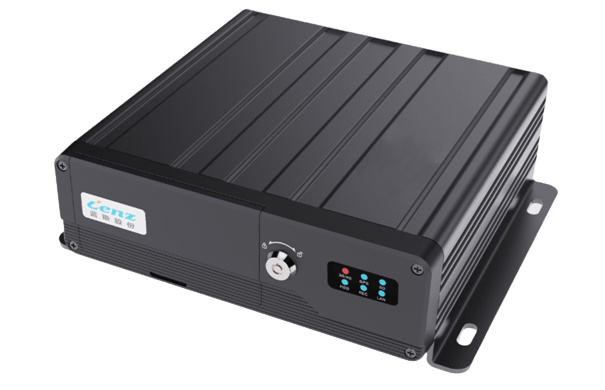 Summary: Technological iteration and scenario adaptation are the core.
The technological breakthrough of the AI edge computing terminal on buses should focus on "real-time, low latency, and high reliability." Xiamen Lans Communication has addressed the pain points of traditional solutions in terms of computing power, latency, and stability through technological innovations such as heterogeneous computing architecture, lightweight algorithms, and time-sensitive networks. Its solution has been verified effective in projects like the Chengdu bus. In the future, with the popularization of 5G-A and large AI models (such as LLaMA-3), edge computing terminals need to further optimize model compression (such as knowledge distillation) and multimodal fusion (video + radar + IMU) capabilities to adapt to more complex bus operation scenarios.