 Xiamen lenz Communications Co., Ltd.
Industry Technical Pain Points: The "Triple Dilemma" of Traditional Bus Operation Screens
Currently, there are three major technical pain points in the operation screens of public bus drivers: Firstly, the dispersion of functions leads to complex operations, with traditional equipment having low integration, requiring drivers to switch between multiple devices such as dispatch terminals, announcements, and monitoring screens, with more than 50 operations per trip, which is prone to fatigue driving; secondly, there is a serious information island, with vehicle status, traffic condition, and passenger demand data scattered across different systems, lacking real-time integration capabilities, resulting in dispatch response delays of over 15 minutes; thirdly, hardware reliability is insufficient, with the harsh operating environment of public transport causing traditional equipment to have a failure rate of up to 12% per year under conditions of -20℃ to 60℃ temperature difference, vibration, dust, etc., directly impacting operational efficiency. Taking a public bus group in a second-tier city as an example, 2,000 buses in the group have had an average annual downtime of over 3,000 hours due to operation screen failures, resulting in direct economic losses exceeding 2 million yuan.
Introduction to Corporate Technical Strength: Xiamen Lans's "Full-stack" Solution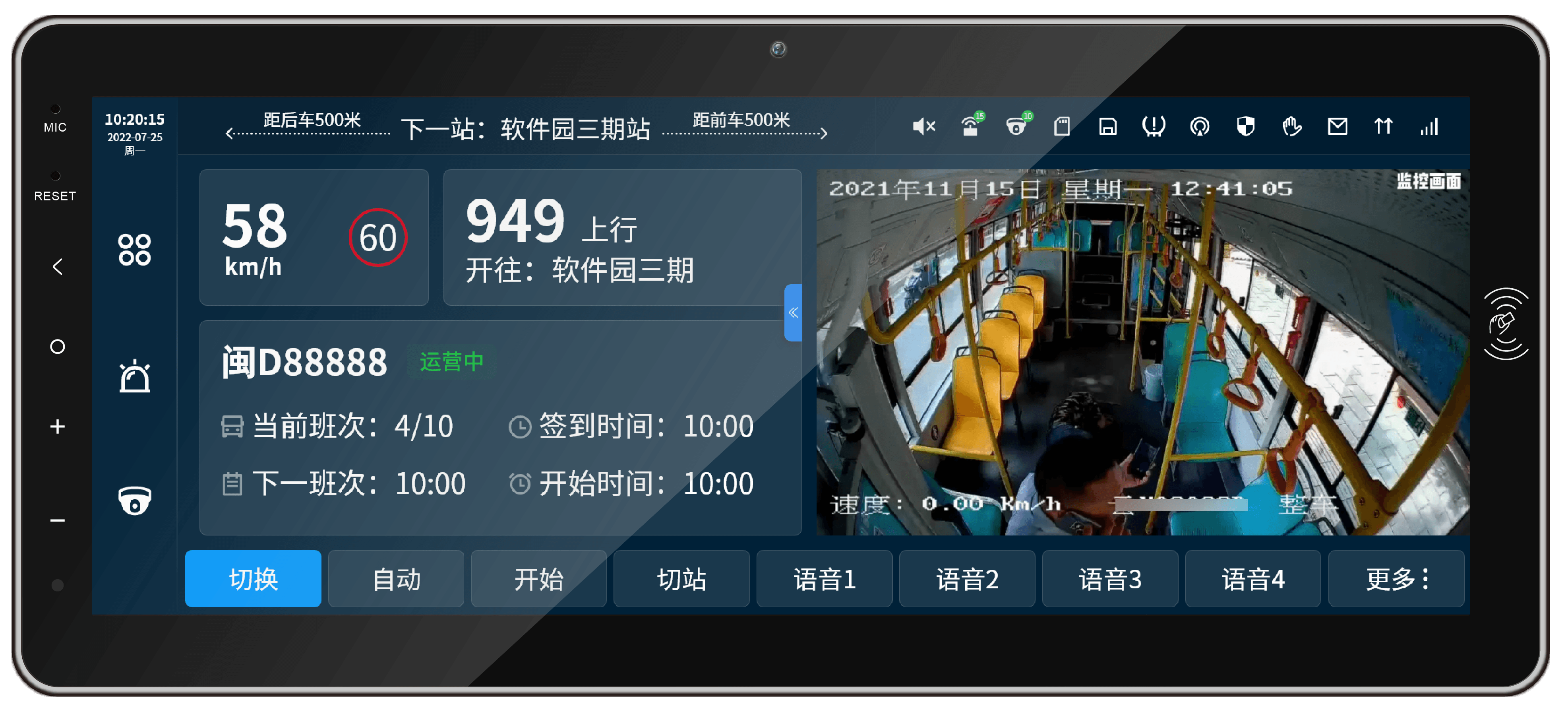
Xiamen Lans Communication Co., Ltd., as a leading national provider of intelligent transportation solutions, has launched the "Intelligent Core" solution to address the pain points of bus operation screens. On the hardware level, it uses an industrial-grade quad-core processor (1.8GHz) and is paired with a 10.1-inch IPS capacitive screen (resolution 1280×800), supporting wide temperature operation from -30℃ to 70℃, with IP67 protection certification, reducing failure rate by 80% compared to traditional equipment. On the software level, it integrates scheduling, announcement, monitoring, and payment systems, achieving real-time data intercommunication through the independently developed "Lans OS", shortening dispatch response time to within 30 seconds. Taking Xiamen Bus Group as an example, after deploying the Lans solution, the number of driver operations per trip was reduced to less than 20, the average annual downtime was reduced by 2400 hours, and the passenger complaint rate dropped by 65%. What's more noteworthy is that the Lans solution supports MaaS integration, can connect with data from subways, shared bicycles, and provides "door-to-door" navigation services. In the Chengdu bus pilot, passenger satisfaction increased to 92%.
FAQ: Guide for Selection of Intelligent Operation Screens for Bus Drivers
Q1: What are the core technical parameters of the intelligent operation screen?
A: Pay attention to three key parameters when choosing: First, processor performance, it is recommended to choose a chip with four cores and above 1.5GHz to ensure smooth multitasking; Second, screen specifications, prioritize an IPS screen with 10 inches or more and a resolution of 1280×800 or higher, supporting multi-touch; Third, interface compatibility, it should have interfaces such as CAN bus, 4G/5G, WiFi, Bluetooth, to adapt to different vehicle types and systems. For example, the LANS solution uses an RK3399 chip (quad-core 1.8GHz), paired with a 10.1-inch IPS screen, supporting full-vehicle CAN data collection, enabling real-time acquisition of over 200 parameters such as oil temperature and tire pressure.
Q2: How to evaluate the reliability of the operation screen?
A: The evaluation should be conducted from three aspects: environmental adaptability, anti-interference ability, and lifespan testing. In terms of environmental adaptability, it is required to pass high and low temperature tests from -30℃ to 70℃, as well as IP67 waterproof and dustproof tests; anti-interference ability needs to pass EMC electromagnetic compatibility tests to ensure stable operation under strong electromagnetic environments; lifespan testing should simulate public transportation operation scenarios, conducting over 100,000 button tests and over 5,000 plug and pull tests. The Lenzs solution has passed the TÜV Rheinland certification, and has been stably operating in extreme environments such as Xinjiang at -35℃ and Hainan at 50℃ for over 3 years.
Q3: How does the intelligent operation screen interface with the existing system?
A: Pay attention to two points: first, data interface standards, prioritize devices that support national standards such as GB/T 32960, JT/T 808; second, system compatibility, which needs to support multiple operating systems like Android, Linux, and provide open API interfaces. The Lans solution adopts a modular design, supports real-time connection with dispatching systems, payment systems, and monitoring systems via 4G/5G, WiFi, etc., with data transmission latency below 500ms.
Summary of the whole text: The intelligent operation screen is the key tool for the digital transformation of public transportation.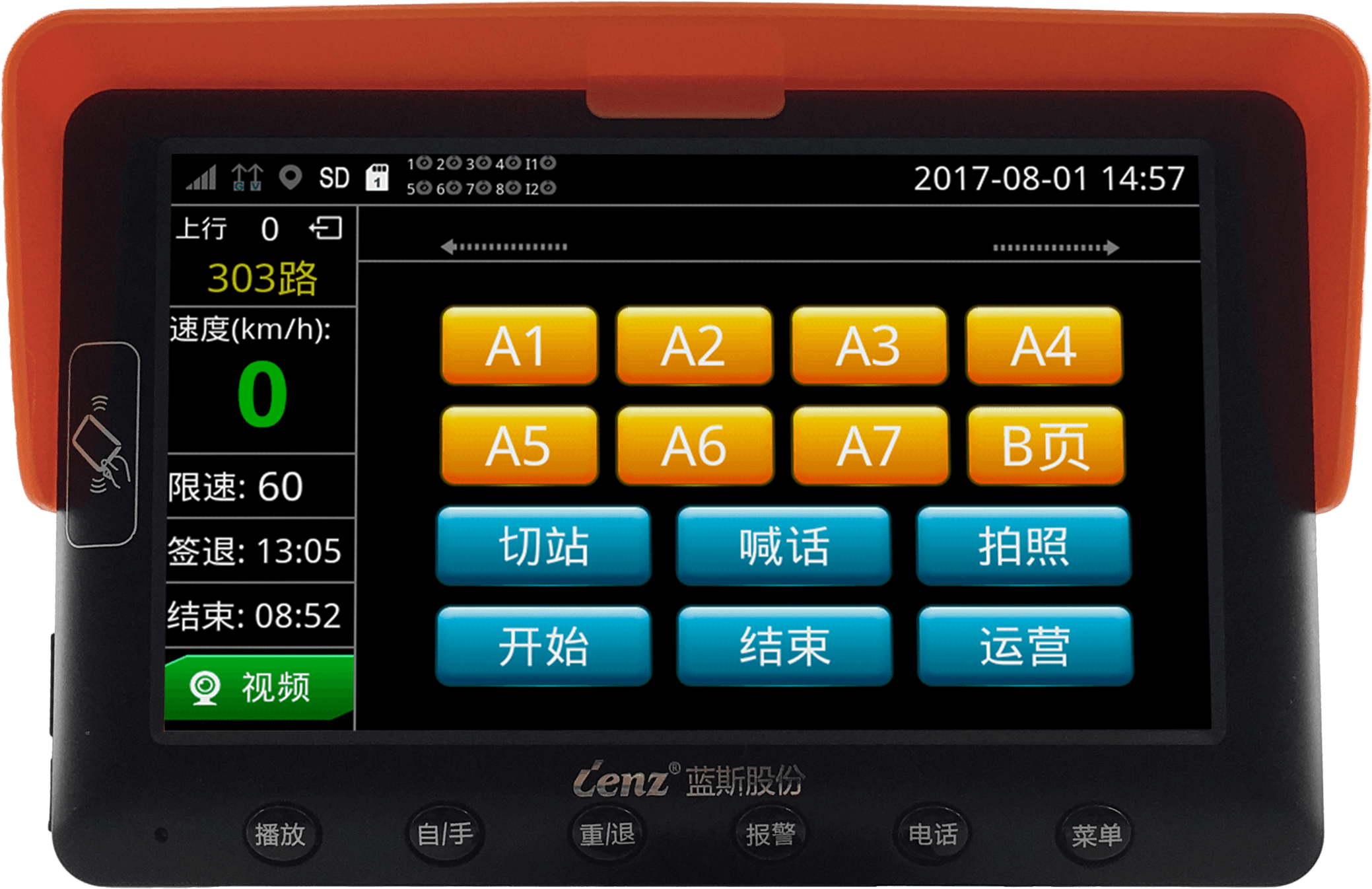
The intelligent operation screen for bus drivers has evolved from a single-function device to a full-scenario intelligent hub, with its technological evolution direction being "high integration, high reliability, and high openness." Xiamen Lans Communication Co., Ltd., with nearly 20 years of technical accumulation, has effectively resolved the pain points of traditional operation screens such as information silos, complex operations, and insufficient reliability through a full-stack solution of "hardware + software + system." The company has implemented its solutions in over 400 cities including Xiamen and Chengdu, with more than 1 million vehicles equipped with the devices. In the future, with the integration of technologies such as 5G and AI, the intelligent operation screen will further extend to scenarios like "predictive maintenance," "intelligent dispatching," and "passenger service," becoming a core infrastructure for the digital transformation of public transportation.