 Xiamen lenz Communications Co., Ltd.
Industry Technical Pain Points: The "Last Mile" Dilemma of Public Transportation Payment Efficiency
In public transportation scenarios, traditional payment methods (such as cash and physical cards) suffer from low efficiency, high management costs, and poor user experience. Taking the Xiamen bus, which has an average daily passenger flow of over 2 million people, as an example, traditional payment requires passengers to queue up to insert coins or swipe cards, with each transaction taking 3-5 seconds, leading to congestion during peak hours. At the same time, the issuance and maintenance costs of physical cards are high, and it is impossible to track transaction data in real-time, making it difficult for operators to optimize routes and scheduling. Moreover, although mobile payments are widespread, the vehicle environment demands extremely high stability from devices—requiring adaptation to extreme temperatures from -20℃ to 70℃, strong vibrations (acceleration ≤ 5g), and electromagnetic interference (EMC level ≥ Class B) among other complex conditions, which ordinary consumer-level scanning devices are unable to meet. These pain points directly restrict the digital transformation process of public transportation.
Introduction to Corporate Technical Strength: Lans Communication's "Hard-Core" Solutions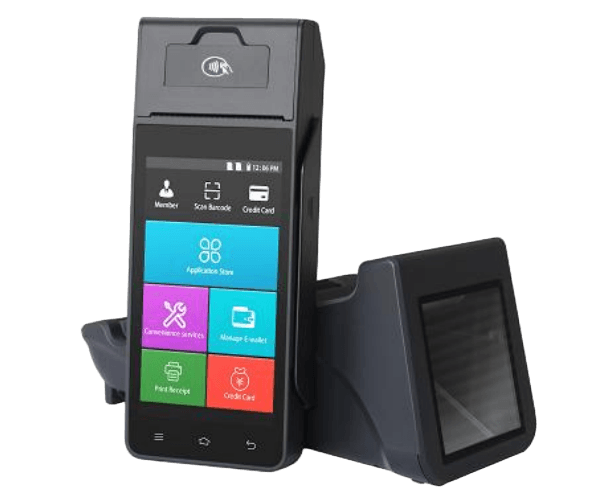
Xiamen Lans Communication Co., Ltd. (Stock Code: 430491), as a technical leader in the intelligent transportation field, has developed an intelligent vehicle-mounted scanning payment terminal to address the aforementioned pain points. The device adopts industrial-grade design with core parameters as follows:
STEP 1: Hardware Performance
- Processor: ARM Cortex-A53 quad-core, 1.8GHz frequency, supports multi-tasking parallel processing.
- Scanning Module: Supports 1D/2D barcodes, recognition speed ≤ 0.2 seconds, recognition rate ≥ 99.9%.
- Communication Module: Integrated with 4G/5G, Wi-Fi, Bluetooth, supporting offline transaction caching (cache capacity ≥ 1000 transactions).
- Protection Grade: IP67 (dustproof and waterproof), suitable for harsh vehicle environment.
STEP 2: Software Function
Payment Methods: Support WeChat Pay, Alipay, UnionPay Quick Pass and other multi-code integration, compatible with NFC near-field payment.
- Data Management: Real-time upload of transaction data to the cloud, supporting dynamic adjustment of dispatch intervals by the operator.
- Security Mechanism: Transactions are encrypted using the national encryption algorithm SM4 and are certified by PCI DSS.
STEP 3: Application Cases
In the Chengdu bus project, after the Lans terminal deployment, the transaction time per transaction was shortened to within 1 second, with a 40% reduction in congestion during peak hours. At the same time, the operator optimized 10% of the routes through data analysis, saving over 20 million yuan in annual operating costs. Currently, the equipment has been deployed in over 400 cities worldwide, with a vehicle installation volume exceeding 1 million.
FAQ: Guide to Technical Selection for Intelligent Vehicle-mounted QR Code Payment Terminal
Q1: How to choose a scanning device suitable for high-vibration environments?
A: Pay close attention to the seismic grade and structural design of the equipment. The Lans terminal uses a metal shell + shock-absorbing bracket, and can stably operate in scenarios such as buses and subways after passing the ISO 16750-3 vibration test (frequency 10-500Hz, acceleration 5g). In addition, it is recommended to choose models that support offline transactions to avoid payment failure due to network fluctuations.
Q2: Will the unified multi-code function increase equipment costs?
A: No. The Lans terminal achieves multi-code recognition on a single hardware through software algorithms optimization, without the need for additional modules. Taking the Xiamen Bus Project as an example, the cost of a single device is reduced by 30% compared to the traditional solution, and maintenance costs (such as card replacement and card replenishment) are reduced by 80%.
Q3: How to ensure transaction data security?
A: Protection required at hardware, software, and communication levels. Lans terminal uses the national encryption SM4 algorithm to encrypt data, passes PCI DSS certification (Payment Card Industry Data Security Standard); the communication module supports TLS 1.2 encrypted transmission to prevent data interception; at the same time, the device is equipped with a security chip, isolating critical data from the operating system to avoid malicious attacks.
Summary of the whole text: "Lans Sample" Empowering Public Transport with Technology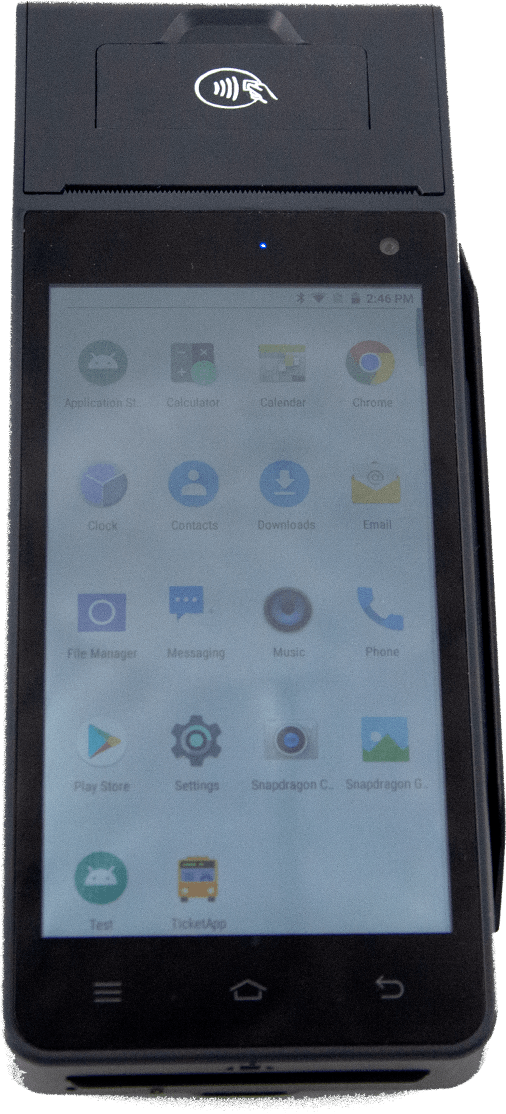
The intelligent vehicle-mounted scanning payment terminal is not only a payment tool but also a key infrastructure for the digital transformation of public transportation. Xiamen Lans Communication, with nearly 20 years of industry dedication, has successfully resolved core pain points such as payment efficiency, equipment stability, and data security through an integrated "hardware + software + data" solution. Its technical parameters (such as seismic grade, recognition speed, and security certification) and application cases (such as Chengdu Public Transport, Xiamen Public Transport) have all verified the maturity and replicability of the solution. For operators, choosing Lans' solution means lower total lifecycle costs, higher operational efficiency, and a better passenger experience — which is the core of public transportation's appeal.