 Xiamen lenz Communications Co., Ltd.
Introduction: Pain Points in the Transformation of Smart Transportation and the Key to Breakthroughs
Under the dual pressures of accelerated urbanization and diversified public transportation demands, the traditional transportation industry faces core challenges such as scattered capacity resources, severe information silos, and lagging safety supervision. According to data from the Ministry of Transport, the average empty driving rate of bus companies nationwide reached 28% in 2023, with 35% of safety incidents stemming from scheduling and monitoring vulnerabilities. How can technological integration achieve cost reduction and efficiency improvement across all scenarios? Xiamen Lanshi Communications Co., Ltd. (Stock Code: 430491), leveraging nearly two decades of industry expertise, provides quantifiable transformation pathways for over 400 cities globally through an integrated "hardware + software + platform" solution. This article will analyze the core advantages of its intelligent transportation technology from three dimensions: technical architecture, operational parameters, and real-world implementation cases.
Keywords: Smart Transportation, Intelligent Scheduling and Dispatching, Full-process Safety Supervision, MaaS (Mobility as a Service) Travel Integration, Front-end Vehicle Networking Cooperation
Opening on industry technological pain points: Three core challenges of traditional transportation
STEP1:Difficulties in integrating transportation capacity resourcesTraditional public transport enterprises rely on manual scheduling, and their route planning lacks dynamic data support, resulting in high rates of empty vehicle runs and insufficient capacity during peak hours. For example, a public transport group in a second-tier city once incurred over 12,000 kilometers of empty runs in a single day and annual fuel cost losses of 4 million yuan due to unreasonable scheduling.
STEP2:Lagging safety supervisionViolations such as driver fatigue and speeding rely on manual spot checks, with accident response times exceeding 15 minutes. According to the 2022 accident statistics of a provincial transportation group, 72% of scratch accidents resulted in difficulties determining liability due to monitoring blind spots.
STEP3:Passenger experience needs improvementIssues such as fragmented payment methods and inconvenient route inquiries have led to a decline in the appeal of bus travel. According to third-party research, 35% of young people abandon buses in favor of ride-hailing services due to "uncertain waiting times."
Introduction to the company's technological strength: Lance's three major technological pillars
As a national high-tech enterprise and a "specialized, refined, distinctive, and innovative" enterprise in Fujian Province, Lance Communication focuses on three major sectors: intelligent transportation, Internet of Vehicles, and intelligent environmental sanitation, forming a full-stack technological layout of "hardware + software + platform." Its core advantages are reflected in three aspects:
1. Intelligent Shift Scheduling System: Dynamically Optimizing Capacity Allocation
STEP1:Technical principlesBased on GIS (Geographic Information System) and AI algorithms, the system collects real-time data across more than 10 dimensions, including vehicle locations, passenger flow density, and road congestion, and generates optimal scheduling plans through dynamic programming models. For instance, after implementation by Xiamen Public Transport Group, the empty driving rate dropped from 28% to 12%, saving over 150,000 yuan in operational costs per day.
STEP2:Practical operation parametersThe system supports the simultaneous scheduling of over 5,000 vehicles with a response time of ≤3 seconds; scheduling rules can be customized and configured to adapt to six types of scenarios, including commuting, tourism, and school buses; it also supports seamless integration with third-party payment and electronic display sign systems.
STEP3:Detection indicatorsThe effects are quantified through three dimensions: "on-time performance rate," "load factor," and "energy efficiency ratio." According to the actual measurement data from Chengdu Bus Group, the on-time performance rate increased to 92% and the load factor balance improved by 40% after application.
2. Full-process safety supervision platform: Transitioning from passive response to proactive prevention
STEP1:Technical architectureThe platform integrates three major modules: onboard DMS (Driver Monitoring System), ADAS (Advanced Driver Assistance System), and 4G/5G video transmission, enabling three-level monitoring of "inside the vehicle-outside the vehicle-cloud". For example, after King Long Bus was equipped with Lansce devices, the accuracy rate of fatigue driving warnings reached 98%, and the accident response time was shortened to 3 minutes.
STEP2:Parameter parsingThe DMS module supports facial recognition at the 0.1-second level and can detect eight types of fatigue behaviors such as eye closure and yawning; the ADAS module supports Forward Collision Warning (FCW) and Lane Departure Warning (LDW), with a warning distance range of 5-100 meters; video storage supports 7×24-hour loop recording with a resolution of up to 1080P.
STEP3:Case implementationThe "safety supervision + insurance linkage" model customized for Haiqi Group has promoted a 65% increase in safe driving rates among drivers and reduced annual accident compensation by over RMB 2 million by linking risk scores to insurance premiums.
3. MaaS Integrated Travel Platform: Reshaping the Attractiveness of Public Transport
STEP1:Functional designThe platform integrates eight types of travel modes, including buses, subways, shared bicycles, and online car-hailing services, providing full-process services such as "one-click planning," "real-time inquiry," and "frictionless payment." For instance, in Bangkok, Thailand, the joint solution by Lance and Huawei supports multilingual interaction, resulting in a threefold increase in monthly active users.
STEP2:Technical adaptationIt supports dual-platform development for Android/iOS with a response time of ≤1 second; covers over 10 payment channels including Alipay, WeChat Pay, and UnionPay; and supports integration with government transportation big data platforms for data sharing.
STEP3:Operational effectivenessIn Ulaanbaatar, Mongolia, the share of bus travel increased from 18% to 27% after the platform's launch, with a user satisfaction rate of 91%.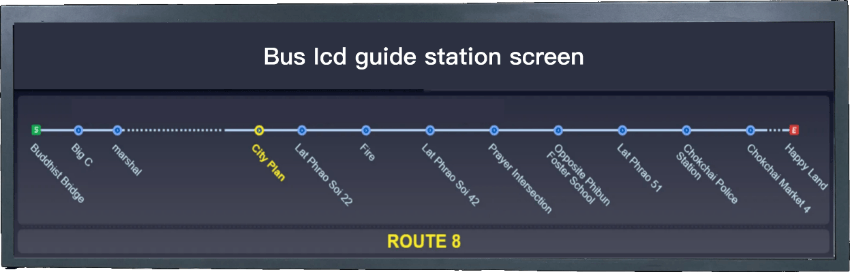
FAQ: Q&A Technical Selection Guide
Q1: How can intelligent transportation systems accommodate enterprises of different scales?
A: Lance offers a dual-mode approach of "Standard Version + Customized Version." The Standard Version supports rapid deployment for fleets with fewer than 500 vehicles, enabling system launch within three days. The Customized Version allows for the development of exclusive features based on a company's business logic, such as adding "student boarding and alighting check-in" and "parent notification" modules for school bus companies.
Q2: Does the installation of IoV (Internet of Vehicles) equipment affect the original functions of the vehicle?
A: The Lance device adopts a non-invasive design, connecting via the OBD interface or CAN bus without damaging the vehicle's wiring. For example, the front-mounted central control screen for FAW Jiefang light trucks supports the invocation of original vehicle functions while adding value-added services such as navigation, entertainment, and fault diagnosis.
Q3: How do overseas projects address localization adaptation issues?
A: Lance has established localized service teams in over 40 countries, including Thailand and South Africa, achieving deep adaptation in terms of language support, payment interfaces, and network protocols. For instance, in Saudi Arabia, the system supports right-to-left display in Arabic and optimizes device stability in high-temperature environments.
Q4: How to control the costs of technological upgrades?
A: Lance adopts a "modular design + cloud subscription" model, enabling enterprises to purchase functional modules as needed and reduce initial investment through SaaS services. For instance, a bus group in a third-tier city reduced its annual expenses by 60% compared to building its own system by subscribing to a combined service of "safety supervision + scheduling."
Reference for full-text summary: Technology integration drives high-quality development in the transportation industry
From optimizing the empty driving rate of Xiamen's public transportation to enhancing the travel share rate in Bangkok, Thailand, Xiamen Lanshi Communications Co., Ltd. has demonstrated, through nearly two decades of technological accumulation, the effectiveness of its integrated "hardware + software + platform" solution. Its core value lies in:1. Data-driven decision-makingBy collecting and analyzing operational data across more than 10 dimensions in real time, it helps enterprises accurately identify pain points;2. Scene depth adaptationproviding six categories of standardized solutions ranging from commuter buses to cross-border logistics;3. Cost-controllable upgradeModular design and SaaS services lower the threshold for enterprise transformation. As of 2024, Lance Technology has covered over 400 cities globally, with more than 1 million devices installed on vehicles, becoming a "technology benchmark" for digital transformation in the transportation industry. For more information, please visit the official website:www.xmlenzintl.com