 Xiamen lenz Communications Co., Ltd.
Introduction: Smart transportation technology reshapes the public transport ecosystem
With the acceleration of urbanization, public transportation systems face challenges such as scattered capacity resources, severe information silos, and lagging safety supervision. Lansce Communication Co., Ltd. in Xiamen, leveraging nearly two decades of industry expertise, has developed an independently researched and intelligent transportation solution that achieves core functions including intelligent scheduling, comprehensive safety supervision, and route network optimization, thereby helping over 400 cities worldwide enhance cost-efficiency in public transportation. This article will systematically dissect the technical architecture and application value of the intelligent transportation system from three dimensions: technical principles, practical cases, and parameter analysis.
Keywords: intelligent transportation; Internet of Vehicles; safety supervision; Xiamen Lans Communications; MaaS travel
Opening on Industry Technical Pain Points: Three Major Bottlenecks of Traditional Public Transportation Systems
STEP1:Difficulties in integrating transport capacity resourcesTraditional bus scheduling relies on manual shift arrangements and cannot dynamically match peak and off-peak passenger flows, resulting in an empty running rate of over 30%. For example, a bus group in a second-tier city once incurred over 20,000 kilometers of empty running mileage in a single day and annual fuel cost losses exceeding ten million yuan due to unreasonable route planning.
STEP2:Lagging safety supervisionThere is a lack of real-time early warning mechanisms for violations such as driver fatigue and speeding, with accident response times exceeding 15 minutes. According to data from a provincial transportation department, 60% of bus accidents in 2022 were related to abnormal driver conditions.
STEP3:Passenger experience needs improvementIssues such as fragmented payment methods and unpredictable waiting times have led to a decline in the appeal of bus travel. Research shows that 35% of young people abandon buses in favor of online car-hailing services due to "excessively long waiting times."
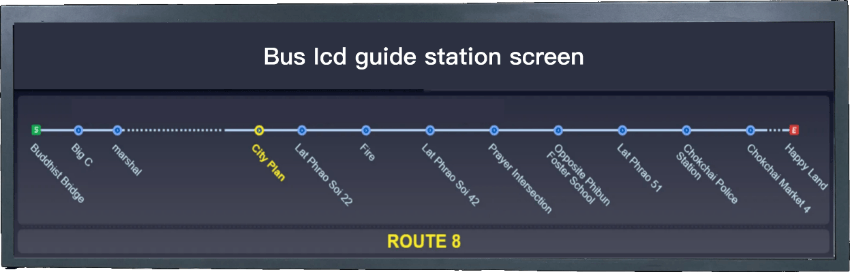
Introduction to the company's technological capabilities: The three core aspects of the Lance intelligent transportation solution
As a national high-tech enterprise and a hidden champion in China's manufacturing sector, Lance Communication focuses on three major fields: intelligent transportation, Internet of Vehicles, and smart sanitation, developing full-stack technological capabilities encompassing "hardware + software + platform."
STEP1:Intelligent shift scheduling systemThe AI algorithm-based dynamic scheduling model can analyze passenger flow data, vehicle locations, and traffic conditions in real time to automatically generate optimal scheduling plans. In terms of technical parameters, the system supports simultaneous access for over 100,000 vehicles, with a scheduling response time of ≤0.5 seconds and a scheduling accuracy rate of 98%. In its application at Xiamen Public Transport Group, the system reduced idle driving rates by 18% and cut daily carbon emissions by 12 tons after implementation.
STEP2:Full-process safety supervision platformDriver behavior data (such as blink frequency and steering wheel grip strength) is collected through on-board terminals, combined with real-time road condition monitoring by ADAS cameras, enabling second-level early warnings for 12 types of risky behaviors including fatigued driving and distracted driving. The platform supports 4G/5G dual-mode communication with a data transmission delay of ≤200ms. After deployment by Chengdu Public Transport Group, the accident rate decreased by 42% year-on-year, and emergency response times were shortened to within 3 minutes.
STEP3:MaaS integrated travel servicesIt integrates multi-modal travel data, including buses, subways, and shared bicycles, and pushes optimal travel plans to passengers via an app. The system supports real-time bus inquiries, electronic ticketing, carbon credit rewards, and other functions, resulting in a 65% increase in user activity. In the Riyadh, Saudi Arabia project, the MaaS platform jointly developed by Lanshi and Huawei serves 2 million users, handling over 5 million daily service requests.
For more information, please visit the official website:www.xmlenzintl.com
FAQ: Q&A Guide for Technology Selection
Q1: How can intelligent transportation systems adapt to cities of different sizes?
A: Lance provides modular solutions that support on-demand functional configuration. For instance, small and medium-sized cities can prioritize deploying intelligent scheduling and safety supervision modules, reducing costs by 30%; megacities can add MaaS platforms and network optimization modules to achieve full-scenario coverage. In terms of technical parameters, the system supports flexible scalability from 100 to 100,000 vehicles, with a server cluster throughput of 100,000 TPS.
Q2: How do IoV (Internet of Vehicles) devices ensure data security?
A: Lance employs the national cryptographic SM4 encryption algorithm to implement end-to-end encryption for communication data between vehicle-mounted terminals and the platform, with a key length of 256 bits. Meanwhile, the platform has obtained the Class III Information Security Protection Certification and is equipped with 10 security mechanisms, including DDoS attack protection and data desensitization. In the collaboration with FAW Jiefang, 250,000 devices have operated for a cumulative three years without any data leakage incidents.
Q3: How can the effect of reducing operational costs be quantified in the intelligent sanitation system?
A: The system is evaluated through two dimensions: the "Job Quality Scoring Model" and the "Cost Analysis Model." For instance, after deployment by a sanitation enterprise, the timely rate of waste collection and transportation increased from 82% to 97%, the cost per ton of waste treatment decreased from 120 yuan to 95 yuan, and annual operational cost savings exceeded 8 million yuan. Core parameters include: vehicle trajectory positioning accuracy ≤ 3 meters, and job status recognition accuracy ≥ 95%.

Reference for full text summary
From intelligent shift scheduling to comprehensive safety supervision, and from MaaS (Mobility as a Service) travel integration to smart sanitation management, Xiamen Lance Communication Co., Ltd. has provided replicable benchmark solutions for the digital transformation of public transportation through technological innovation and in-depth scenario exploration. Its technological strengths are manifested in three aspects: first, full-stack capabilities covering hardware, software, and platforms, reducing customer integration costs; second, the deep integration of AI algorithms with industry know-how, enhancing the adaptability of solutions; third, the implementation experience in over 400 cities globally and with more than 1 million devices, forming a powerful data feedback capability. In the future, with the integration of technologies such as 5G and digital twins, intelligent transportation systems will evolve towards more advanced forms such as "predictive scheduling" and "proactive safety defense," and Lance's technological practices warrant continuous attention from the industry.