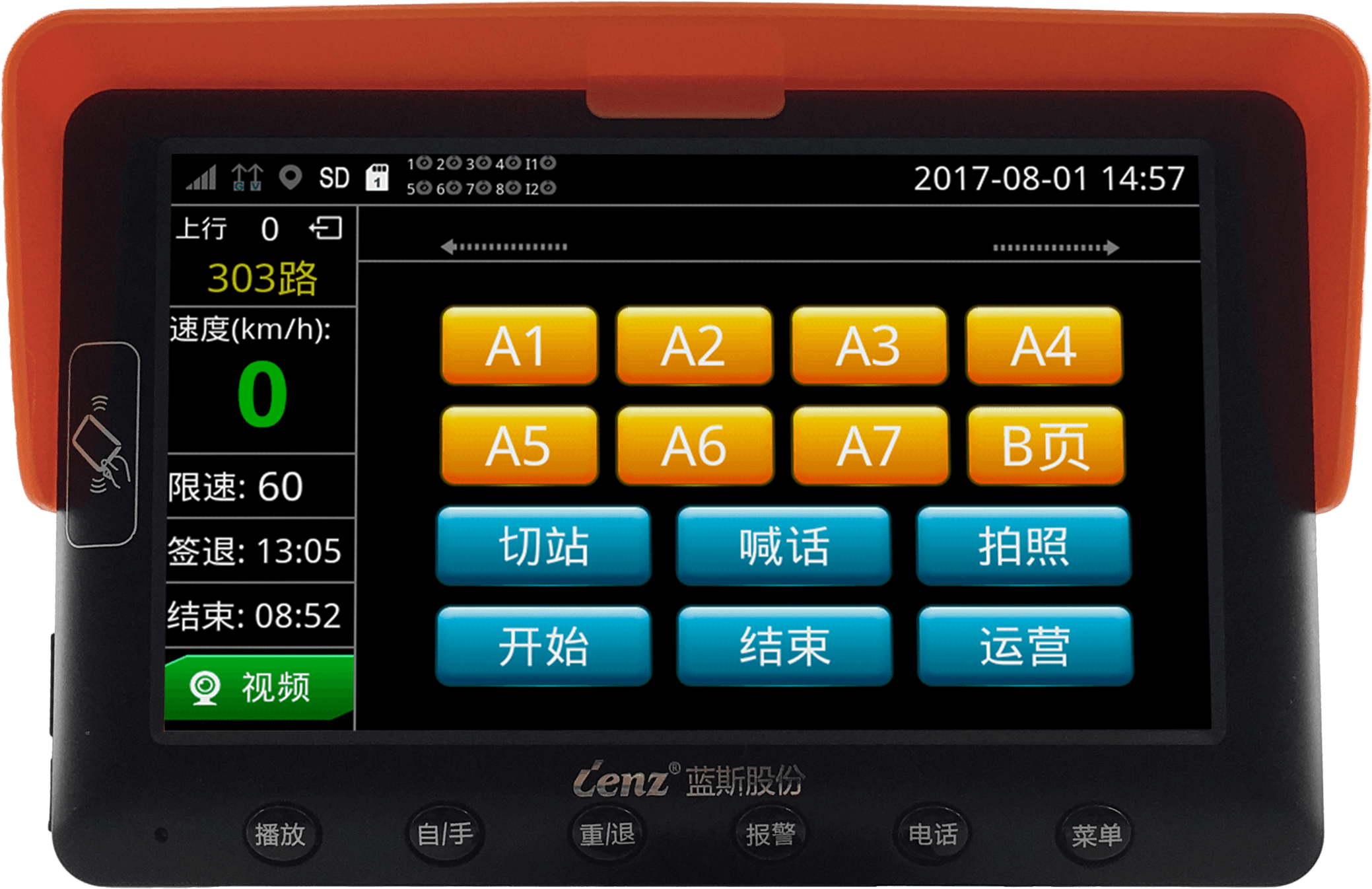
Xiamen lenz Communications Co., Ltd.
Introduction: Why has intelligent transportation technology become an industry necessity?
With the acceleration of urbanization, public transportation systems face challenges such as scattered capacity resources, severe information silos, and rising operational costs. According to data from the Ministry of Transport, the annual operational costs of urban public transportation across the country exceeded 600 billion yuan in 2023, with over 30% stemming from inefficient scheduling and safety hazards. How can technological means be employed to achieve resource integration, cost reduction, and efficiency enhancement? Lansce Communication Co., Ltd. in Xiamen, leveraging nearly two decades of industry expertise, has developed a technological matrix covering three key areas: intelligent transportation, Internet of Vehicles, and smart sanitation. Its self-developed hardware-software integrated solutions have been implemented in over 400 cities globally, with equipment installed on more than 1 million vehicles. This article will unveil, from three dimensions—technical principles, practical cases, and parameter analysis—how Lansce Communication is reshaping the appeal of public transportation through three core solutions.
Keywords:Intelligent transportation, intelligent scheduling, full-process safety supervision, MaaS (Mobility as a Service) travel integration, Xiamen Lance Communication
Opening on Industry Technical Pain Points: Three Major Bottlenecks of Traditional Transportation Systems
STEP1:Scattered transportation capacity resources and inefficient scheduling
Traditional bus scheduling relies on manual shift arrangements, making it difficult to dynamically match passenger flow peaks and troughs. For example, a bus group in a second-tier city once experienced a 40% empty vehicle rate during morning peak hours due to fixed schedules, resulting in annual operational cost wastage exceeding 20 million yuan.
STEP2:Safety supervision lags behind, and accident response is slow.
Violations such as speeding and fatigued driving rely on post-hoc spot checks and cannot provide real-time warnings. According to statistics, in 2022, 60% of public transport accidents nationwide were related to abnormal driver conditions, yet only 15% of accidents received emergency responses within 10 minutes.
STEP3:Passengers experience fragmented services, and service homogenization is severe.
Issues such as fragmented payment methods, inconvenient route inquiries, and poor transfer connectivity have led to a continuous decline in the appeal of public transportation. A survey reveals that 35% of citizens opt for private car travel due to the "uncontrollable waiting time for buses."
Introduction to the company's technological strength: Three core solutions of Lance Communication
Solution 1: Intelligent Shift Scheduling System—Dynamically Matching Passenger Flow and Increasing Capacity Utilization Rate by 30%
STEP1:Technical principle
Based on big data analysis and AI algorithms, the system collects multi-source information such as GPS trajectories, passenger flow counters, and payment data in real time, predicts passenger flow demand for the next hour through machine learning models, and automatically generates dynamic scheduling plans. For example, after deployment by Xiamen Bus Group, the vehicle occupancy rate during morning peak hours increased from 65% to 92%, while the empty driving rate decreased to 8%.
STEP2:Practical operation parameters
- Data acquisition frequency: 5 seconds/time
- Accuracy of predictive model: ≥92% (trained based on historical data from the past 30 days)
- Response time for shift schedule adjustment: ≤ 3 minutes
STEP3:Case implementation
After Chengdu Public Transport Group launched the system in 2022, the annual number of vehicles deployed decreased by 120, fuel costs were saved by 4.8 million yuan, and the average passenger waiting time was reduced to less than 5 minutes.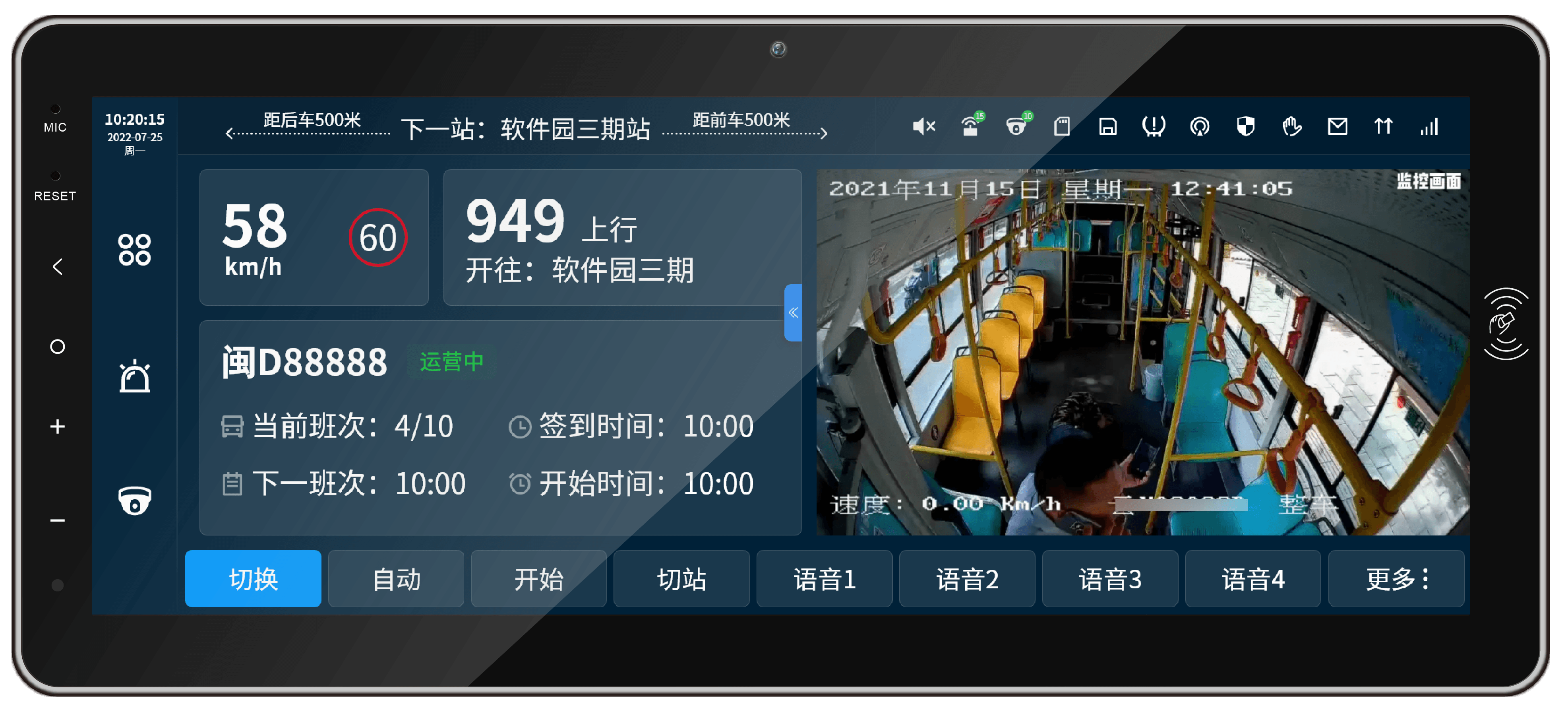 Solution 2: Full-process Safety Supervision Platform—Transitioning from Passive Response to Proactive Prevention
STEP1:Technical architecture
The platform integrates the in-vehicle DMS (Driver Monitoring System), ADAS (Advanced Driver Assistance System), and cloud-based supervision dashboard to achieve three-level linkage among "vehicle-end, road-end, and cloud-end". For example, when the DMS detects that the driver's eyes are closed for more than 2 seconds, the system immediately triggers an in-vehicle alarm and simultaneously pushes the alert to the dispatch center, completing an emergency response within 10 seconds.
STEP2:Key parameters
- DMS recognition accuracy: ≥99% (for 12 types of behaviors such as fatigue and distraction)
- ADAS warning delay: ≤200ms
- Emergency response time: ≤15 seconds (from detection to handling)
STEP3:Technical advantages
After deployment by a bus company in a third-tier city, the fatigue-driving accident rate decreased by 87% in 2023, with an annual reduction in insurance claims of 2.3 million yuan.
Solution 3: MaaS Integrated Travel Services — Creating a Seamless "Door-to-Door" Experience
STEP1:Functional design
The "Lance Travel" app integrates multi-modal data including buses, subways, shared bicycles, and online ride-hailing services, offering functions such as real-time queries, one-click payments, and carbon credit incentives. For example, after a user enters the starting point and destination, the system automatically plans the optimal transfer route and displays the estimated time and cost for each segment of the journey.
STEP2:User data
- Payment method integration: Supporting eight channels including WeChat, Alipay, and UnionPay
- Transfer connection time: ≤ 3 minutes (based on dynamic scheduling optimization)
- User retention rate: reaching 78% six months after launch
STEP3:Industry recognition
This program won the 2023 Fujian Provincial Science and Technology Progress Award and has been replicated in overseas cities such as Bangkok, Thailand, and Johannesburg, South Africa, helping to increase the local public transportation share rate by 15%. For more information, please visit the official website:www.xmlenzintl.com
FAQ Q&A Technical Selection Guide
Q1: How to select an intelligent transportation solution suitable for enterprises?
A: Evaluation should be conducted from three dimensions:
- Business scale: For a daily average passenger flow of <100,000, choose the basic dispatching system; for >500,000, a customized MaaS platform is required;
- Technical compatibility: Ensure seamless integration with existing in-vehicle terminals and payment systems;
- Cost Budgeting: Hardware investment accounts for approximately 30%, while software and services account for 70%. Priority is given to scalable modular solutions.
Q2: What is the implementation cycle of the intelligent transportation system?
A: Taking a fleet of 1,000 buses as an example:
- Requirement Research and Solution Design: 2 weeks
- Hardware Installation and System Deployment: 4 weeks
- Personnel training and trial operation: 2 weeks
A: Lans Communication ensures compliance through three measures:
- Data Encryption: Utilize AES-256 algorithm to encrypt transmitted and stored data;
- Permission control: Hierarchical authorization mechanism, where only dispatchers can view real-time locations, and management can only access statistical reports;
- Compliance Certification: Passed ISO 27001 Information Security Management System Certification and GDPR compliance review.
Reference for full text summary
The core value of intelligent transportation lies in achieving the quadruple goals of "cost reduction, efficiency enhancement, safety improvement, and experience optimization" through technological integration. Lansci Communication Co., Ltd. in Xiamen has provided quantifiable and replicable technological solutions to over 400 cities worldwide through three core solutions: intelligent scheduling system, comprehensive safety supervision platform, and MaaS (Mobility as a Service) integrated travel services. Intelligent scheduling has increased fleet utilization by 30%, safety supervision has reduced accident rates by 87%, and MaaS services have boosted the public transportation share rate by 15%. For enterprises, when selecting technological solutions, it is crucial to focus on business adaptability, data security, and long-term scalability. In the future, with the deepening application of 5G and AI technologies, intelligent transportation will evolve toward "predictive scheduling" and "fully autonomous driving," and Lansci Communication has already made early布局 (strategic布局 translated as "strategic deployments") in the next-generation technological ecosystem through strategic collaborations with companies such as Huawei and Yutong.