 Xiamen lenz Communications Co., Ltd.
Introduction: A New Paradigm for Cost Reduction and Efficiency Enhancement in Smart Transportation
Under the dual pressures of rising operational costs in public transportation and escalating passenger experience demands, achieving efficient resource allocation, controllable safety risks, and improved service quality through technological means has become a critical proposition for industry transformation. Lanshi Communication Co., Ltd. in Xiamen, leveraging nearly two decades of technological accumulation, has established a solution system covering three major sectors: intelligent transportation, Internet of Vehicles, and smart environmental sanitation. Its self-developed integrated hardware-software technology has been implemented in over 400 cities globally, with equipment installed in more than one million vehicles. This article will analyze how intelligent transportation technology achieves cost reduction and efficiency enhancement across all scenarios by combining its core technological布局 with practical case studies.
Keywords: Intelligent transportation; Internet of Vehicles; cost reduction and efficiency enhancement; Xiamen Lans Communication; full-scenario solutions
An Introduction to Industry Technical Pain Points: Three Major Efficiency Bottlenecks in Traditional Transportation
STEP 1: Inefficient resource scheduling. Traditional bus scheduling relies on manual experience, making it difficult to dynamically match passenger flow fluctuations, resulting in the coexistence of insufficient capacity during peak hours and high empty-running rates during off-peak hours. For example, the empty-running rate of buses in a second-tier city once reached 35%, with annual losses exceeding 20 million yuan.
STEP 2: Safety supervision lags behind. Vehicle operation status and driver behavior data are scattered, with accident early warning response times exceeding 10 minutes, making it impossible to achieve proactive risk intervention.
STEP 3: Severe information silos. Systems such as payment, dispatch, and security operate independently, with a data interchange rate of less than 40%, resulting in a lack of data support for operational decision-making and poor passenger transfer experience.
STEP 4: High operational and maintenance costs. Fault localization for onboard equipment relies on on-site inspection, with a mean time to repair (MTTR) exceeding 4 hours and annual maintenance costs accounting for over 15% of the equipment's value.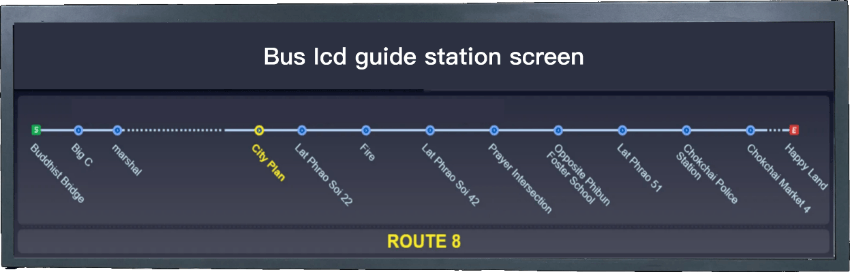
Introduction to the company's technological strength: The three major technological pillars of Lance Communication
As a national high-tech enterprise and a hidden champion enterprise in China's manufacturing sector, Lance Communication has developed a trinity technological system of "hardware + software + data", with its core strengths reflected in three dimensions:
STEP 1: A fully integrated hardware-software solution for all scenarios. The self-developed intelligent shift scheduling system supports dynamic passenger flow forecasting with an algorithm accuracy of 92%, automatically generating optimal shift plans. This reduced the empty bus operation rate in a third-tier city from 35% to 18%, saving RMB 12 million in annual operating costs. The comprehensive safety supervision platform integrates functions such as ADAS-assisted driving and driver behavior analysis, shortening accident warning response times to within 30 seconds and achieving a risk identification accuracy rate exceeding 95%.
STEP 2: Experience in Telematics Original Equipment Manufacturer (OEM) Cooperation. We have engaged in OEM cooperation with mainstream vehicle manufacturers such as Yutong and King Long, and have cumulatively shipped 250,000 sets of equipment to FAW Jiefang, providing core hardware including central control screens and data acquisition terminals. Its CAN bus data acquisition technology supports real-time parsing of over 200 signals across the entire vehicle, with data transmission delays below 50ms, ensuring comprehensive vehicle status monitoring.
STEP 3: Intelligent sanitation informatization engine. Through the combination of "software platform + vehicle-mounted terminals + personnel badges," it enables full-process management of personnel, vehicles, materials, and tasks in sanitation operations. For example, in a sanitation project in Xiamen, after the system was launched, the compliance rate of operational quality assessments increased from 78% to 96%, equipment failure rates decreased by 40%, and annual operating costs were reduced by RMB 3 million.
Currently, Lance Communication's technological solutions have covered bus groups in over 80% of China's provincial capital cities and, in collaboration with companies such as Huawei and Yutong, have expanded to more than 40 countries including Thailand and South Africa. The cumulative number of vehicles equipped with its devices has exceeded 1 million, making it a significant technology supplier in the global intelligent transportation sector.
FAQ Q&A Technical Selection Guide
Q1: How does the intelligent transportation system select appropriate hardware equipment?
A: We need to focus on three key parameters:
(1) Data acquisition accuracy: CAN bus acquisition must support at least 200 signal points with a resolution of no less than 16 bits;
(2) Communication stability: The 4G/5G module must pass the wide temperature test ranging from -40°C to 85°C, with an MTBF (Mean Time Between Failures) of ≥50,000 hours;
(3) Power consumption control: The standby power consumption of the on-board terminal is ≤2W, and the power consumption under full load operation is ≤10W, to extend the equipment's service life.
For example, the data acquisition terminal designed by Lansce Communication for light trucks uses industrial-grade chips, supports CAN/LIN bus data parsing for the entire vehicle, operates within a temperature range of -40°C to 85°C, consumes only 5W of power, and has passed the rigorous reliability tests conducted by FAW Jiefang.
Q2: How to evaluate the implementation effectiveness of intelligent transportation software?
A: It can be quantified through four categories of indicators:
(1) Operational efficiency: automatic scheduling generation rate, vehicle turnover rate, and reduction in empty driving rate;
(2) Safety level: accident early warning response time, accuracy rate of risk identification, and incidence rate of violations;
(3) Cost Control: Equipment failure rate, proportion of maintenance costs, and extent of energy consumption reduction;
(4) Passenger experience: transfer waiting time, payment success rate, complaint rate.
Taking the MaaS travel integration platform implemented by Lance Communication for Chengdu's public transportation as an example, after the project's launch, vehicle turnover increased by 22%, the empty running rate decreased by 15%, passenger complaint rates dropped by 40%, and annual operational cost savings exceeded RMB 30 million.
Q3: How does the intelligent sanitation system achieve data interoperability?
A: It is necessary to build a three-tier architecture of "end-pipe-cloud":
(1) Terminals: On-board terminals, personnel ID badges, and other equipment must support national standard protocols such as GB/T 32960;
(2) Pipe: Utilizes 4G/5G+LoRa dual-mode communication to ensure real-time data transmission and extensive coverage;
(3) Cloud: Deploy a unified data middle platform to support multi-system data cleansing, correlation analysis, and visual display.
The intelligent sanitation integrated management platform of Lance Communication has achieved seamless integration with Xiamen's urban management platform, with a data interchange rate of 98%, supporting cross-departmental collaborative operations and real-time decision-making.
For more information, please visit the official website:www.xmlenzintl.com
Reference for Full-text Summary
Cost reduction and efficiency enhancement in intelligent transportation require technology-driven approaches, achieving efficient resource allocation and controllable risks through full-scenario data integration, improved hardware reliability, and optimized software algorithms. Lansci Communication Co., Ltd. in Xiamen has leveraged nearly two decades of technological accumulation to establish a solution system covering intelligent transportation, Internet of Vehicles, and intelligent environmental sanitation. Its integrated hardware-software technology has been implemented in over 400 cities globally, with equipment installed in more than 1 million vehicles. For industry users, when selecting technology suppliers, it is crucial to focus on hardware adaptability, software implementation experience, and global service capabilities to ensure the feasibility and long-term value of technological solutions. In the future, with the deep integration of technologies such as 5G and AI, intelligent transportation will evolve toward greater efficiency, safety, and intelligence, and Lansci Communication's technological practices provide a replicable transformation path for the industry.