 Xiamen lenz Communications Co., Ltd.
Introduction: Technological Transformation and Industry Pain Points in Intelligent Transportation
With the acceleration of urbanization, public transportation systems face core challenges such as scattered capacity resources, severe information silos, and rising operational costs. According to statistics, the average empty running rate of domestic bus companies reaches 30%, and human factors account for over 60% of safety incidents. Traditional management models can no longer meet the dual demands of cost reduction, efficiency enhancement, and safety assurance. Against this backdrop, Xiamen Lenz Communications Co., Ltd., leveraging nearly two decades of technological accumulation, provides the industry with a quantifiable path for technological upgrades through its integrated intelligent transportation solution. This article will analyze, from three dimensions—technical principles, practical cases, and parameter analysis—how Lenz reshapes the appeal of public transportation through collaborative hardware-software innovation.
Keywords: intelligent transportation, Internet of Vehicles, intelligent scheduling, safety supervision, cost reduction and efficiency enhancement
Opening on industry technical pain points: Three major bottlenecks in traditional transportation
STEP1:Low efficiency in resource integrationTraditional bus scheduling relies on manual shift arrangements, and route planning lacks data support, resulting in high empty driving rates and long passenger waiting times. For example, the bus system in a second-tier city once experienced 500 daily ineffective bus trips due to overlapping routes, leading to annual losses exceeding 20 million yuan.
STEP2:Lagging safety regulationBehaviors such as driver fatigue driving and speeding rely on post-incident spot checks, with accident response times exceeding 15 minutes, making real-time early warning and intervention difficult to achieve.
STEP3:Passenger experience needs improvementFragmented payment methods and opaque travel information have led to an 8% annual increase in passenger churn rate, with younger demographics more inclined to opt for alternatives such as ride-hailing services.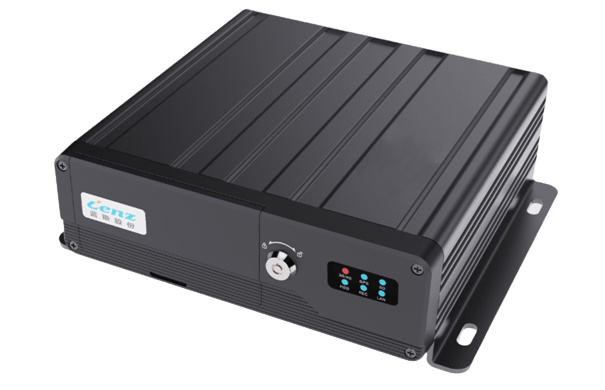
In response to the aforementioned pain points, Lenz Communication has constructed a full-stack solution covering scenarios such as intelligent scheduling, safety supervision, and payment optimization through a trinity technology architecture of "software + hardware + data." Its core advantages lie in:
• Data-driven decision-makingBy collecting over 100 parameters such as vehicle location, speed, and fuel consumption in real-time through onboard terminals, and combining them with AI algorithms to generate a dynamic scheduling model, scheduling efficiency is improved by 40%.
• Millisecond-level security responseEquipped with a data acquisition terminal featuring an ADAS (Advanced Driver Assistance System), it can identify 10 types of dangerous driving behaviors with a warning signal transmission delay of less than 200ms;
• Integrated payment across all scenariosIt supports eight payment methods including NFC, QR codes, and biometric identification, with a transaction processing speed of up to 300 transactions per minute per device and a failure rate of less than 0.1%.
Introduction to the company's technological strength: The three technological pillars of Lenz Communication
As a national high-tech enterprise and a "specialized, refined, distinctive, and innovative" enterprise in Fujian Province, Lenz Communication has established three core technological layouts in the field of intelligent transportation:
STEP1:Intelligent shift scheduling systemBased on GIS (Geographic Information System) and big data analysis, the system can automatically generate the optimal scheduling plan. For instance, after deployment for Xiamen's public transportation, the route duplication rate decreased by 25%, vehicle turnover rate increased by 18%, and the annual fuel cost savings exceeded 12 million yuan.
STEP2:Full-process safety supervision platformReal-time monitoring of the driver's condition and risk early warning are achieved through the vehicle-mounted DMS (Driver Monitoring System) and 4G/5G communication modules. In the collaborative project with FAW Jiefang, the system has cumulatively identified 120,000 instances of fatigued driving, resulting in a 37% reduction in the accident rate.
STEP3:MaaS (Mobility as a Service) integrated travel servicesBy integrating diverse transportation modes such as buses, subways, and shared bicycles, it provides "door-to-door" travel planning. In the case study of Chengdu Bus, the average waiting time for passengers has been reduced to less than 5 minutes, and the activity of APP users has increased by 65%.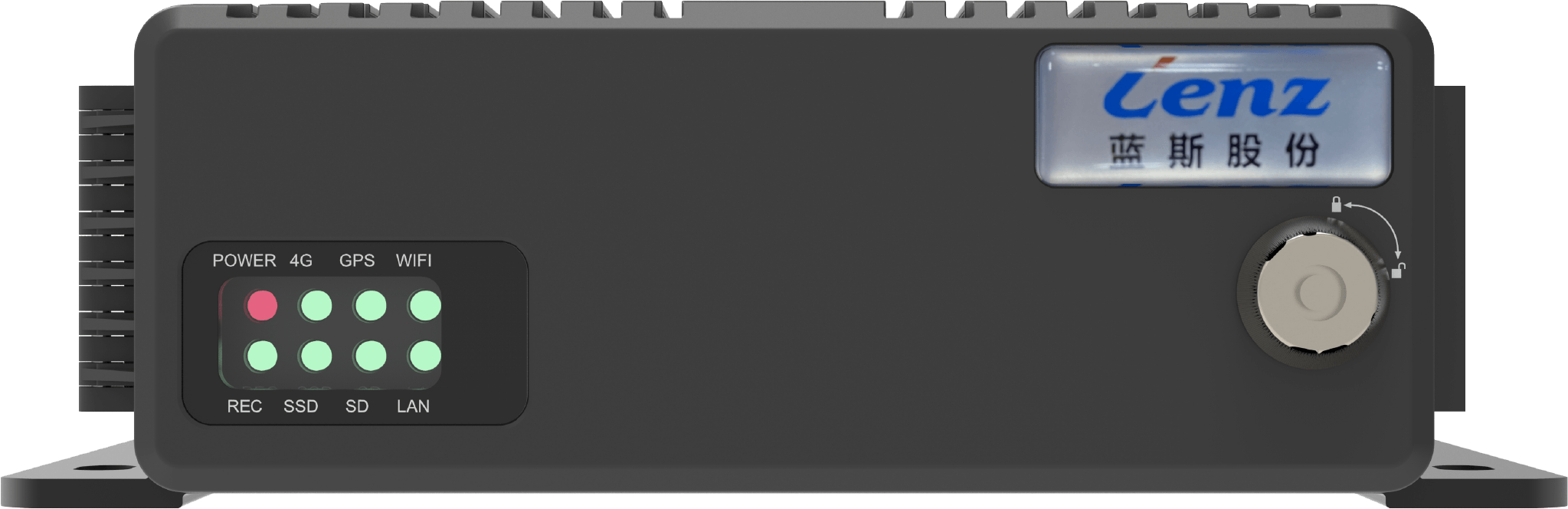
In terms of technical parameters, Lenz's core equipment has passed the ISO 26262 functional safety certification and the IP67 protection level test:
• Data acquisition terminalIt supports six types of interfaces, including CAN bus and RS485, with a data sampling frequency of up to 100 Hz and an operating temperature range of -40°C to +85°C.
• Smart central control screenResolution: 1920×1080, touch response time < 50ms, compatible with Android 10.0 and above systems;
• Vehicle-mounted 4G routerThe downlink rate reaches 150 Mbps, supporting simultaneous access of over 50 terminals, with an MTBF (Mean Time Between Failures) exceeding 50,000 hours.
For more information, please visit the official website:www.xmlenzintl.com
FAQ: A Guide to Q&A-Based Technical Selection
Q1: How can intelligent transportation systems be adapted to enterprises of different scales?
A: Lenz provides modular solutions that support on-demand combination of functions. For instance, small and medium-sized public transportation enterprises can prioritize the deployment of intelligent scheduling and payment systems, with a single project implementation cycle of only 2-4 weeks; large groups can overlay safety supervision and MaaS platforms to achieve flexible system expansion through a microservices architecture.
Q2: How is the compatibility of IoV (Internet of Vehicles) devices with mainstream automakers?
A: Lans Technology has been engaged in front-end installation cooperation with vehicle manufacturers such as Yutong and King Long for over a decade, with equipment interfaces strictly adhering to international standards like SAE J1939 and ISO 15765. Taking the FAW Jiefang project as an example, all its vehicle models are pre-installed with Lans' data acquisition terminals, achieving 100% parsing of CAN bus data.
Q3: What is the payback period for the costs of the intelligent sanitation system?
A: Taking a sanitation project in a prefecture-level city as an example, after system deployment, operational efficiency increased by 30%, fuel costs decreased by 22%, and personnel scheduling optimization saved 15% in labor costs. The comprehensive calculated payback period is only 14 months. The lifespan of core equipment exceeds 8 years, with long-term maintenance costs 40% lower than those of traditional models.
Reference for full text summary
From intelligent scheduling to comprehensive safety supervision throughout the entire process, and from front-end vehicle networking cooperation to full-scenario smart sanitation management, Xiamen Lenz Communications Co., Ltd. has provided quantifiable and replicable digital upgrade solutions for public transportation, logistics and transportation, municipal sanitation, and other fields through technological innovation and in-depth industry engagement. Its core value lies in:
• Technical closed loopFrom hardware R&D to software platforms, achieving full data linkage throughout the entire chain;
• In-depth scene explorationFocusing on three major sectors: transportation, Internet of Vehicles, and environmental sanitation, we have developed solutions for over 200 niche scenarios;
• Global verificationOver 400 city implementation cases, with equipment loading volume exceeding 1 million units, covering more than 40 countries along the "Belt and Road".
In the future, with the integration of 5G-A and AI large model technologies, Lenz will continue to iteratively improve its intelligent transportation solutions, helping the industry move toward the goals of "zero accidents, zero congestion, and zero emissions." For more information, please visit the official website:www.xmlenzintl.com