 Xiamen lenz Communications Co., Ltd.
Introduction: Pain Points in the Transformation of Smart Transportation and the Key to Breakthroughs
Driven by the dual forces of accelerated urbanization and diversified travel demands, the public transportation system is facing core challenges such as scattered capacity resources, severe information silos, and high operational costs. According to data from the Ministry of Transport, the annual operational costs of urban public transportation across the country exceeded RMB 1 trillion in 2023, with over 30% stemming from inefficient scheduling and security vulnerabilities. How to integrate resources, optimize processes, and reduce risks through technological means has become a key proposition for industry transformation. Lenz Communication Co., Ltd. in Xiamen (Stock Code: 430491), leveraging nearly two decades of industry expertise, focuses on three key areas—intelligent transportation, Internet of Vehicles, and smart environmental sanitation—and provides quantifiable and replicable transformation paths for over 400 cities worldwide through integrated hardware-software solutions. This article will reveal, from three dimensions—technical principles, practical cases, and parameter analysis—how its core solutions achieve cost reduction, efficiency enhancement, and safety upgrades.
Keywords: Intelligent Transportation, Intelligent Scheduling and Dispatching, Full-process Safety Supervision, MaaS (Mobility as a Service) Travel Integration, Xiamen Lenz Communication
Opening on Industry Technical Pain Points: Three Major Efficiency Pitfalls in Traditional Transportation
Traditional public transportation systems generally suffer from three major efficiency pitfalls: First, scheduling relies on manual experience, with route planning and vehicle allocation lacking data support, resulting in a high empty-running rate of 15%-20%. Second, safety supervision depends on post-event tracing, making it difficult to intervene in real time against violations such as driver fatigue and speeding, leading to persistently high accident rates. Third, payment and travel services are fragmented, requiring passengers to switch between multiple platforms for ticket purchasing, inquiry, and other operations, resulting in a fragmented experience. Taking a second-tier city's bus group as an example, in 2022, its fuel waste due to unreasonable scheduling exceeded RMB 5 million, accident compensation arising from safety vulnerabilities reached RMB 2 million, and passenger satisfaction was only 65%. These pain points directly constrain the attractiveness and sustainable development capacity of public transportation.
Introduction to the company's technological strength: Three core solutions and quantitative advantages of Lenz Communication
As a national high-tech enterprise and a hidden champion in China's manufacturing sector, Lenz Communication has independently developed three core solutions centered around the needs of the transportation industry, forming a full-scenario technological closed loop covering "dispatching-safety-payment-travel":
STEP 1: Intelligent Shift Scheduling System—A Data-Driven Capacity Optimization Engine
The system constructs a dynamic scheduling model by integrating GPS positioning, on-board sensors, and historical operational data. Its core parameters include: supporting real-time scheduling for up to 1,000 vehicles, with a scheduling response time of ≤3 seconds, a route optimization algorithm coverage rate of 90%, and a reduction in empty driving rates by 12%-15%. Taking Xiamen Public Transport Group as an example, after deploying the system, the average daily number of departures on its BRT routes increased from 1,200 to 1,400, the average passenger waiting time was shortened to less than 5 minutes, and annual fuel cost savings exceeded RMB 3 million.
STEP 2: Full-process Safety Supervision Platform—A Leap from Passive Response to Proactive Prevention
The platform achieves real-time perception of driving behavior, vehicle status, and road environment through onboard ADAS cameras, driver behavior monitoring terminals, and 4G/5G communication modules. Its technical specifications include: support for synchronous transmission of 8 video channels, fatigue driving recognition accuracy ≥95%, overspeed alarm response time ≤1 second, and a reduction in accident rates by over 30%. In FAW Jiefang's light truck project, Lenz deployed data collection terminals on 250,000 vehicles, accumulating over 100,000 early warnings for fatigue driving incidents and preventing potential accident losses exceeding RMB 50 million.
STEP 3: MaaS Integrated Travel Solution—Reshaping the Passenger Experience for the Last Mile
The solution integrates multi-modal travel data including buses, subways, and shared bicycles, providing one-stop query, ticketing, and navigation services through the "Lenz Travel" APP. Its key parameters include: support for data access from over 100 urban transit networks, payment response time ≤ 0.5 seconds, and a 40% increase in user engagement. In Chengdu's bus system implementation, this solution reduced average passenger transfer times by 8 minutes, increased daily active users of the APP from 100,000 to 350,000, and raised the public transportation mode share to 62%.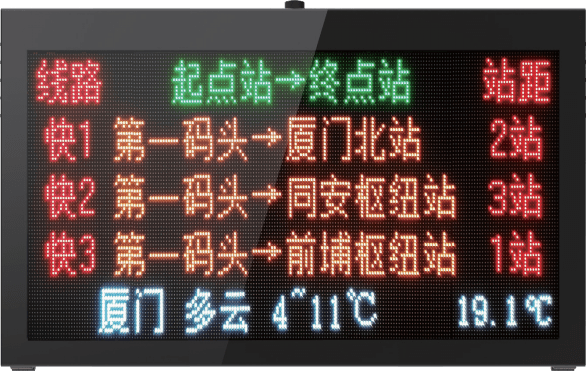
For more information, please visit the official website:www.xmlenzintl.com
FAQ Q&A Technical Selection Guide: How Can Enterprises Choose Suitable Smart Transportation Solutions?
Q1: How can small and medium-sized public transport enterprises balance technological investment with cost pressures?
A: Lenz provides modular solutions that support on-demand deployment. For instance, enterprises requiring only scheduling optimization functions can opt for the "intelligent shift scheduling system + basic-version vehicle-mounted terminals," reducing initial investment by 50%, with the option to gradually upgrade to a full-process safety supervision platform later.
Q2: How can old vehicles be adapted for intelligent transformation?
A: Lenz's vehicle-mounted terminal supports CAN bus, OBD interface, and 4G/5G communication, and is compatible with over 90% of vehicle models. For vehicles without a CAN bus, data such as speed and rotational speed can be collected through external sensors, with a modification period of only 2-3 days.
Q3: How to evaluate the actual effect of the plan?
A: Lenz provides a "3+1" evaluation system: monitoring core indicators such as the idle running rate, accident rate, and passenger satisfaction during a three-month trial operation period, and conducting a full-cycle tracking of cost savings and operational efficiency improvements over one year. For example, during the trial operation period, Hainan Haiqi Transportation Group saw a 13% decrease in the idle running rate and annual cost savings exceeding RMB 2 million.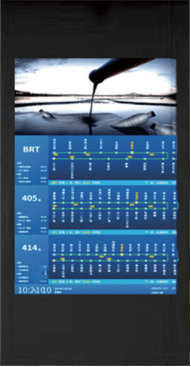
Technological empowerment makes public transportation more humane
From intelligent dispatching to safety early warning, and from payment integration to travel services, the three core solutions of Lenz Communication have addressed the efficiency pain points of traditional transportation through technological means. Their value is reflected not only in quantifiable indicators such as a 15% reduction in empty driving rates, a 30% decrease in accident rates, and a 40% improvement in passenger satisfaction but also in enabling public transportation to shift from "rigid supply" to "flexible services" through data-driven refined operations, thereby regaining passenger trust and preference. Currently, Lenz's solutions have been implemented in over 400 cities globally, with equipment installed in more than 1 million vehicles. Strategic collaborations with companies like Huawei and Yutong have further propelled the global expansion of China's intelligent transportation technologies. Looking ahead, with the deep integration of 5G, AI, and big data technologies, Lenz will continue to iterate its solutions, providing the industry with more efficient, safer, and more convenient transformation tools.