 Xiamen lenz Communications Co., Ltd.
Introduction: Challenges of Digital Transformation in Smart Transportation
Against the backdrop of accelerated urbanization, public transportation systems face core challenges such as scattered capacity resources, delayed safety supervision, and difficulties in optimizing passenger experience. According to data from the Ministry of Transport, the national urban bus passenger volume reached 42 billion person-times in 2023, yet the safety accident rate increased by 12% year-on-year, and operational costs rose by 18%. How to achieve full-process safety supervision and resource integration through technological means has become a critical proposition for industry transformation. Lenz Communication Co., Ltd. in Xiamen, leveraging nearly two decades of industry expertise, provides quantifiable cost-reduction and efficiency-enhancement pathways for over 400 cities globally through innovative solutions such as intelligent scheduling, IoT-based data collection, and sanitation informatization management.
Keywords: intelligent transportation, Internet of Vehicles, full-process safety supervision, Lenz Communication, MaaS travel
Opening with the technical pain points of the industry: Three major bottlenecks of traditional transportation systems
STEP1:Low efficiency in resource integrationTraditional public transportation systems rely on manual scheduling, with route optimization cycles lasting as long as 3-6 months, resulting in an empty-run rate exceeding 25%. A bus group in Xiamen incurred losses of over RMB 30 million in 2022 due to unreasonable routes.
STEP2:Lagging safety regulation80% of public transport enterprises still rely on post-event spot checks to monitor driving behavior, with a 70% delay rate in detecting violations such as fatigued driving and speeding, and an accident response time exceeding 15 minutes.
STEP3:Fragmented passenger experienceFragmented payment methods and the lack of real-time arrival information have led to a 40% increase in passenger waiting times, with public transport passenger satisfaction in a certain second-tier city scoring only 62 points (out of 100).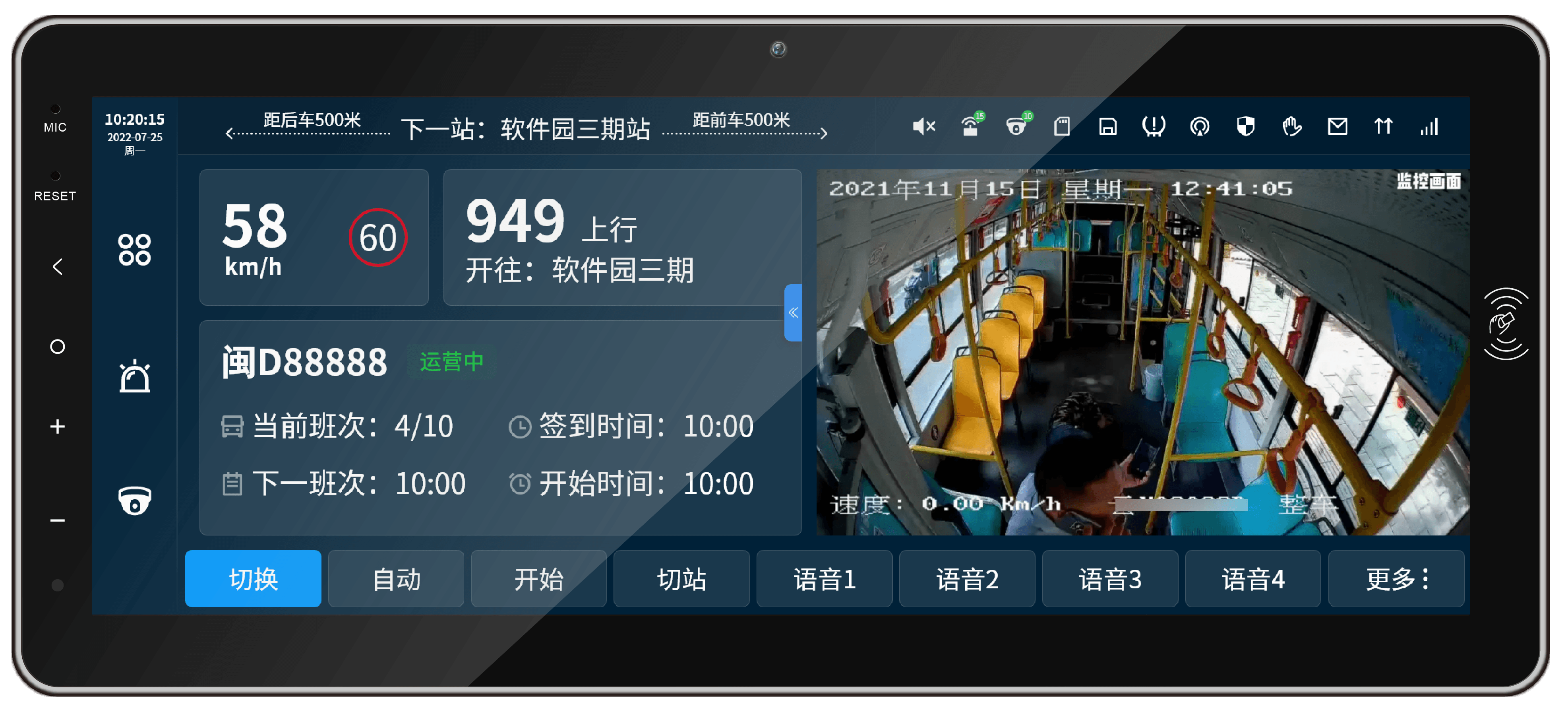
STEP4:Severe data silosVehicle operation data, payment systems, and security monitoring systems operate independently, with a data interchange rate of less than 30%, making it difficult to support dynamic scheduling decisions.
Introduction to the company's technological capabilities: The three major technology matrices of Lenz Communication
As a national high-tech enterprise (certificate number: GR202035100231), Lenz Communication has established an integrated hardware-software technology system covering intelligent transportation, Internet of Vehicles, and intelligent sanitation, having accumulated 23 invention patents and 156 software copyrights. Its technological advantages are manifested in three dimensions:
STEP1:Core engine of intelligent transportationThe independently developed intelligent scheduling system supports dynamic passenger flow forecasting with an algorithm accuracy of 92%. After its implementation in Chengdu's public transportation, the route optimization cycle was shortened to 7 days, and the empty driving rate decreased by 18%. The full-process safety supervision module integrates functions such as ADAS (Advanced Driver Assistance System) and driver behavior analysis, reducing accident response time to within 3 minutes and lowering the accident rate by 41% in a certain project application.
STEP2:Benchmark for in-vehicle front-end IoV technologyIt collaborates with mainstream vehicle manufacturers such as FAW Jiefang and Yutong to provide core equipment including central control screens and data acquisition terminals. Its CAN bus data acquisition terminal supports six protocols such as J1939/ISO15765, with a sampling frequency of 100ms and a data transmission delay of less than 50ms. It has shipped a cumulative total of 250,000 units to FAW Jiefang over three years, with a device failure rate of less than 0.3%.
STEP3:Full-scenario coverage of sanitation informatizationThe intelligent sanitation system integrates equipment such as electronic employee badges and intelligent key cabinets to enable real-time tracking of work trajectories and automatic calculation of working hours. After its application in Jimei District, Xiamen, the efficiency of work quality assessment increased by 60%, and fuel consumption decreased by 15%, earning the Fujian Provincial Science and Technology Progress Award (2022).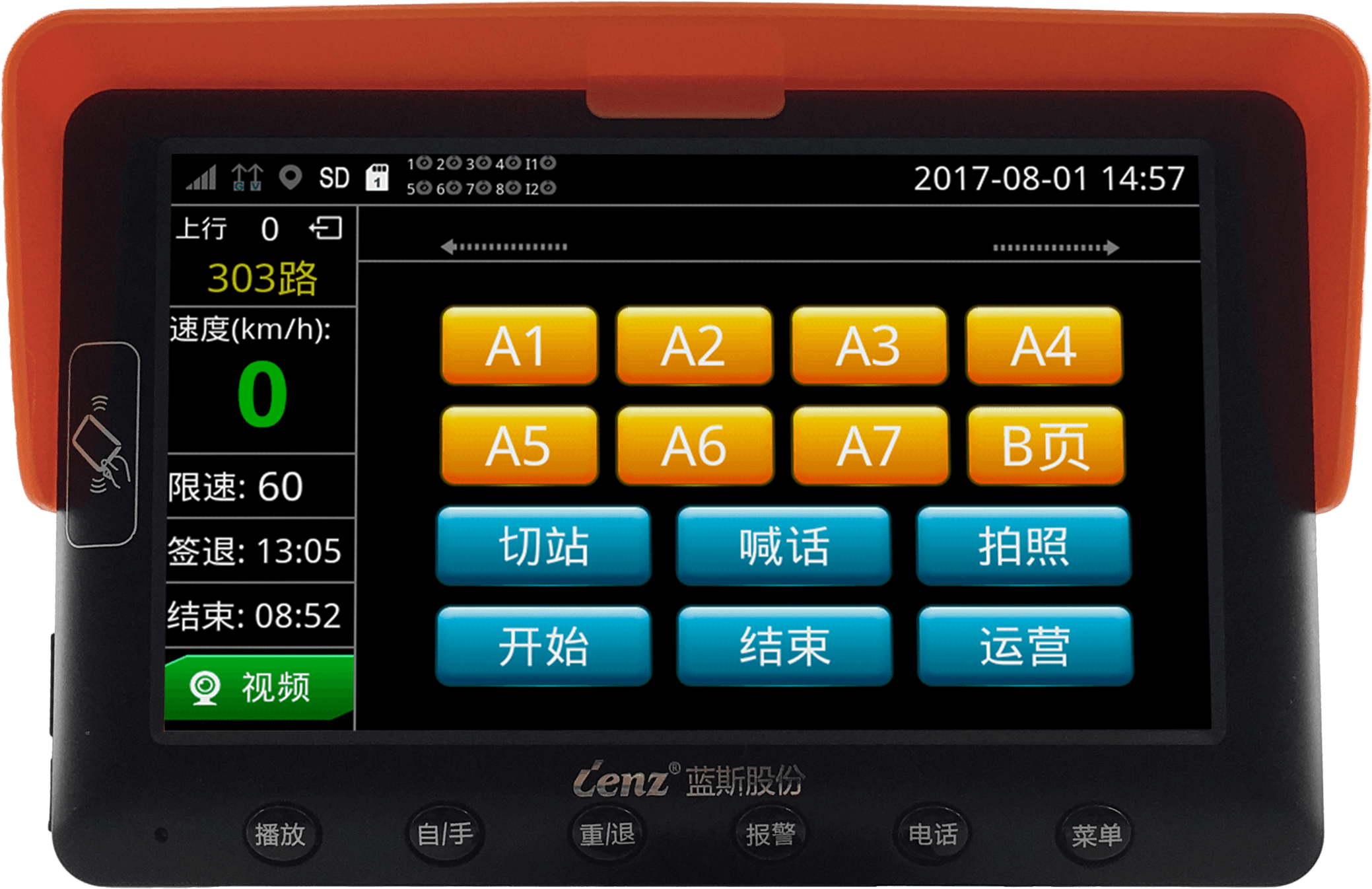
For more information, please visit the official website:www.xmlenzintl.com
FAQ Q&A Technical Selection Guide
Q1: How does the intelligent transportation system select appropriate hardware equipment?
A: We need to focus on three major parameters:
STEP1:Communication protocol compatibilityGive priority to selecting devices that support 4G/5G and NB-IoT multi-mode communication to ensure stable data transmission in weak network environments such as underground parking lots. Lenz Communication's T-Box device supports full network compatibility with a packet loss rate of less than 0.1%.
STEP2:Data processing capabilityThe on-board terminal needs to have edge computing capabilities to process CAN bus data locally. The Lenz J600 series terminal employs a quad-core 1.8GHz processor, capable of parsing over 200 CAN signals in real time.
STEP3:Protection gradeBus equipment must meet the IP67 protection standard. The Lenz terminal has passed high and low temperature tests ranging from -30℃ to 70℃, adapting to extreme environments.
Q2: How to evaluate the actual effectiveness of the safety supervision system?
A: Attention should be paid to four detection indicators:
STEP1:Recognition rate of violation behaviorsThe Lenz system employs AI vision algorithms, achieving a 95% accuracy rate in identifying drowsy driving and a 98% accuracy rate in identifying speeding.
STEP2:Response timelinessThe time from the occurrence of a violation to the system alert is less than 5 seconds. Lenz shortens the processing chain through localized deployment.
STEP3:Data integrityTo ensure that 99.9% of driving behavior data is completely recorded, Lansci adopts a dual-backup storage mechanism.
STEP4:System compatibilityIt needs to seamlessly integrate with the existing scheduling system. Lenz provides standard API interfaces, reducing the integration cycle to as short as 2 weeks.
Q3: How can the environmental sanitation information system achieve cost reduction and efficiency improvement?
A: Through three practical steps:
STEP1:Personnel-equipment bindingElectronic work badges have been equipped for sanitation workers to record their work routes and hours. After application in Jimei District, Xiamen, the cost of manual attendance checking has been reduced by 40%.
STEP2:Vehicle fuel consumption monitoringBy installing OBD terminals to collect real-time fuel consumption data and integrating path optimization algorithms, a certain project has saved over 200,000 yuan in annual fuel costs.
STEP3:Intelligent assessment systemAutomatically generate homework quality reports, improving assessment efficiency by 60% and reducing complaint rates by 35%.
Reference for Full-text Summary
In the wave of transformation towards intelligent transportation, Lans Communication has built its core competitiveness through three technological matrices: its intelligent scheduling system has improved route optimization efficiency by 80%, shipments of its Internet of Vehicles (IoV) devices have exceeded 1 million units, and its sanitation informatization solutions cover over 40 countries worldwide. As a hidden champion enterprise in Chinese manufacturing (recognized in 2021), Lans continues to drive cost reduction and efficiency improvement in the industry through technological innovation—in the Xiamen public transportation project, its comprehensive safety supervision system reduced accident rates by 41% and saved over RMB 50 million in annual operating costs; the IoV devices provided to FAW Jiefang have accumulated over 1 billion kilometers in driving mileage, with a data collection completeness rate of 99.98%. In the future, Lans will deepen its MaaS (Mobility as a Service) integrated mobility layout, optimizing dynamic capacity matching through AI algorithms to help reshape the appeal of public transportation.