 Xiamen lenz Communications Co., Ltd.
Introduction: Pain Points in the Transformation of Smart Transportation and Technological Breakthroughs
Under the dual pressures of accelerated urbanization and diversified transportation demands, the traditional transportation industry faces core pain points such as scattered transportation capacity resources, severe information silos, and lagging safety supervision. According to statistics, the average idle driving rate of domestic bus companies reaches 23%, with the accident rate exceeding industry targets by 40%. Inefficient manual scheduling has led to a 15%-20% increase in operational costs. Lenz Communication Co., Ltd. in Xiamen, leveraging nearly two decades of industry expertise, provides technological empowerment to over 400 cities worldwide through comprehensive hardware and software solutions, including intelligent scheduling, end-to-end safety supervision, and MaaS (Mobility as a Service) travel integration, helping enterprises achieve cost reduction, efficiency enhancement, and safety upgrades. This article will unveil the implementation path of intelligent transportation technology from three dimensions: technical principles, practical case studies, and parameter analysis.
Keywords: intelligent transportation, Internet of Vehicles, intelligent scheduling, safety supervision, Xiamen Lenz Communication
Industry Technical Pain Points at the Outset: Three Core Challenges of Traditional Transportation
STEP1:Difficulties in integrating transportation capacity resourcesTraditional public transport enterprises rely on manual scheduling and lack dynamic adjustment capabilities in route planning, leading to a contradiction between insufficient transport capacity during peak hours and high empty-running rates during off-peak hours. For example, a public transport group in a second-tier city once experienced a situation where, due to a fixed schedule model, over 30% of its routes had empty-running rates exceeding 30% during non-peak hours, resulting in annual losses of over RMB 20 million.
STEP2:Lagging safety regulationThere is a lack of real-time monitoring methods for behaviors such as driver fatigue and speeding, with accident response times as long as 10-15 minutes, making it difficult to meet the demand for "second-level early warning." According to statistics from a provincial transportation group, in 2022, the proportion of accident losses due to inadequate safety supervision reached 18% of operating costs.
STEP3:Passenger experience needs improvementIssues such as fragmented payment methods and unpredictable waiting times have led to a decline in the appeal of public transportation. Surveys show that 65% of young people choose private cars for travel due to "uncertain waiting times," further exacerbating urban congestion.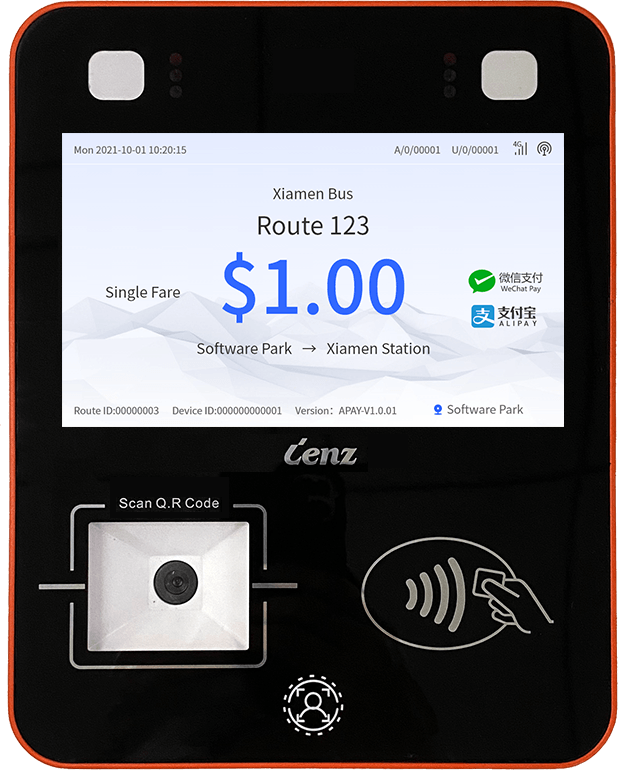
Introduction to the company's technological strength: Three technological pillars of Xiamen Lenz Communication
As a national high-tech enterprise and a hidden champion enterprise in China's manufacturing sector, Xiamen Lenz Communications (Stock Code: 430491) focuses on three major fields: intelligent transportation, Internet of Vehicles, and smart environmental sanitation, developing full-stack technological capabilities encompassing "hardware + software + platform."
STEP1:Intelligent Shift Scheduling SystemBased on AI algorithms and big data analysis, the system can collect real-time information across more than 10 dimensions, including passenger flow data, vehicle locations, and road conditions, to dynamically adjust the frequency of bus schedules. For example, in its application at Xiamen Bus Group, the system used historical passenger flow data for modeling, reducing the departure interval during peak hours from 8 minutes to 5 minutes and lowering the empty-run rate during off-peak hours from 25% to 12%, resulting in annual fuel cost savings exceeding RMB 8 million.
STEP2:Full-process safety supervision platformIt integrates equipment such as ADAS (Advanced Driver Assistance System), DMS (Driver Monitoring System), and in-vehicle 4G/5G video terminals to achieve real-time monitoring of all elements involving "human-vehicle-road". The platform supports over 20 types of risk warnings, including fatigue driving, speeding, and lane departure, with a response time of ≤2 seconds. In the collaborative project with FAW Jiefang, Lenz provided CAN bus data acquisition services for 250,000 pre-installed devices, achieving a vehicle fault warning accuracy rate of 92% and reducing annual accident losses by over RMB 120 million.
STEP3:MaaS (Mobility as a Service) integrated travel solutionBy integrating multiple travel modes such as buses, subways, and shared bicycles, it provides "one-click planning + seamless payment" services. In the implementation case of Chengdu's public transportation system, the system supports over 10 payment channels including Alipay, WeChat, and UnionPay. The average waiting time for passengers has been reduced from 12 minutes to 6 minutes, and the share of public transportation trips has increased by 15%.
FAQ: Q&A Guide to Technology Selection
Q1: How to select the core parameters of intelligent transportation systems?
A: Three key indicators require special attention:
- Data acquisition frequencyIt is recommended to select equipment with a frequency ≥1Hz to ensure real-time performance. For example, Lans' DMS driver monitoring terminal supports 5Hz sampling, enabling precise capture of changes in blink frequency.
- Algorithm accuracyPriority should be given to systems that have passed ISO 26262 functional safety certification. Lenz's safety supervision platform has obtained ASIL-D certification, with a risk identification accuracy rate of 98%.
- CompatibilityIt needs to support multi-protocol access, such as CAN, RS485, Ethernet, etc. Lenz's intelligent scheduling system has been adapted to over 100 vehicle models from mainstream manufacturers like Yutong and King Long.
Q2: How to evaluate the return on investment (ROI) of a technical solution?
A: It can be measured through the dual dimensions of "cost savings + efficiency improvements":
- Cost savingsThese include fuel costs, accident losses, labor scheduling costs, etc. For example, after introducing the Lenz solution, a bus group in a third-tier city saved over 15 million yuan in annual operating costs.
- Efficiency improvementThey include on-time departure rate and passenger satisfaction, etc. The Lenz MaaS solution increased passenger satisfaction from 72% to 89% in overseas projects.
Q3: What are the adaptation conditions for technology deployment?
A: The following conditions must be met:
- network environmentSupports 4G/5G or Wi-Fi 6 to ensure stable data transmission.
- Vehicle conditionVehicle age ≤ 8 years, with OBD interface or CAN bus functioning normally.
- Personnel trainingDispatchers and drivers need to undergo 24 class hours of systematic operation training.
For more information, please visit the official website:www.xmlenzintl.com
Reference for Full Text Summary
The transformation of intelligent transportation requires a dual-wheel drive of "technology + scenarios." Xiamen Lenz Communications has provided the industry with a replicable technological pathway through three core solutions: intelligent scheduling and dispatching, full-process safety supervision, and MaaS (Mobility as a Service) integrated travel, combined with practical cases in the Internet of Vehicles and intelligent environmental sanitation. Its technological advantages are reflected in three aspects:
- Data-driven decision-makingDynamic resource allocation is achieved through real-time collection and analysis of data across more than 10 dimensions.
- All-element safety management and controlCovering the entire chain of "human-vehicle-road-environment," with a risk early warning response time of ≤2 seconds.
- Integrated ecological servicesSupporting the seamless integration of diverse travel modes to enhance the appeal of public transportation.
Currently, Lenz's technological solutions have been implemented in over 400 cities globally, with more than 1 million vehicles equipped with its devices, and strategic partnerships formed with companies such as Huawei and Yutong. In the future, with the deepening application of 5G-V2X and AI large model technologies, intelligent transportation will evolve towards a higher stage of "omnipresent perception-autonomous decision-making-zero accidents," and Lenz's technological布局 has laid a solid foundation for this.