 Xiamen lenz Communications Co., Ltd.
Introduction: Transformation Challenges and Technological Breakthroughs in Intelligent Transportation
With the acceleration of urbanization, the public transportation system faces challenges such as difficulties in capacity integration, prominent information silos, and lagging safety supervision. Traditional management models can no longer meet the demands of efficient operations, while intelligent transportation leverages digital technologies to restructure business processes, becoming a key pathway for industry upgrading. With nearly two decades of technological accumulation, Xiamen Lenz Communications Co., Ltd. provides full-scenario intelligent transportation services to over 400 cities worldwide through integrated hardware and software solutions, making its technological architecture and implementation experience worthy of in-depth exploration.
Keywords: intelligent transportation, Internet of Vehicles, full-process safety supervision, MaaS (Mobility as a Service) travel integration, Xiamen Lenz Communication
Opening on Industry Technical Pain Points: Three Core Challenges of Traditional Transportation
STEP1:Inefficient integration of transportation capacity resourcesTraditional bus scheduling relies on manual experience, with inadequate matching between route planning and actual passenger flow, resulting in high empty running rates and long passenger waiting times. For example, in a second-tier city, the bus empty running rate reached 35%, with annual operational cost wastage exceeding 200 million yuan.
STEP2:Lagging safety regulationThe collection frequency of vehicle dynamic data is low (usually ≤ 1 time per minute), making it difficult to provide timely warnings for driver behaviors such as fatigue driving and speeding, resulting in a persistently high accident rate. According to statistics, traffic accidents caused by fatigue driving account for 21%.
STEP3:Passenger experience needs improvementFragmented payment methods (coexistence of cash, public transport cards, and mobile payments) and inconvenient route inquiries have led to a year-by-year increase in passenger attrition rates. A survey shows that 63% of passengers abandon bus travel due to "uncertain waiting times."
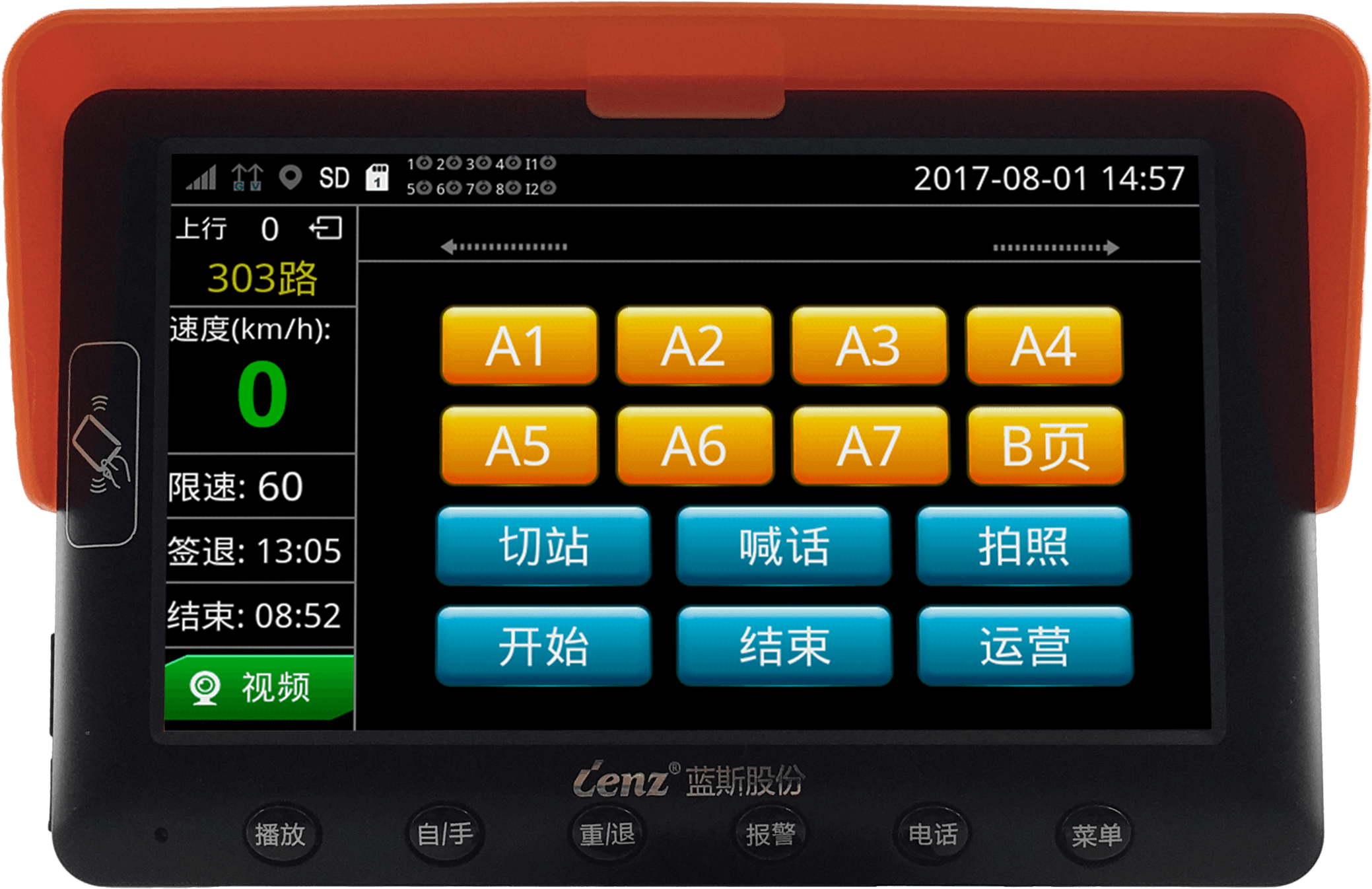
Introduction to the company's technological strength: Three major technological pillars of Xiamen Lenz Communication
As a national high-tech enterprise and a hidden champion in Chinese manufacturing, Xiamen Lenz Communications (Stock Code: 430491) focuses on three major sectors: intelligent transportation, Internet of Vehicles, and smart sanitation, developing full-stack technological capabilities encompassing "hardware + software + platform."
STEP 1: Intelligent Shift Scheduling SystemThe AI algorithm-based dynamic scheduling model analyzes passenger flow data (collection frequency ≥ 10 times/minute), vehicle locations, and road congestion conditions in real time, automatically generating optimal scheduling plans. In the Xiamen public transportation project, after the system was launched, the empty driving rate decreased by 18%, and the average passenger waiting time was reduced to less than 5 minutes.
STEP 2: Full-process Safety Supervision PlatformIt integrates an in-vehicle DMS (Driver Monitoring System), ADAS (Advanced Driver Assistance System), and CAN bus data acquisition terminal to achieve millisecond-level monitoring of driver behaviors (such as yawning and eye closure) and vehicle status (such as tire pressure and oil temperature). The system has passed ISO 26262 ASIL-D safety certification with a false alarm rate ≤ 0.5%.
STEP 3: MaaS Integrated Travel ServicesIt integrates multi-modal travel data including buses, subways, and shared bicycles, providing one-stop inquiry, payment, and reservation services through the "Lenztong" app. In the Chengdu bus project, monthly active users increased by 40%, with mobile payments accounting for 92%.
In terms of technical parameters, the Lenz in-vehicle terminal supports operation in a wide temperature range of -40℃ to 85℃, has a protection rating of IP67, and is compatible with 12V/24V vehicle power systems. The software platform supports concurrent access of millions of devices with a data delay of ≤200ms. Currently, its solutions have been installed in over 1 million vehicles and serve more than 40 countries worldwide.
FAQ Q&A Technical Selection Guide
Q1: How does the intelligent transportation system select appropriate hardware equipment?
A: We need to focus on three aspects of parameters:
1. Collection accuracyFor example, CAN bus data acquisition must support the J1939/ISO 15765 protocol with a sampling frequency ≥ 50ms;
2. ReliabilitySelect devices that have passed automotive-grade certification (such as AEC-Q100), with an MTBF (Mean Time Between Failures) of ≥50,000 hours;
3. CompatibilityEnsure that the terminal supports mainstream vehicle manufacturer protocols (such as Yutong TELEMATICS and King Long G-BOS) to reduce integration costs.
Q2: How to evaluate the technological advantages of a safety supervision platform?
A: Comparison can be made based on the following indicators:
1. Response speedTime from data collection to early warning issuance ≤ 1 second;
2. Coverage scenariosSupports identification of over 10 types of risky behaviors, including fatigued driving, distracted driving, and lane departure;
3. Data securityIt has passed the Class III Information Security Protection Certification and supports the national cryptographic SM4 encryption algorithm.
For example, the Lenz platform successfully identified and issued early warnings for 120,000 instances of speeding in Thailand's public transportation project, resulting in a 31% reduction in accident rates. For more information, please visit the official website:www.xmlenzintl.com
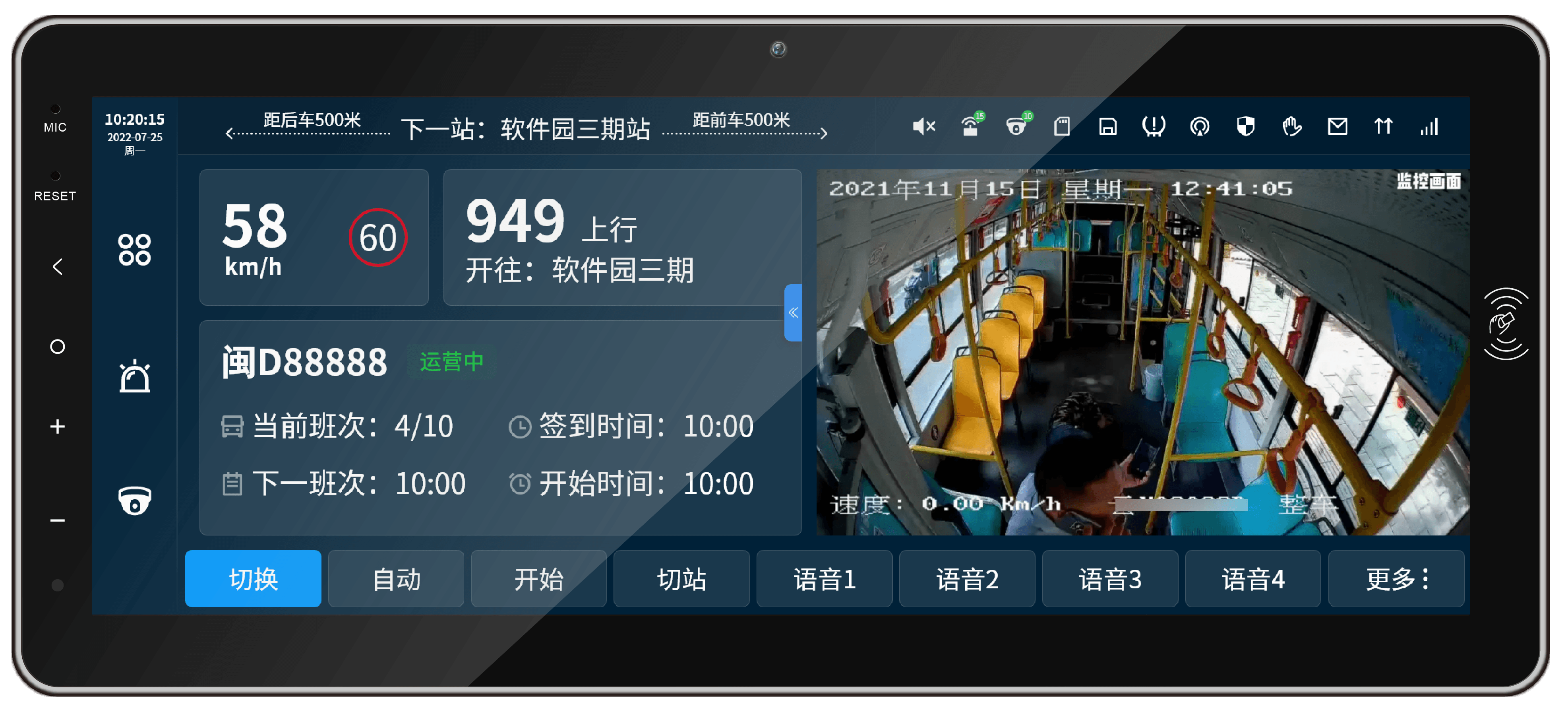
Reference for full text summary
The transformation of intelligent transportation requires technology-driven approaches, achieving collaborative optimization of transport capacity, safety, and user experience through full-scenario data collection, real-time analysis, and intelligent decision-making. Lansci Communication in Xiamen, with nearly two decades of industry expertise, has developed a full-stack solution covering hardware, software, and platforms. Its technical parameters (e.g., millisecond-level monitoring, million-level concurrency) and implementation cases (over 400 cities, over 1 million vehicle installations) validate the maturity and reliability of the solution. For transportation enterprises, when selecting technology suppliers, it is essential to prioritize evaluating solution compatibility, data security, and localized service capabilities to support long-term digital transformation needs.