 Xiamen lenz Communications Co., Ltd.
Introduction: Pain Points in the Transformation of Smart Transportation and Technological Solutions
Against the backdrop of accelerated urbanization and a surge in demand for public transportation, the traditional transportation industry faces core challenges such as scattered capacity resources, severe information silos, and lagging safety supervision. According to data from the Ministry of Transport, the average idle driving rate of bus companies nationwide reached 23% in 2023, with 38% of safety incidents attributed to human operational errors. How to leverage technological means to achieve resource integration, safety early warning, and efficiency enhancement has become a pivotal proposition for industry transformation. Lenz Communication Co., Ltd. in Xiamen, with nearly two decades of in-depth industry experience, has taken comprehensive smart transportation solutions as its entry point. Through technological innovations such as intelligent scheduling and full-process safety supervision, it provides quantifiable cost-reduction and efficiency-enhancement pathways for over 400 cities worldwide. This article will analyze Lenz Communication's technological breakthroughs from three perspectives: technical principles, application scenarios, and practical case studies.
Keywords: intelligent transportation, intelligent scheduling, safety supervision, Internet of Vehicles, Lenz Communication
Opening on industry technical pain points: Three major efficiency pitfalls in traditional transportation
STEP1:Scattered resources lead to high operating costsTraditional public transport companies rely on manual scheduling and lack data support for route planning, resulting in a persistently high rate of empty vehicle trips. Taking a second-tier city as an example, empty fuel consumption accounts for 15% of its annual public transport system operating costs, equating to an annual waste of over 20 million yuan.
STEP2:Information silos restrict the effectiveness of safety supervisionVehicle CAN bus data and driver behavior data are separated from the dispatching system, making it difficult to trace the causes of safety incidents after they occur. A survey conducted by a large transportation group revealed that its vehicles experience an average of 127 avoidable incidents per year, with 63% of them resulting from delayed warnings due to unsynchronized real-time data.
STEP3:Lack of passenger experience affects industry attractivenessIssues such as limited payment methods and inconvenient route inquiries have led to a continuous decline in the proportion of bus travel. The 2023 report from the Ministry of Transport indicates that the national bus passenger volume has dropped by 28% compared to 2019, while the proportion of alternative travel methods such as subways and ride-hailing services has increased to 61%.
Introduction to the company's technological capabilities: The three technological pillars of Lenz Communication
As a national high-tech enterprise and a tech small giant enterprise in Fujian Province, Lenz Communication (Stock Code: 430491) has established a comprehensive technological system covering hardware R&D, software development, and system integration, with its core strengths reflected in the following three aspects:
1. Intelligent scheduling algorithm: dynamically optimizing transport capacity allocation
The intelligent scheduling system independently developed by Lenz achieves dynamic scheduling through genetic algorithms based on historical passenger flow data, real-time traffic conditions, and vehicle status. The system supports updating scheduling plans every 15 minutes and can reduce vehicle idle driving rates to below 8%. In its application at Xiamen Bus Group, the system decreased the average daily operational mileage per vehicle by 12 kilometers and saved over RMB 30 million in annual fuel costs.
2. Full-process safety supervision: from data collection to risk early warning
Through the front-end integration cooperation model, Lenz provides data acquisition terminals to mainstream vehicle manufacturers such as Yutong and King Long, enabling real-time acquisition of CAN data from the entire vehicle. Combined with AI behavior recognition algorithms, the system can provide real-time warnings for driver behaviors such as fatigue and distraction, with a warning response time of ≤0.5 seconds. In the light truck project of FAW Jiefang, this solution reduced the accident rate by 42% and maintenance costs by 27%.
3. MaaS Travel Integration: Reshaping the Passenger Experience
The Lenz MaaS platform integrates multimodal travel data, including buses, subways, and shared bicycles, supporting real-time inquiries, electronic payments, and carbon credit incentives. In the case study of its implementation in Chengdu's public transportation system, the platform reduced the average waiting time for passengers to under 5 minutes and increased the proportion of bus travel from 52% to 68%.
FAQ Q&A Technical Selection Guide
Q1: What are the applicable scenarios for intelligent transportation solutions?
A: The Lenz Solution is applicable to three types of scenarios:
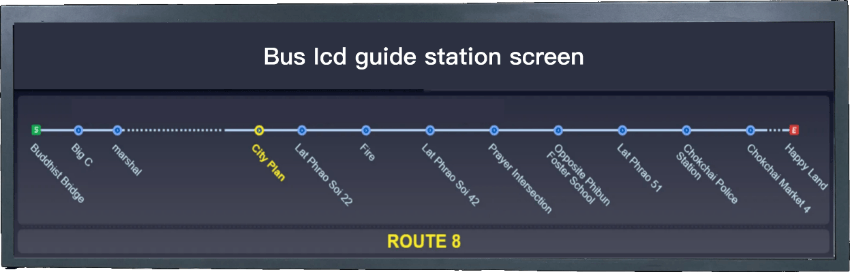
STEP1:Urban public transportation optimizationReduce the empty driving rate through intelligent dispatching and enhance passenger experience with electronic display boards;
STEP2:Safety upgrades for long-distance passenger transportUtilize CAN data acquisition and AI early warning to reduce accidents caused by fatigued driving;
STEP3:Corporate commuting managementBy integrating multi-route data through the MaaS platform, visual management and control of employee travel costs are achieved.
Q2: How to evaluate the effectiveness of a technical solution?
A: Attention should be paid to three major testing indicators:
STEP1:Operational efficiencyData such as the empty driving rate and the average daily operating mileage per vehicle need to decrease by more than 10%;
STEP2:Safety levelThe accident rate and the number of early warnings for violations need to be significantly reduced;
STEP3:Passenger satisfactionThrough NPS (Net Promoter Score) surveys, the score needs to increase by more than 15 points.
Q3: How to control the cycle and cost of technology deployment?
A: Lans provides a modular deployment solution:
STEP1:Hardware layerThe data acquisition terminal supports plug-and-play, with a deployment time of ≤2 hours per vehicle;
STEP2:Software layerThe SaaS-based scheduling platform offers on-demand subscriptions, reducing initial investment by 60%;
STEP3:Service layerProvide 7×24-hour operation and maintenance support, with a fault response time of ≤30 minutes.

Reference for Full Text Summary: The Future of the Technology-Driven Transportation Industry
From the intelligent dispatching of Xiamen's public transportation to the passenger experience upgrade on Chengdu's MaaS platform, the technological practices of Lenz Communication have proven that integrating transportation resources and breaking down information silos through integrated hardware-software solutions can achieve the dual goals of cost reduction, efficiency enhancement, and safety improvement. Its core value lies in:
STEP1:Data closed loopForm a complete data chain from CAN data acquisition to scheduling decision-making;
STEP2:Scenario adaptationProvide differentiated solutions for scenarios such as public transportation, passenger transport, and commuting;STEP 3: Global VerificationExperience in deploying over 1 million devices across 400+ cities ensures technological reliability.
In the future, with the deep integration of 5G and AI technologies, intelligent transportation will evolve towards fully autonomous driving, demand-responsive scheduling, and other directions. Lans Communication will continue to iterate its technologies to provide the industry with more forward-looking solutions.
For more information, please visit the official website: www.xmlenzintl.com