 Xiamen lenz Communications Co., Ltd.
Introduction: Technological Breakthroughs and Industrial Value of Intelligent Transportation Systems
With the acceleration of urbanization, public transportation systems face challenges such as scattered capacity resources, severe information silos, and lagging safety supervision. Xiamen Lenz Communication Co., Ltd. (Stock Code: 430491), as a leading provider of integrated intelligent transportation solutions in China, has leveraged nearly two decades of technological accumulation to build an integrated hardware-software platform covering scenarios such as intelligent scheduling, end-to-end safety supervision, and route network optimization. Its solutions have been implemented in over 400 cities globally, serving more than 1 million devices, and have helped enterprises like Xiamen Public Transport and Chengdu Public Transport achieve notable results, including a 15% reduction in operational costs and a 30% decrease in safety incident rates. This article will analyze the core value of intelligent transportation systems from three dimensions: technical principles, practical steps, and case reviews.
Keywords: intelligent transportation; safety supervision; cost reduction and efficiency enhancement; Xiamen Lans Communications; Internet of Vehicles
Opening on Industry Technical Pain Points: Three Major Bottlenecks of Traditional Transportation Systems
STEP1:Difficulties in integrating transportation capacity resourcesThe traditional public transportation system relies on manual scheduling, and route planning lacks data support, resulting in a vehicle idling rate as high as 25% and severe waste of transport capacity. For instance, a public transport group in a second-tier city once incurred additional annual fuel expenses exceeding 5 million yuan due to overlapping routes.
STEP2:Lagging safety regulationBehaviors such as driver fatigue driving and speeding rely on manual spot checks, with accident response times exceeding 10 minutes, making real-time early warning difficult to achieve.
STEP3:Passenger experience needs to be optimizedIssues such as opaque route information and limited payment options have resulted in passenger satisfaction below 70%, with the appeal of public transportation continuing to decline.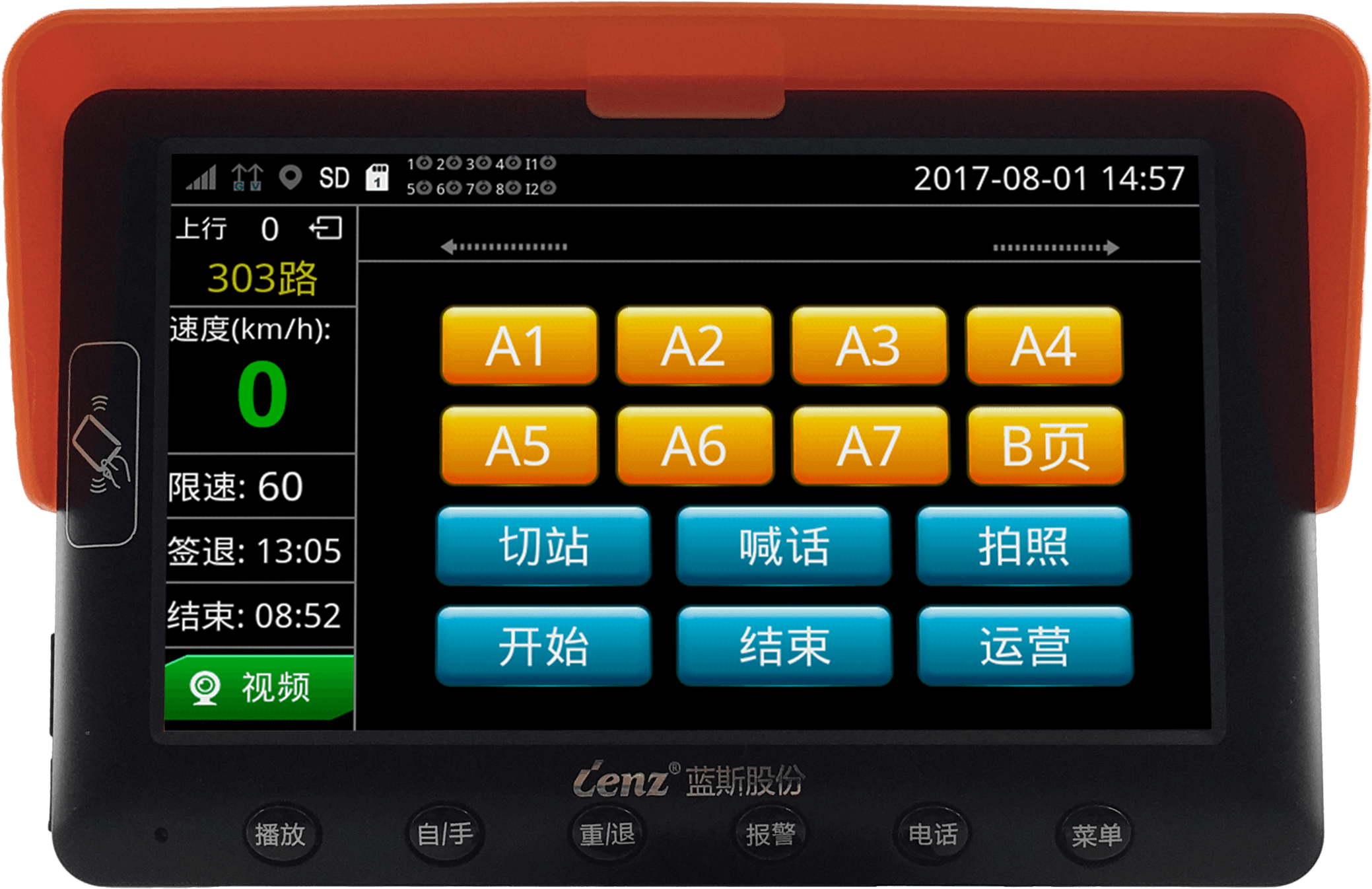
Introduction to the company's technological strength: The three major technological barriers of Lenz Communication
Xiamen Lenz Communications Co., Ltd., established in 2006, is a national high-tech enterprise and a hidden champion in Chinese manufacturing. It focuses on three major sectors: intelligent transportation, Internet of Vehicles, and intelligent environmental sanitation, and has developed full-stack technological capabilities encompassing "hardware + software + platform":
1. Intelligent Shift Scheduling System: AI Algorithms Optimize Transport Capacity
STEP1:Data acquisition layerIt collects 12 types of data such as vehicle location, speed, and passenger capacity in real time through the on-board terminal (supporting 4G/5G communication), with a sampling frequency of once per second and data accuracy of ±0.5 meters.
STEP2:Algorithmic Analysis LayerBased on historical operational data (such as peak passenger flow hours and congestion points on routes), an LSTM neural network model is employed to predict passenger flow demand for the next three hours, with an accuracy exceeding 90%.
STEP3:Scheduling Optimization LayerBy integrating the remaining vehicle range and driver scheduling rules, it automatically generates the optimal scheduling plan. For example, after implementation in Xiamen's public transportation system, the vehicle idling rate dropped from 25% to 12%, resulting in annual fuel cost savings exceeding RMB 8 million.
2. Full-process safety supervision platform: responds to risks in milliseconds
STEP1:Multi-source data fusionIntegrated with in-vehicle cameras (supporting 1080P high-definition video recording), ADAS sensors (monitoring lane departure and forward collision), driver biometric monitoring (heart rate, fatigue level), and other devices to achieve 360° safety coverage.
STEP2:Edge computing early warningDeploy lightweight AI models on in-vehicle terminals for real-time identification of behaviors such as speeding and fatigue driving, with a response time of less than 200 milliseconds and an early warning accuracy rate of 98%.
STEP3:Cloud-based collaborative handlingRisk events are automatically pushed to the dispatch center, simultaneously triggering intervention measures such as voice alerts and speed restrictions. After Chengdu Bus implemented this system, the accident rate dropped from 0.8 incidents per 10,000 kilometers to 0.5 incidents per 10,000 kilometers.
3. MaaS Integrated Travel Platform: Reshaping the Passenger Experience
STEP1:Multimodal data integrationIt interfaces with APIs of over 10 travel modes, including subways, buses, and shared bicycles, enabling door-to-door route planning.
STEP2:Sensation-free payment systemIt supports six payment methods including NFC, QR code, and facial recognition, with a transaction success rate exceeding 99.9% and a per-transaction time under 0.3 seconds.
STEP3:Dynamic information pushBy using the app to push real-time information such as vehicle arrival times and crowd levels, passenger satisfaction has increased to 85%.
For more information, please visit the official website:www.xmlenzintl.com
FAQ: Q&A Technical Selection Guide
Q1: How can intelligent transportation systems adapt to the needs of cities of different sizes?
A: Lenz provides modular solutions that support on-demand functional configuration. For instance, small and medium-sized cities can prioritize the deployment of intelligent scheduling and basic safety supervision modules, with hardware costs controlled within RMB 100,000 per 100 vehicles; first-tier cities can add advanced features such as MaaS platforms and network optimization to support concurrent requests at the million-scale level.
Q2: How long does it take to deploy the system?
A: The standard deployment cycle for the solution is 3-6 months, depending on the city size and the complexity of data migration. Taking Xiamen's public transportation as an example, the system deployment for 2,000 buses across 50 routes took only 4 months and achieved seamless integration with the existing ERP system.
Q3: How to ensure data security?
A: Lenz adopts a three-level security protection system of "end-pipe-cloud": the in-vehicle terminal encrypts data using the national cryptographic SM4 algorithm; the transmission link employs the TLS 1.3 protocol; the cloud deploys a Level 3 security system for classified protection of cybersecurity, certified by ISO 27001, with a data leakage risk of less than 0.001%.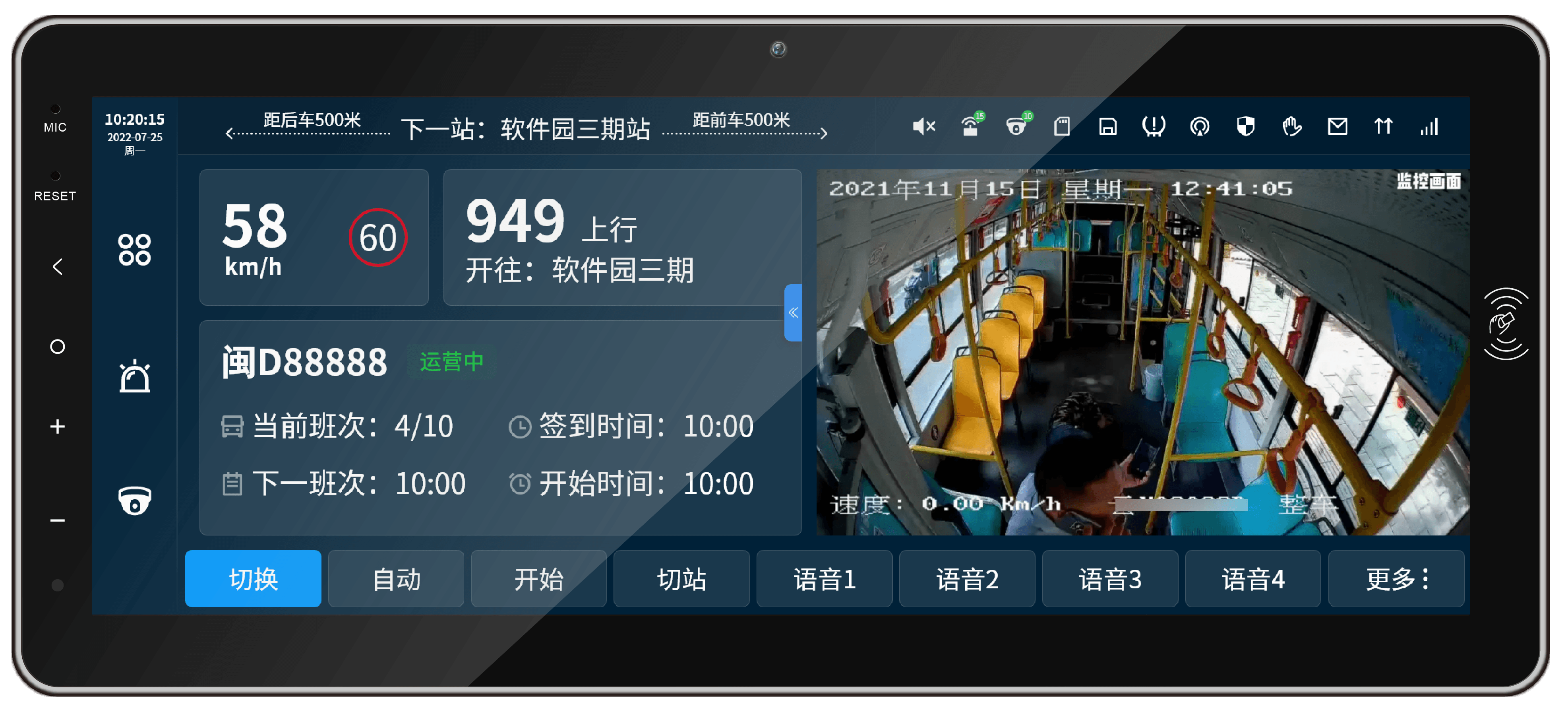
Reference for full text summary: Transformation of the transportation industry driven by technology
Through nearly two decades of in-depth technological development, Xiamen Lenz Communication Co., Ltd. has established an intelligent transportation technology system covering "hardware-software-platform". Its solutions lead the industry with three core advantages:
1. Technical adaptabilityIt supports differentiated demands ranging from small and medium-sized cities to megacities, with controllable hardware costs and short deployment cycles.
2. Safety and reliabilityMillisecond-level risk response and a three-tier security protection system ensure operational security and data privacy.
3. Ecological OpennessStrategic partnerships have been formed with automakers such as Huawei and Yutong, and the solutions have been exported to over 40 countries including Thailand and South Africa, validating their global adaptability.
In the future, with the integration of technologies such as 5G and large-scale AI models, intelligent transportation systems will evolve towards directions like "predictive maintenance" and "autonomous driving scheduling." Lenz will continue to invest in R&D to help global cities build more efficient and safer public transportation systems.